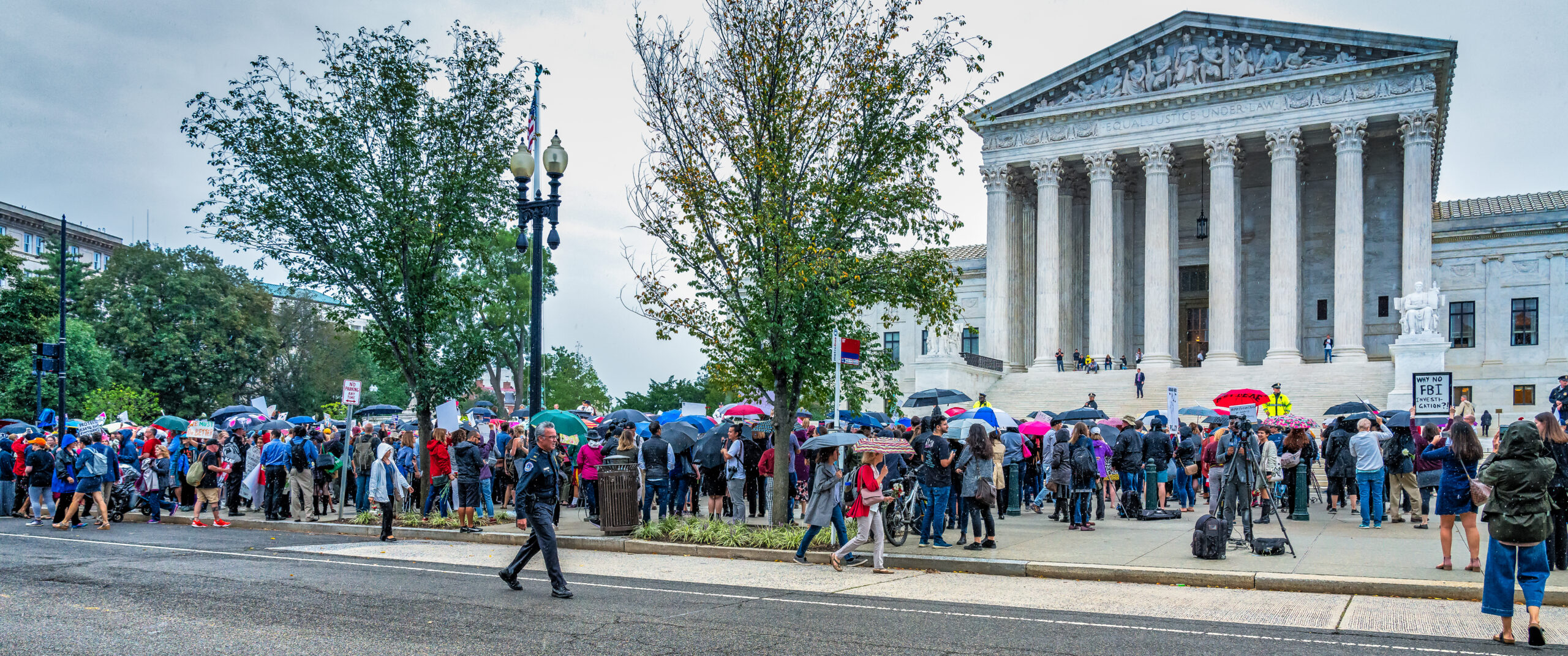
Opinion: Columnist Argues Constitutional Structure Shields Supreme Court From Political Takeover
In a recent opinion piece, Armando Simón contends that the U.S. Constitution’s separation of powers and federalism were deliberately designed to prevent the concentration of power and that those structures continue to frustrate modern efforts to reshape the judiciary. He cites historical precedents, contemporary partisan proposals to expand the Supreme Court, and a recent Virginia dispute over representation as evidence of ongoing conflict between decentralizing constitutional design and attempts at centralized control.
By Christopher Manley
814 views
In a recent column published by The American Spectator, commentator Armando Simón argued that the United States Constitution was deliberately engineered by the Founding Fathers to prevent the nation from becoming despotic and that its structural features — most notably the separation of powers and federalism — have continued to protect the judiciary and the broader system of checks and balances against partisan capture.
Simón begins by recounting the framers’ early experience under the Articles of Confederation, which he describes as an experiment that “fizzled” because it produced a central government with little effective authority. Drawing on historical comparisons with the Dutch Republic, the Amphictyonic League and the Swiss confederacy, the column traces how the founders rejected monarchy, oligarchy and dictatorship and concluded that a republic with mechanisms to prevent concentration of power was the most suitable system for a large and diverse nation.
To achieve that objective, Simón writes, the framers established a multimodal center of power. The new Constitution split authority among an executive, a legislature and a judiciary, and further divided the legislature into a bicameral body — the Senate and the House of Representatives — each with distinct prerogatives. The columnist argues this diffusion of authority, together with the Bill of Rights, constitutes a deliberate bulwark against government overreach and against the rise of autocracy.
Turning to contemporary politics, Simón contends that these structural protections have repeatedly frustrated efforts by some on the political left to concentrate power, particularly in the federal judiciary. The column says that “on numerous occasions, Democrats have practically salivated over legislating additional seats to a presumed defenseless Court,” a reference to recurring proposals to expand the U.S. Supreme Court — often labeled “court-packing” by opponents. Simón frames those calls as part of a broader pattern of attempts to neutralize judicial constraints on legislative and executive initiatives.
The column also addresses a range of modern disputes that, according to Simón, demonstrate the limits of political efforts to rearrange power. He recounts, for example, his view that the 2020 presidential election was “shady” and that the Biden administration’s policies on immigration brought increased numbers of undocumented migrants, a characterization he attributes to his perspective rather than asserting as settled fact. Simón further describes what he calls “lawfare” — the use of legal action for political ends — and cites the prosecution of former President Donald Trump as an example. He argues these prosecutions were widely perceived in some quarters as politically motivated, and that they have not succeeded in sidelining Trump because of his resources and political resilience.
A specific state-level episode is highlighted to illustrate the interaction between state constitutions, state judiciaries and the federal judiciary. Simón recounts that a Democrat-controlled Virginia legislature attempted to alter representation in a manner he characterizes as nullifying the state constitution, and that the Virginia Supreme Court (referred to in his piece as SCOVA) rejected the move. He says that Democrats then appealed to the U.S. Supreme Court and were unsuccessful, and that some Democrats reacted by proposing “reform” measures aimed at the state court — proposals that Simón reports were soon abandoned.
On the question of whether the U.S. Supreme Court can be insulated from political encroachment, the columnist asserts that the Court and the Constitution provide internal protections. He argues Congress does not have unfettered authority to change the Court’s composition without running into constitutional limits, and that the Court itself could deem such expansions to be congressional overreach. Simón also speculates that Justices might take internal disciplinary steps against colleagues deemed unworthy, though that suggestion is presented as conjecture rather than settled practice.
Throughout the column, Simón’s central claim is that the mix of federalism, separation of powers and the Bill of Rights has made the American constitutional order unusually resilient. He suggests that those structural features continue to constrain partisan ambitions and protect a plurality of power centers across states and branches of government. The piece concludes by positioning this resilience as a continuing check on efforts to centralize authority.
Armando Simón is identified in the column as a native of Cuba, a retired psychologist and historian, and the author of books including When Evolution Stops and The Transgender Cult: Psychology, Politics, Religion and the Media. The article presents his opinionated assessment of American constitutional design and contemporary political disputes rather than a neutral factual history of the events discussed.