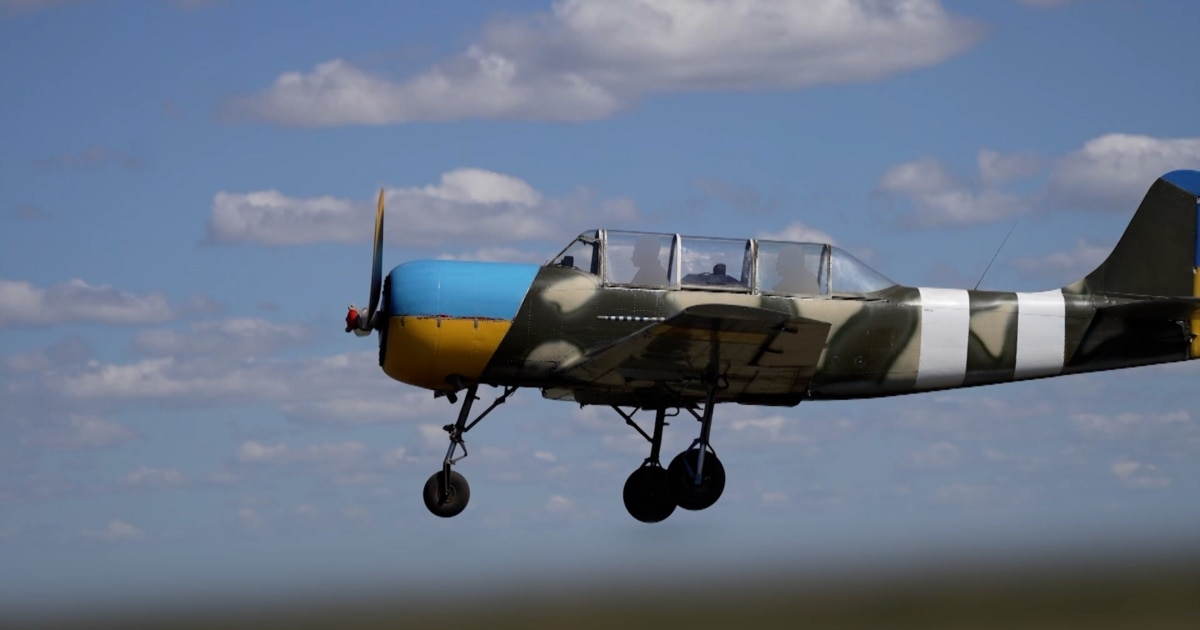
Open-cockpit Yak-52s and World War I–style tactics help Ukraine shoot down Russian drones over Odesa
Operating from three Soviet-era Yak-52 propeller planes donated by a Dutch NGO, Ukrainian aircrews are using open cockpits and onboard gunners to intercept Russian-launched drones, including Iranian-made “Shahed” models. The unconventional tactic — likened to approaches from the First World War — has enabled the crews to shoot down multiple drones in individual missions while offering a low-cost supplement to Ukraine’s air defenses.
By Vanessa Bergmann
1,004 views
Ukrainian forces have adopted an unconventional aerial countermeasure against Russian-launched drones over the Odesa region, employing World War I–style tactics from the open cockpits of Soviet-era Yak-52 propeller aircraft. In a notable adaptation to contemporary drone threats, three inexpensive Yak-52s—donated by a Dutch non-governmental organization—have been pressed into patrol service, carrying aircrew including a machine gunner positioned in the open cockpit to engage incoming unmanned aerial vehicles.
The patrols have been credited with downing several drones in single missions, according to reporting by Radio Europa Liberă. The drones engaged included Iranian-manufactured “Shahed” models, which have figured prominently in recent aerial attacks. Using the Yak-52s’ slow speed and maneuverability, crews are able to approach and disrupt or destroy relatively slow-moving targets that can be difficult to intercept with higher-speed fighters or long-range air defenses.
The choice of aircraft and tactics has drawn comparisons with early military aviation: the visible gunner in an exposed cockpit and the reliance on direct, manual engagement echo methods from the First World War more than modern aerial combat doctrine. Yet the approach also reflects pragmatic wartime innovation. Faced with a sustained threat from low-cost, expendable drones, Ukrainian defenders have sought methods that are affordable, quickly deployable and effective in engaging a particular class of aerial threat.
Donations from international non-governmental backers have played a direct role in enabling the operations. The three Yak-52s were provided by a Dutch NGO and repurposed for patrol and interception missions. Their deployment underscores how a mix of civilian support and improvisation has augmented Ukraine’s formal military and air-defense capabilities, particularly in regions where more sophisticated systems may be scarce or prioritized elsewhere.
Beyond the immediate tactical successes of downing drones, the operations carry broader significance for civilian protection and the contest to preserve Ukrainian territorial integrity. Drones can be used for strikes on infrastructure and populated areas; finding workable, cost-effective countermeasures helps reduce the risk to civilians and to critical installations. The use of adapted aircraft offers one such solution while also highlighting how the conflict has driven rapid innovation in defensive practices.
At the same time, the improvised tactics point to wider challenges in modern conflict: that even as states invest in high-end air defenses, adversaries can employ inexpensive, asymmetric technologies that demand new responses. The Yak-52 patrols are one example of how defenders can combine legacy platforms with low-tech weaponry to meet such threats. The initiative also illustrates the role of international civil society in providing material support that can have direct operational impact on the ground.
While the reports emphasize the effectiveness of these missions in specific instances, details about the frequency of operations, the total number of drones intercepted, and longer-term integration with Ukraine’s broader air-defense network were not disclosed in the available reporting. Observers say such measures are likely to remain one element among many as Ukraine continues to adapt its tactics and technologies to protect civilians and maintain control of its airspace.
The deployment of Yak-52s with open-cockpit gunners represents a striking blend of historical wartime imagery and contemporary necessity. By repurposing older aircraft and relying on donated resources, Ukrainian defenders have demonstrated a capacity for pragmatic adaptation in the face of evolving threats — an aspect of the conflict that has direct implications for civilian safety and the protection of democratic institutions under attack.