Norway's PM Says Drone Nearly Hit President Zelenskyy's Plane; Moldova Reports Shahed-Type Drone Crash
Norwegian Prime Minister Jonas Gahr Støre told journalists that a drone nearly struck the aircraft carrying Ukrainian President Volodymyr Zelenskyy as it flew from Moldova to Oslo on Sept. 8. Moldova's Defence Ministry said a Shahed-type drone entered Moldovan airspace and crashed near the village of Mihaileni at about 16:20 local time; no casualties were reported.
By Christopher Manley
1,098 views
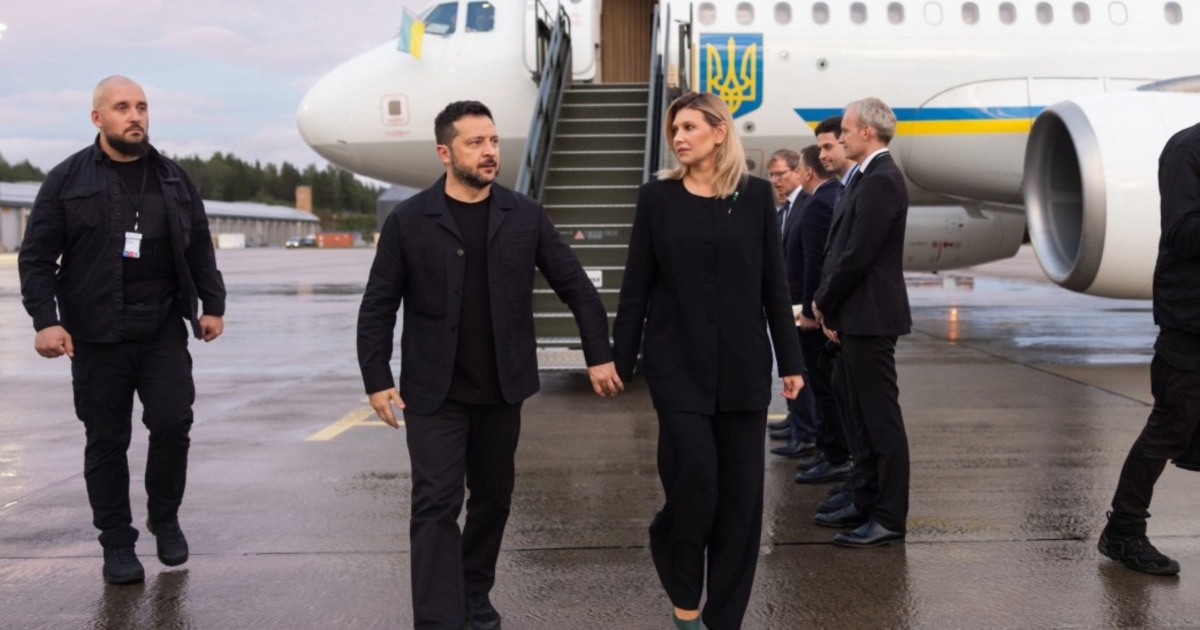
Norwegian Prime Minister Jonas Gahr Støre told journalists that a drone came dangerously close to striking the plane carrying Ukrainian President Volodymyr Zelenskyy as it flew from Moldova to Oslo on Sept. 8, according to reporting by Norwegian broadcaster NRK. The incident occurred while Zelenskyy was en route to Norway to attend the funeral of King Harald V and to hold meetings in Oslo, where he met Støre, the finance minister, and former NATO secretary-general Jens Stoltenberg.
Moldova's Ministry of Defence reported that a Shahed-type drone, described by the ministry as of the model associated with Russia, entered Moldovan airspace and fell near the populated locality of Mihaileni. The ministry said the airspace breach and the subsequent crash occurred at approximately 16:20 local time. Authorities reported that no one was injured in the incident.
Norwegian broadcaster NRK said Prime Minister Støre informed journalists about the near-miss involving Zelenskyy's aircraft, though the prime minister's comments were reported in summary form rather than as a direct quote in the Moldovan media report. The Office of the President of Ukraine did not respond to NRK's request for comment about the reported drone encounter, the Norwegian outlet said.
The Moldovan Defence Ministry's identification of the drone as a Shahed-type model is significant because drones of that design have been widely reported in recent months in connection with strikes originating from or associated with Russian forces in the context of the conflict in Ukraine. Moldova, which shares a border with Ukraine and has sought to maintain its sovereignty and territorial integrity amid regional instability, has been on heightened alert over incursions and airspace violations.
While Moldovan authorities stated there were no casualties from the crash near Mihaileni, the episode raises urgent questions about the safety of civilian air traffic and the protection of state leaders traveling internationally. An attack or near-attack on the aircraft of a sitting head of state constitutes a serious escalation in the use of unmanned aerial systems and presents challenges for regional security and diplomatic relations.
Norway's confirmation that Prime Minister Støre raised the matter publicly underscores the incident's international implications. Zelenskyy's presence in Oslo for the royal funeral and for meetings with senior Norwegian and NATO-aligned officials placed him in close proximity to international partners; any attempt to target or endanger his aircraft while transiting third-country airspace could carry consequences for Moldova-Norway-Ukraine relations and for wider NATO discussions about civilian and military airspace safety.
At this stage, Moldovan authorities have provided limited details beyond the model classification and the crash location. Investigations into the drone's origin, flight path, and whether it posed a deliberate threat to Zelenskyy's aircraft would typically involve air surveillance records, radar data and coordination between Moldovan, Norwegian and potentially Ukrainian authorities. No public confirmation has been released linking the drone definitively to any specific actor or government beyond the model description.
The reported incident adds to a growing pattern of concern about the use of unmanned systems to carry out strikes, cross-border incursions and reconnaissance in and around conflict zones. For Ukraine and its allies, an attempted strike on the Ukrainian president's plane — even if it was not directly targeted — is likely to prompt renewed calls for stronger protections for civilian air traffic and for accountability measures against operators of such drones. Moldova's public announcement and Norway's reporting together place pressure on authorities to disclose findings from any inquiry and to take steps to prevent future airspace violations.