Norway Pledges NOK 85 Billion to Ukraine for 2027, Majority Earmarked for Military Needs
On 23 August Norway announced it will allocate 85 billion Norwegian kroner (about $9.2 billion) to Ukraine in 2027, matching the support provided for 2026. The package is set to direct 70 billion kroner toward military requirements and 15 billion kroner to humanitarian assistance as Norwegian and Baltic regional leaders visit Kyiv for state ceremonies and diplomatic talks.
By Clémence Desjardins
828 views
Norway’s government announced on 23 August that it will provide 85 billion Norwegian kroner to Ukraine in 2027 — roughly $9.2 billion at current exchange rates — continuing the level of support set for 2026. Officials said the funding package is expected to be split between military and humanitarian needs, with 70 billion kroner (about $7.5 billion) allocated for defence and 15 billion kroner (about $1.6 billion) reserved for humanitarian assistance.
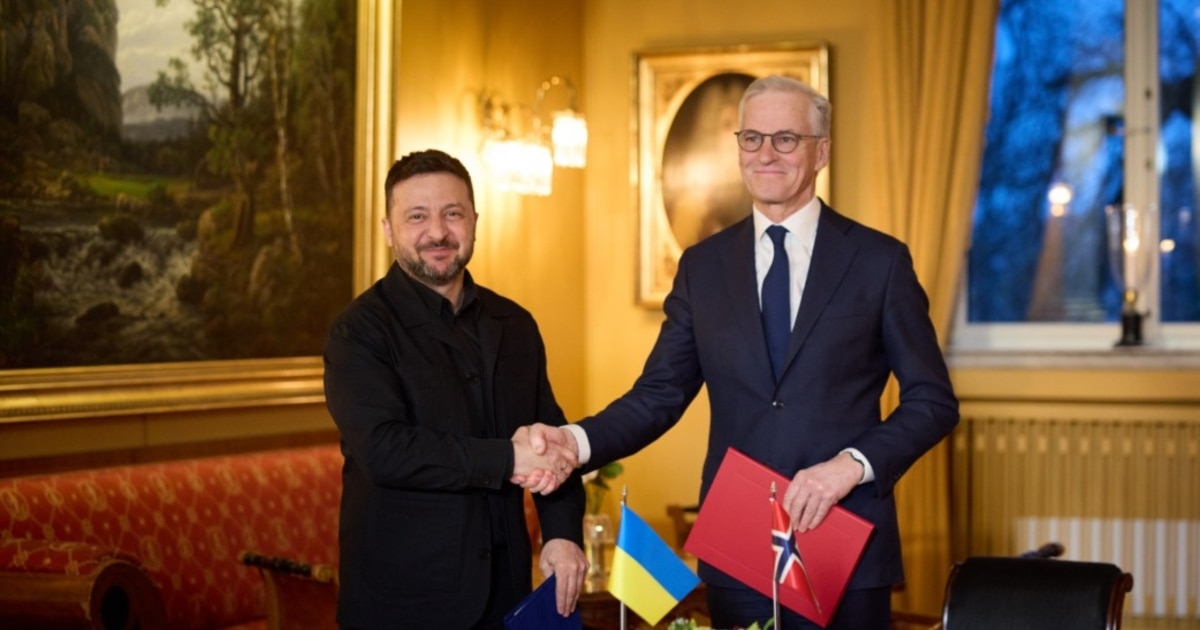
The announcement came as Prime Minister Jonas Gahr Støre traveled to Kyiv on Sunday with leaders from Northern European and Baltic countries to attend ceremonies marking Ukraine’s State Flag Day on 23 August and its Independence Day on 24 August. During the visit, the delegation held bilateral and multilateral discussions with Ukrainian President Volodymyr Zelensky. Norway’s leader framed the support as both assistance to Ukraine and an investment in European security.
«Дапамога Ўкраіне ў абароне і аднаўленьні — гэта ня толькі падтрымка, але і інвэстыцыя ва ўласную бясьеку Эўропы», — падкрэсьліў ён. The Norwegian government said the planned spending for 2027 mirrors the package approved for 2026 and underscores Oslo’s continued commitment to Ukraine amid the ongoing conflict with Russia.
President Zelensky, reflecting on talks with visiting heads of state and government, wrote on his official Telegram channel that the most pressing challenges in a protracted war are Russia’s ballistic capabilities and the financial resources required to sustain Ukraine’s defence. He stated that he expects support of 30 billion euros from European Union countries and assessed the Ministry of Defence’s budget shortfall at approximately $27 billion.
Norway’s announced allocation arrives against a wider European effort to balance immediate military assistance with long-term reconstruction and humanitarian needs in Ukraine. The stated division within the Norwegian package — directing the majority to military spending — signals a focus on sustaining Ukraine’s defence capacity, while the humanitarian tranche is intended to address civilian needs and the broader humanitarian consequences of the conflict.
The Norwegian commitment also highlights ongoing diplomatic engagement by regional partners in support of Ukraine’s sovereignty. The presence of Northern European and Baltic leaders in Kyiv for the flag and independence commemorations — alongside high-level talks — reflects efforts to maintain international pressure and material support while drawing attention to security threats posed by Russian military capabilities.
Officials did not provide detailed breakdowns of how the military funds will be used, nor did the Norwegian announcement specify delivery schedules or the mechanisms for disbursing the humanitarian portion. Likewise, Ukraine’s request for an additional 30 billion euros from EU countries and the defence ministry’s cited $27 billion gap underscore the scale of financing Kyiv says is required to sustain operations and recovery efforts.
The latest Norwegian pledge is part of a broader pattern of long-term Western support for Ukraine that combines military reinforcement with humanitarian and reconstruction aid. As leaders meet and statements are issued, the political and practical questions of how to coordinate funding, ensure accountability, and address evolving security threats remain central to international discussions about the conflict’s future and Europe’s security architecture.