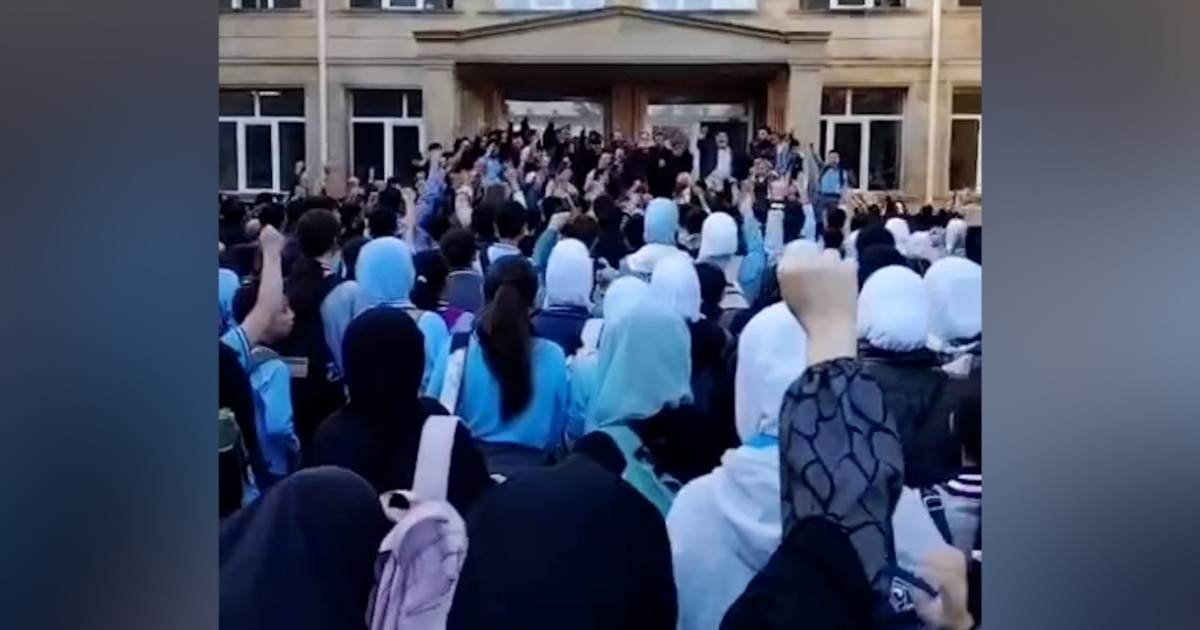
New School Rules in Azerbaijan Spark Protests After Girls Wearing Hijab Are Denied Entry
Azerbaijani authorities recently approved rules barring clothing judged 'incompatible with secular education,' a measure that has led to some schoolgirls wearing hijab being turned away from classes. Parents and community members have protested, arguing the policy violates religious freedom, while officials say it aims to protect children from coercion and to preserve secular schooling.
By Clémence Desjardins
978 views
Newly approved regulations on student dress in Azerbaijan that ban clothing considered "incompatible with secular education" have reignited a national dispute over religion and schooling, prompting protests after some girls who wear the hijab were reportedly not admitted to lessons.
The new rules, which do not explicitly mention the Islamic veil, have nonetheless been interpreted in practice by some schools as justification for excluding pupils who wear headscarves. Parents of affected children and others in the community have protested the measures, saying they infringe on the right to religious freedom and on girls' access to education.
Authorities defending the regulations say their intent is to protect children from external pressures and to maintain a secular learning environment. Officials have emphasized that the policy is aimed at preventing coercion and ensuring that schools remain spaces for neutral, nonsectarian education.
The dispute highlights a broader tension in Azerbaijan between the country's secular education policy and the religious identities of many families. While the new rules are framed around the principle of secular schooling, critics contend that the vague language gives local administrators broad discretion and can lead to the de facto targeting of religious dress without a clear legal basis.
Parents and rights advocates have framed the controversy as a matter of fundamental freedoms. They argue that excluding pupils from classes for wearing religious clothing not only restricts freedom of belief and expression but also threatens the right to education, particularly for girls. The protests that have followed the implementation of the rules reflect these concerns and underscore the sensitive nature of balancing secularism and individual rights in educational settings.
Education authorities and school administrators, meanwhile, maintain that the measures are necessary to shield children from coercive influences and to preserve the neutrality of the classroom. By prohibiting attire deemed incompatible with secular instruction, officials say they are safeguarding students from social and religious pressures that could affect their learning environment.
Legal experts and civil society observers often note that policies touching on religious expression in public schools require careful design and transparent guidelines to avoid arbitrary application. Vague or broadly worded rules can create inconsistent enforcement from one institution to another and can fuel community tensions when families feel their beliefs are being despoiled.
The situation has drawn public attention and debate within Azerbaijan, with media outlets reporting on incidents at schools and repeating the concerns of parents and the explanations of authorities. For rights monitors, the case raises questions about how the state reconciles commitments to secular public education with obligations under international human rights norms, including protection of freedom of religion and equal access to schooling.
As protests continue and families seek clarity about the status of religious dress in classrooms, observers say a transparent dialogue between authorities, parents, educators, and rights groups will be critical to finding an approach that protects children’s education while respecting individual freedoms. Radio Free Europe/Radio Liberty reported on the unfolding developments and the competing perspectives voiced by parents and officials.
The debate over the hijab in schools in Azerbaijan is part of a broader regional and global conversation about the role of religion in public life, the meaning of secularism in state institutions, and the limits of school policies that affect personal beliefs. How Azerbaijani authorities respond to the protests and whether they provide clearer guidelines or reconsider the rules will shape the immediate educational prospects of affected pupils and the longer-term relationship between state policy and religious practice in the country.