National Review Editorial Urges United States to Maintain Military Forces in Germany
National Review has published an editorial arguing that the United States should not withdraw its military forces from Germany. The piece presents the continuation of America's military presence in Germany as a matter of strategic importance and urges policymakers to resist calls for a broad pullout.
By Christopher Manley
1,054 views
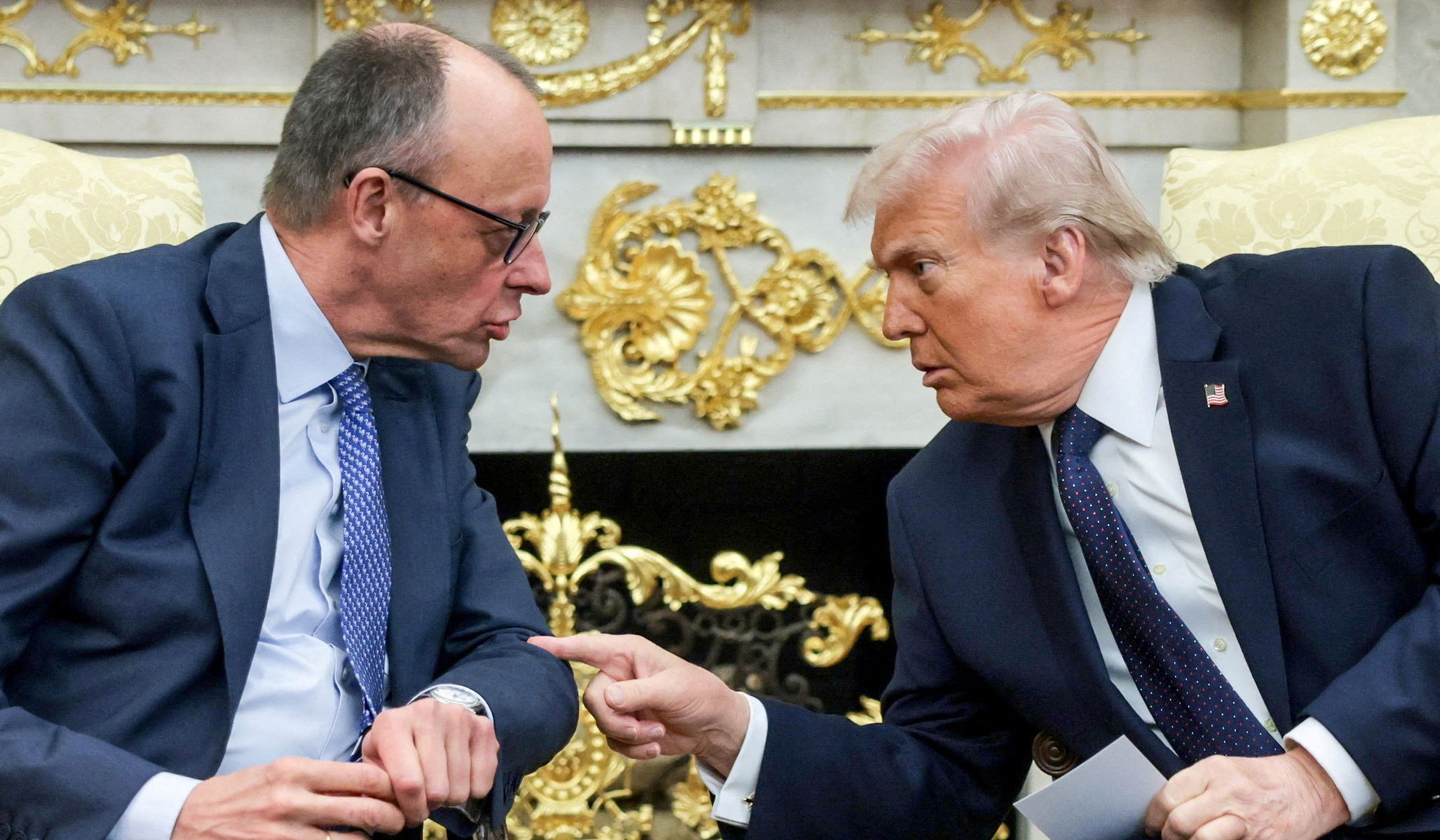
The piece arrives in direct response to a fast-moving dispute between Washington and Berlin. On Friday, May 1, 2026, the Pentagon announced that the United States would withdraw about 5,000 troops from Germany over the next six to 12 months, fulfilling a threat President Trump had made earlier in the week as he clashed with the German leader over the U.S. war with Iran. Trump had moved against the NATO ally after Chancellor Friedrich Merz said the U.S. was being "humiliated" by the Iranian leadership and criticized Washington's lack of strategy in the war. The Pentagon framed it differently, with chief spokesman Sean Parnell saying the decision "follows a thorough review of the Department's force posture in Europe and is in recognition of theater requirements and conditions on the ground."
The administration signaled the cut was only a beginning. Speaking to reporters in Florida on Saturday, Trump declined to offer an explanation for the move and said a larger reduction was coming: "We're going to cut way down. And we're cutting a lot further than 5,000." He also suggested the pressure could extend beyond Germany, taking swipes at Spain and Italy for not aiding the U.S. campaign against Iran.
The sequence of events helps explain why the editorial reads the withdrawal as punitive rather than strategic. Trump had said earlier in the week that Merz "doesn't know what he's talking about" on Iran, and posted that the German leader should "spend more time on ending the war with Russia/Ukraine" and "fixing his broken Country" than concerning himself with Iran. Berlin, for its part, sought to lower the temperature. Merz told German broadcaster ARD that "there is no connection" between the friction with Trump and the troop reduction, and Defense Minister Boris Pistorius tried to play down the spat.
While the editorial's headline reads as a straightforward defense of the status quo, its argument is pointed in two directions. The magazine does not endorse Merz; rather, it treats his comments as a provocation that nonetheless does not justify the administration's reaction. As the editorial puts it, "Merz's stupidity is no excuse for a stupid response." Its core warning is about American credibility: that even a threat made and then walked back exacts a price, chipping at "the credibility of the American deterrent just a little bit more," and that the wiser course would be for the president to "move on" rather than escalate. In other words, the case against withdrawal is framed less as a defense of Germany than as a defense of U.S. strategic interests and the reliability of American commitments.
That framing situates National Review's stance within a long and recurring debate. Trump pursued a similar drawdown in 2020, when he approved a plan to cut roughly 9,500 troops, a move that drew a bipartisan backlash in Congress and was ultimately halted by the Biden administration in 2021 before it was carried out. The current episode revives those same fault lines on the American right between advocates of burden-shifting toward Europe and those who see forward-deployed forces as essential to deterrence.
Why the German bases matter
The strategic stakes the editorial invokes are considerable. Germany hosts the largest U.S. military presence in Europe, a legacy of the post-World War II occupation, and its installations function as the hub of American power projection across two continents. The country is home to major facilities including Ramstein Air Base, the headquarters of both U.S. European Command and U.S. Africa Command, and Landstuhl Regional Medical Center, the largest American hospital outside the United States.
The scale of the presence has shrunk dramatically over time, which sharpens the debate over further cuts. As of December 2025, 36,436 U.S. active service members were stationed in Germany, a fraction of the roughly 250,000 active-duty troops based in West Germany at the height of the Cold War. The announced 5,000-troop reduction would still leave more than 30,000 U.S. troops in the country. Across Europe as a whole, around 80,000 to 100,000 U.S. personnel are usually stationed depending on operations, exercises and rotations.
Critics of the move argue its consequences extend beyond the headline troop numbers. Analysts have pointed to the risk that abrupt reductions, driven by pique rather than planning, undercut allied confidence at a moment when Russia remains a threat. NATO, notably, sought to turn the development toward its own messaging on burden-sharing rather than alarm. A NATO spokesperson said the U.S. move "underscores the need for Europe to invest more in defense."
What it means
The National Review editorial does not, in itself, change U.S. policy, but it underscores how decisions about overseas forces remain politically and strategically salient — and, notably, how the administration's approach has drawn criticism from voices on the right, not only the left. By urging against a pullout from Germany, the piece signals to policymakers that at least some influential conservative commentators view the U.S. military presence in Germany as worth preserving and the manner of the current drawdown as strategically self-defeating.
How policymakers respond will depend on a range of considerations, including alliance consultations, readiness requirements, fiscal constraints, and broader strategic priorities — as well as the trajectory of the Trump-Merz dispute and the U.S. war with Iran that touched it off. Congress has previously moved to constrain unilateral troop reductions, and similar friction could resurface. As debate continues, the editorial contributes to an ongoing public conversation about the balance between forward-deploying forces abroad and prioritizing other defense objectives. Readers looking to understand the range of perspectives on U.S. basing in Europe will find National Review's stance to be a clear, if pointed, appeal for continuity in the U.S. military presence in Germany — and a rebuke of a withdrawal it casts as driven by personal grievance rather than strategy.