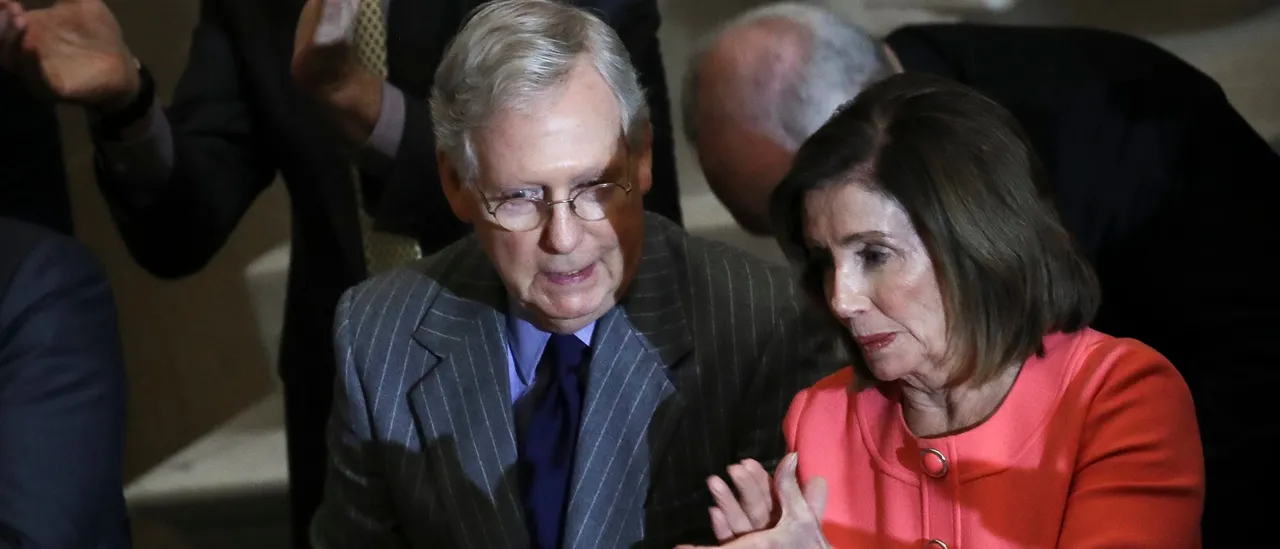
More Than 60 Incumbents Confirmed Out of the 120th Congress: McConnell, Pelosi and Other High-Profile Departures
With all 435 House seats and a third of the Senate on the ballot this November, a wave of retirements and primary upsets has already reshuffled the field for the 120th Congress. Among at least 57 House members and 11 senators who will not return are long-serving leaders such as Mitch McConnell and Nancy Pelosi, along with members who lost renomination or gave up safe seats for failed Senate bids.
By Clémence Desjardins
1,177 views
Voters preparing to cast ballots for all 435 House seats and one-third of the Senate this November will see a Congress considerably altered by departures announced well before Election Day. As of late May, 57 House members and 11 senators had declared they would not seek reelection, and at least four House members and two senators lost renomination in their primaries. Those exits include a mix of veteran leaders stepping down, high-profile primary defeats and members who chose to pursue other offices.
Among the most consequential departures is Kentucky Republican Sen. Mitch McConnell, 84, who announced in February 2025 that he would not seek reelection to an eighth term. McConnell has served in the Senate since 1985 and led the Senate Republican Conference for 18 consecutive years before stepping down as leader in January 2025. His tenure included service as both majority and minority leader and made him a central figure in Senate strategy and confirmations for decades. Trump-backed Republican Rep. Andy Barr won the GOP nomination on May 19 to succeed McConnell and is considered the heavy favorite in the general election in strongly Republican Kentucky.
On the Democratic side, former House Speaker Nancy Pelosi, 86, said in November 2025 she would not run for a 21st term representing San Francisco. Pelosi led the House Democratic Caucus for two decades and served eight years as speaker across two separate stints; her leadership roles spanned Republican and Democratic presidential administrations and shaped major legislative moments. Pelosi also faced scrutiny in recent years over stock trades made while in office, an issue she has denied constituted insider trading, even as observers have noted significant growth in her net worth during her tenure in Congress.
Other veteran Democrats choosing to step away include New York Rep. Jerry Nadler, 78, who announced in September 2025 he would not run for reelection after representing his New York City-area seat since 1992. Nadler chaired the House Judiciary Committee from 2019 to 2023 and served as a House manager during President Trump’s first impeachment. Maryland Rep. Steny Hoyer, 86 and the longest-serving Democrat in the House, announced his retirement in January; Hoyer, who took office in 1981, endorsed his former aide, State Delegate Adrian Boafo, in the crowded Democratic primary to replace him, even as Pelosi backed a different candidate, Harry Dunn.
A number of departures were tied to structural and political changes. Tennessee Rep. Steve Cohen, 77, said he would not seek reelection after GOP-driven redistricting made his Memphis-based, majority-black seat substantially more favorable to Republicans. The new map, drawn after a Supreme Court decision narrowing race-based gerrymandering, transformed a district that President Biden and other Democrats had carried by large margins into one that would have supported former President Trump by a wide margin based on 2024 data. Cohen cited the newly redrawn map when announcing his decision.
Several incumbent Republicans also will not be back. Two-term Sen. Thom Tillis of North Carolina, 65, announced in June 2025 he would not seek a third term amid friction with former President Trump over policy and nominations; Tillis opposed Trump’s signature One, Big, Beautiful Bill Act and was one of three GOP senators to vote against it. Former Alabama Sen. Tommy Tuberville, 71, opted to forgo a Senate reelection bid to run for governor and won the Republican nomination on May 19. Rep. Ryan Zinke, 64, of Montana announced in March he will not seek reelection to the House; Zinke previously served as Trump’s first Secretary of the Interior.
On the House side, several notable exits and primary upsets will also change the chamber’s composition. Rep. Elise Stefanik, 41, announced in December 2025 she would not seek a seventh term after briefly running for New York governor and withdrawing when she did not secure Trump’s endorsement; she cited a desire to spend more time with family. Rep. Nancy Mace of South Carolina is foregoing reelection to run for governor despite trailing in polls and lacking Trump’s endorsement. In Texas, Rep. Dan Crenshaw, a four-term Republican and prominent hawkish voice, was unexpectedly unseated in the March GOP primary by State Rep. Steve Toth.
Other contests produced high-profile losers. Firebrand Texas Democrat Rep. Jasmine Crockett, 45, gave up her safe House seat to run for the Senate and lost the Democratic primary to State Rep. James Talarico by six points. In the Texas Senate Republican primary runoff, Sen. John Cornyn’s 24-year Senate career ended after he was routed by Attorney General Ken Paxton, who had secured Trump’s endorsement; Paxton carried all but two counties in the runoff.
These retirements and defeats have practical consequences beyond individual careers. Open seats typically draw crowded primaries and substantial outside spending, and the exit of long-serving committee chairs and party leaders will reshape committee assignments and institutional knowledge. Several of the open races are already rated competitive by nonpartisan observers — the contest to succeed Tillis is rated “Lean D” by the Cook Political Report, while the open Montana House seat following Zinke’s retirement is rated “Likely R.” As November approaches, party strategists on both sides will be recalibrating to defend vulnerable pickups and target newly winnable races created by this wave of departures.