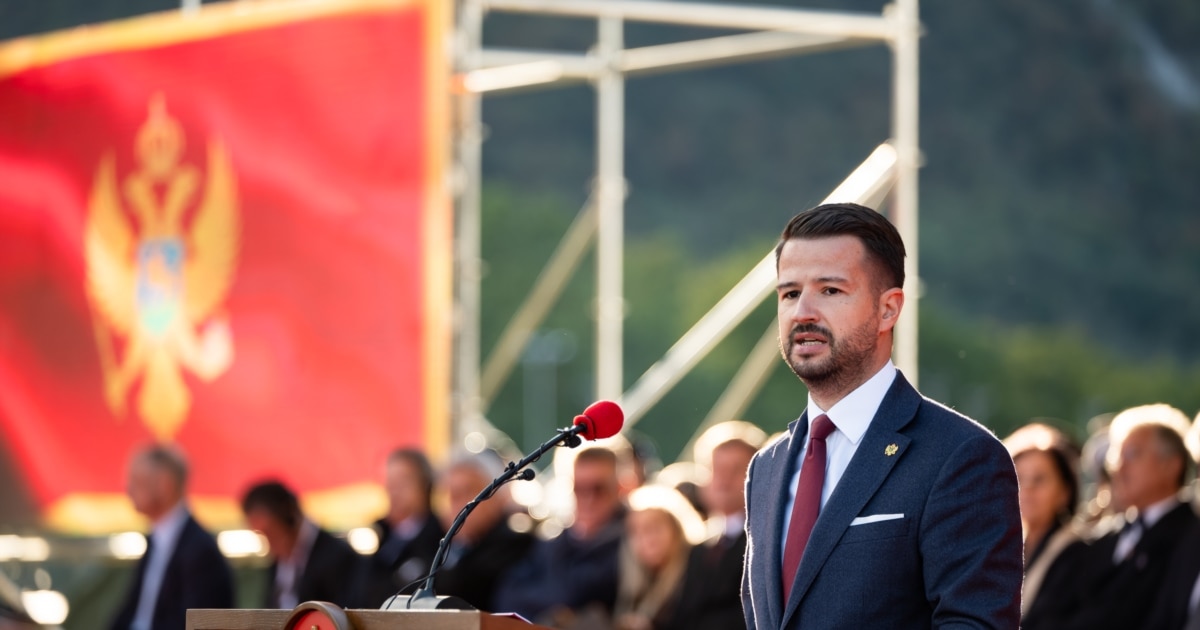
Montenegro’s President: Death of Ratko Mladić Must Not Be Used to Relativize War Crimes
Montenegrin President Jakov Milatović said on August 28 that expressions of sympathy toward the family of the late Hague-convicted Ratko Mladić cannot serve as a pretext for downplaying or relativizing crimes committed during the war in Bosnia and Herzegovina. Milatović reiterated that Mladić was convicted for the Srebrenica genocide and other serious war crimes and urged Montenegro to uphold international court rulings, protect victims’ dignity and reject any glorification of perpetrators.
By Christopher Manley
1,066 views
Montenegro’s president on August 28 urged that public responses to the death of convicted war criminal Ratko Mladić must not become an occasion for downplaying or relativizing widely documented wartime atrocities. In a statement issued the day after Mladić’s death, President Jakov Milatović emphasized the obligation to respect final rulings of international courts and to preserve the dignity of victims and their families.
"Ratko Mladić je pravosnažno osuđen za genocid u Srebrenici, kao i za druge najteže ratne zločine počinjene tokom rata u Bosni i Hercegovini. To nije pitanje političkog stava, već činjenica utvrđena pravosnažnom presudom međunarodnog suda i, kao takva, ne smije biti predmet političkog relativizovanja," Milatović said, restating the legal finding against Mladić as an established fact rather than a matter of political opinion.
Milatović went on to stress the responsibilities of the Montenegrin state in reacting to the death of an internationally convicted figure. "Crna Gora mora poštovati presude međunarodnih sudova, osuđivati ratne zločine, čuvati dostojanstvo žrtava i njihovih porodica i odbacivati veličanje i relativizaciju zločina," he said, urging that official and public discourse should not tolerate glorification of persons convicted of the gravest violations of international humanitarian law.
Ratko Mladić died on August 27 in a hospital in The Hague. He had been serving a life sentence after being convicted by an international tribunal for genocide in Srebrenica and other war crimes committed during the war in Bosnia and Herzegovina. The president’s remarks came the following day and reflect concern among some officials that expressions of sympathy toward the deceased or his family might be used to minimize or justify the crimes established by the tribunal’s final judgement.
On the same day that Mladić’s death was reported, Montenegro’s parliamentary speaker Andrija Mandić posted condolences on the social network X, saying he had extended sympathy to Mladić’s son both personally and on behalf of his party, Nova srpska demokratija. That public expression illustrates contrasting reactions within Montenegro’s political landscape, where officials may balance personal or party statements with broader obligations to international legal findings and the rights of victims.
Milatović’s statement frames the issue as one of state responsibility toward international justice and victims’ memory rather than partisan debate. By underscoring that the convictions are "pravosnažno"—final and legally binding—he sought to close off political attempts to relitigate established findings or to reinterpret them as acceptable political positions.
The president’s comments also point to wider sensitivities across the region about how societies deal with the legacy of wartime atrocities. Calls to reject relativization and glorification reflect concerns that public discourse and political gestures could stoke polarization, re-traumatize victims’ communities, or undermine commitments to accountability and reconciliation.
As Montenegro’s leadership and political actors respond publicly in the days following Mladić’s death, Milatović’s statement sets a clear benchmark: respect for international court rulings, condemnation of war crimes, protection of victims’ dignity and a rejection of any celebration or minimization of crimes. How other Montenegrin politicians, civic groups and the public respond will determine whether his appeal shapes national conversation about justice and remembrance in the wake of a high-profile, internationally convicted figure’s passing.