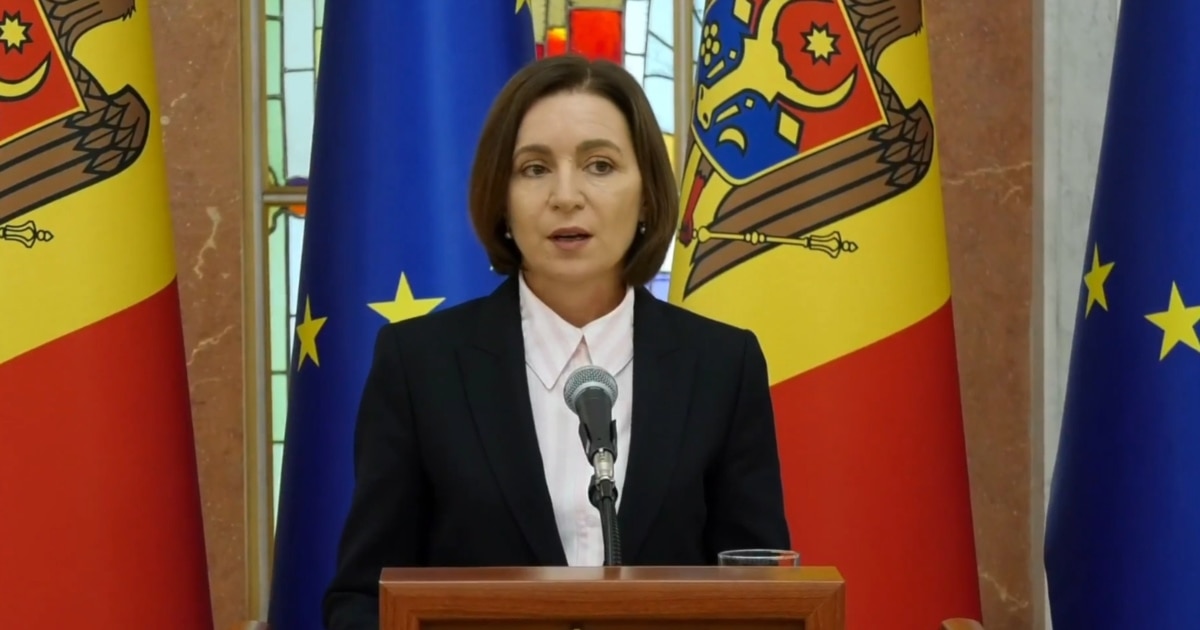
Moldova’s President Orders Security Council Review After Massive Government Data Breach
President Maia Sandu has called a National Security Council meeting after a cyberattack that siphoned the personal data of hundreds of thousands of Moldovans. Authorities have suspended dozens of digital public services and disconnected information systems while investigators probe possible foreign-state involvement and work to shore up vulnerabilities.
By Clémence Desjardins
970 views
Moldovan President Maia Sandu has summoned the country’s National Security Council for urgent consultations following a large-scale cyberattack that authorities say extracted the personal data of hundreds of thousands of Moldovans. The attack, which Moldovan officials and its Electronic Government Agency (AGE) have linked to exploitation of unauthenticated services and tools that may have included artificial intelligence, prompted immediate defensive measures across government systems.
Sandu’s office announced on October 29 that the security meeting would take place "in the coming days" to assess the scale of the incident and to determine appropriate response measures. The call for the review underscores the gravity of the breach: initial public reporting referenced roughly 750,000 affected individuals, while AGE has said the attack targeted about one million people — nearly half of Moldova’s population — with attempted extraction of data tied to personal identification numbers occurring between October 19 and October 23.
Prime Minister Vasile Tofan told cabinet ministers there were "indications of a broader campaign involving foreign state actors," and that investigators were examining possible outside involvement in the incident. Tofan did not name any country. The suggestion of foreign-state links comes amid warnings from several European governments about an expanding campaign of hybrid activity — including cyberattacks, sabotage and disinformation — that they attribute in part to Russia amid its war in Ukraine.
In immediate response to the breach, Moldovan authorities have preventively suspended 82 digital public services and disconnected more than 30 information systems to limit unauthorized access. AGE said the attackers appear to have first exploited vulnerabilities in publicly accessible services that did not require authentication and then used the information obtained to attempt further data extraction from connected systems. Officials said security weaknesses have been addressed in most affected services and that the remaining services will be gradually restored after verification of new protections.
AGE provided a detailed list of the types of personal data that may have been compromised. The potentially exposed information includes identification details such as names and dates and places of birth; information about immediate family members; health-insurance registration and assigned family doctors; records of social benefits, pensions and disability status; driver’s license data and photographs; vehicle ownership and company affiliations; and financial data including International Bank Account Numbers (IBANs), tax debts and payment histories. AGE emphasized that bank card data were not affected and that no unauthorized changes were detected in state registers.
The Moldovan government has also launched a broader review of its information systems to identify and fix further vulnerabilities. AGE warned that cyberattacks are a growing threat to public institutions and said advances in artificial intelligence are making it easier for attackers to automate breaches and to find weaknesses in systems. Officials have not specified the exact tools or techniques used, and investigators are continuing forensic work to determine the attack’s origins and full scope.
Moldova’s geopolitical position — wedged between NATO member Romania to the west and war-ravaged Ukraine to the east — has made the country particularly sensitive to spillover effects from regional conflict and state-sponsored hybrid operations. The breach adds pressure on authorities to demonstrate robust cybersecurity practices and transparency in handling citizens’ data, especially given the scale of potentially exposed records.
Beyond immediate technical remediation, the incident raises longer-term policy and human-rights questions about the protection of personal information and accountability for breaches that threaten citizens’ privacy and economic security. If elements of the attack are confirmed to involve foreign-state actors, the breach could have diplomatic and security implications, potentially prompting calls for international assistance, deeper cooperation on cybersecurity, and closer scrutiny of digital resilience in Moldova’s public sector.
For now, Moldovan authorities are focusing on containment, investigation and system hardening. Officials have asked citizens to remain vigilant for potential fraud or misuse of personal information and to await official guidance from government agencies. The National Security Council meeting convened by President Sandu is expected to set out next steps for both technical response and policy measures to mitigate the fallout and to prevent similar incidents in the future.