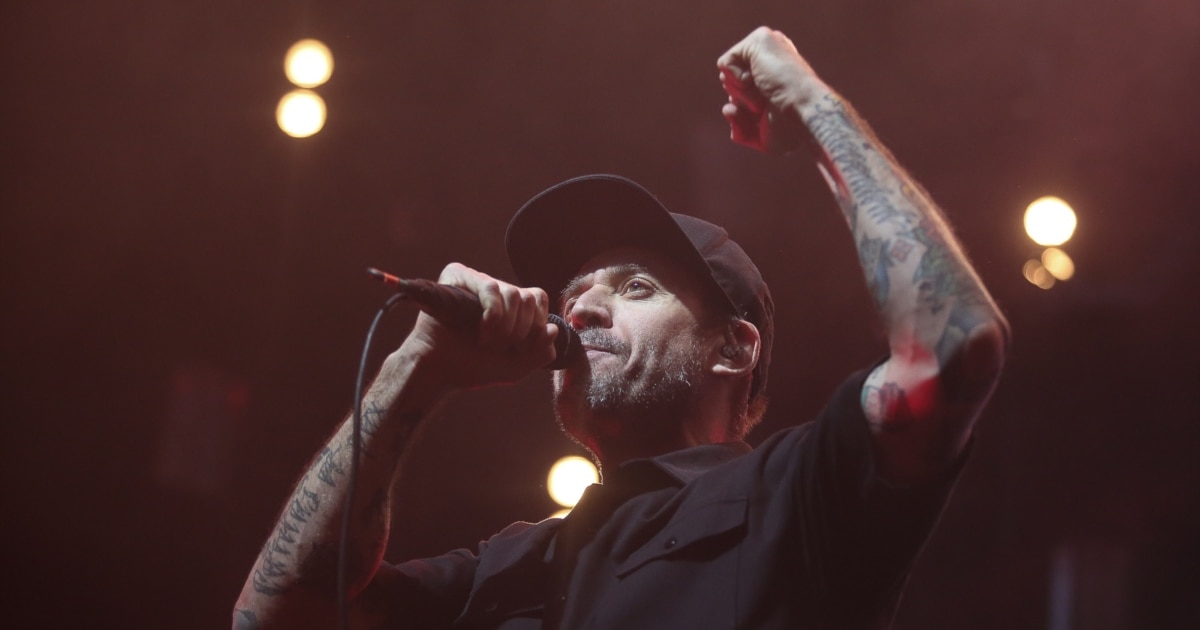
Minsk court convicts musician Siarhei Mikhalok in absentia, sentences him to four years for ‘insulting’ president
Minsk City Court has handed down an in absentia four-year sentence to Belarusian musician Siarhei Mikhalok, finding that materials he posted on social media contained derogatory and obscene assessments of the country’s president. Human rights monitors had reported the opening of a criminal case against the well-known singer and band leader at the end of July, accusing him of incitement of hatred and insulting the head of state.
By Christopher Manley
844 views
A Minsk court has convicted prominent Belarusian musician Siarhei Mikhalok in absentia and sentenced him to four years in a general‑regime correctional colony, according to a statement issued by Belarusian authorities and reported by local human rights media. The ruling, handed down by the Minsk City Court, follows criminal charges connected to materials Mikhalok allegedly posted on social media.
Authorities say the convicted musician used a YouTube channel called "BRUTTO NOSTRA," a Facebook page under the name "Brutto," and an Instagram account "brutto_nostra" to publish "video recordings that contain a negative assessment of the President of the Republic of Belarus, expressed in obscene, including non‑normative linguistic forms." The announcements of the charges and the sentence come after a human rights group reported the opening of a criminal case against Mikhalok at the end of July.
On July 29, the human rights centre Viasna reported that the Minsk City Court had begun consideration of a criminal case against Mikhalok. Rights defenders say the 54‑year‑old musician was accused under part 1 of Article 130 of the Criminal Code (alleged "incitement of hostility") and part 1 of Article 368 ("insulting the president"). The court proceeded in his absence and imposed the four‑year term in a correctional institution running a general regime.
Music journalist Alyaksandr Charnukha, speaking to Radio Svaboda, characterized Mikhalok as one of the most prominent figures in Belarusian popular music and placed the court action in the context of wider pressure on cultural figures. He said: «Ён сьпяваў і сьпявае для вельмі шырокай аўдыторыі людзей, якія ўспрымаюць і песьні кшталту там „Яблыні“ і „Ау“ і песьні кшталту „Ня быць скотам“ і „Воіны сьвятла“. То бок гэта робіць асобу Міхалка даволі маштабнай. І натуральна, гэта асоба якая дазваляла сабе шмат выказваньняў у тым ліку і адносна дзейнай у Беларусі ўлады, таму гэтыя навіны пра суд цалкам вытлумачальныя. Тут няма ніякіх сюрпрызаў. І ён не адзіны беларускі музыка, у дачыненьні якога такія справы ладзяцца. Таксама хутка пачнецца завочны суд над Кацярынай Манкевіч з гурту Dymna Lotva».
Siarhei Mikhalok is a well‑known singer, songwriter and actor, founder of the bands Lyapis Trubetskoy and Brutto. His musical trajectory moved from pop‑rock toward a more overtly political punk‑influenced sound. Mikhalok openly opposed the government of Alexander Lukashenko, publicly supported the 2020 protests in Belarus, and has been placed on an unofficial blacklist in the country; his concerts were banned in Belarus.
Mikhalok has long ties to Ukraine: he lived and worked in Ukraine for several years, received a Ukrainian residence permit in 2015, and five years later was named a Merited Artist of Ukraine. After the 2014 breakup of Lyapis Trubetskoy he formed the punk group Brutto. In 2022, following Russia’s full‑scale invasion of Ukraine, the band Lyapis Trubetskoy was revived in part to support Ukraine. Mikhalok’s song "Воіны сьвятла" (Warriors of the Light) became associated with the Euromaidan protests; it was first released in Russian in 2014, later adapted into Belarusian (2020) and Ukrainian (2022). The Ukrainian translation was made by poet and musician Serhiy Zhadan, and its video was filmed in Tallinn, Estonia, featuring Mikhalok’s then‑wife Sviatlana Zeliankovskaya and his children.
Human rights advocates and independent observers view the conviction as another instance of Belarusian authorities using criminal prosecutions to silence and punish cultural figures and dissidents. The sentence adds to a string of legal actions against artists and musicians who publicly criticized state policy or supported protests. The case also illustrates the continuing legal risks faced by Belarusian public figures living abroad who remain vocal about politics at home.
The Minsk court’s decision and the charges against Mikhalok are likely to heighten tensions between Belarusian authorities and the country’s artistic community, and they will be closely watched by human rights groups monitoring restrictions on freedom of expression in Belarus.