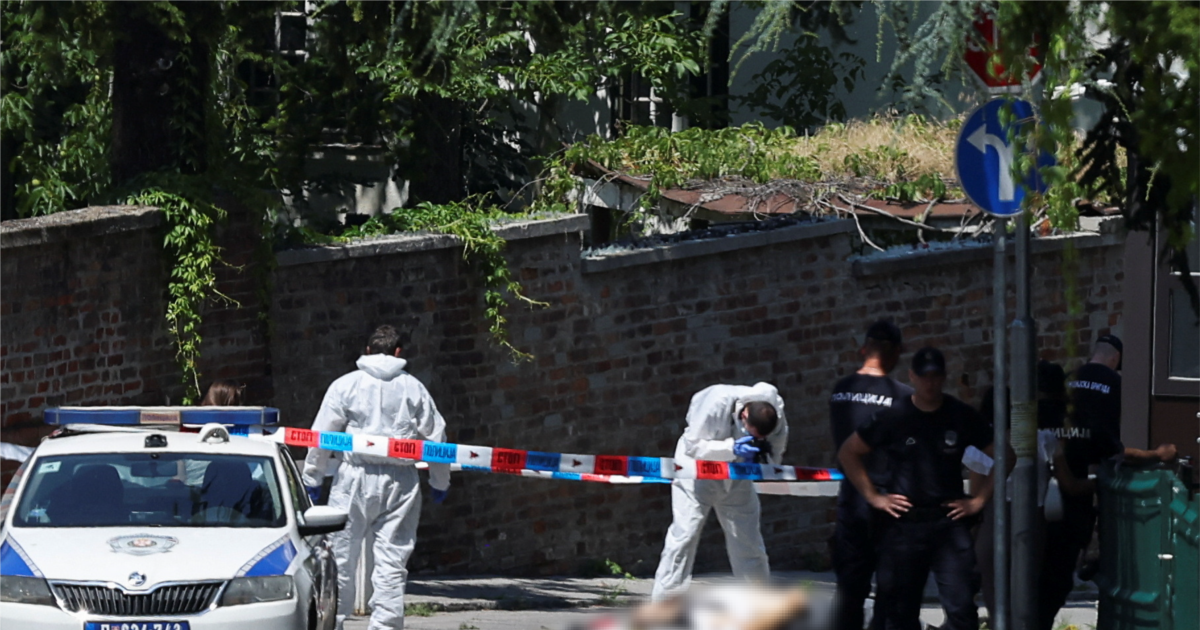
Minor Killed After Knife Attack on Gendarmerie Guarding Israeli Embassy in Belgrade; Interior Minister Calls It Terrorism
A minor attacker was shot dead after assaulting a gendarmerie officer who was guarding the Israeli Embassy in Belgrade in the early hours of October 28, Interior Minister Ivica Dačić said. Dačić described the incident as a terrorist attack and said security services had previously monitored the suspect, who is — according to initial information — known as a representative of the so-called Islamic State.
By Alexander Walter
1,019 views
A minor attacker was killed by a gendarmerie officer after launching a knife assault on a police guard outside the Israeli Embassy in Belgrade shortly after midnight on Wednesday, October 28, Serbian authorities said.
Interior Minister Ivica Dačić told national broadcaster Radio‑television Serbia (RTS) that the assailant, shouting "God is greatest," lunged at the gendarme with two knives. According to Dačić, the gendarmerie member responded with live fire and the attacker was killed at the scene. The incident occurred at approximately 00:15 local time.
Dačić characterized the episode as a terrorist attack and said that security services had been following the suspect prior to the incident. He added that, based on information available so far, the individual was known as a representative of the so‑called Islamic State. Authorities have not publicly released the attacker’s identity, age beyond describing them as a minor, or other investigative details.
In response to the attack, Serbia’s Ministry of Interior (MUP) raised the national terrorism threat level to the highest, the red level. The ministry said this move entails an increased police presence and heightened controls at key locations across the country, a step aimed at bolstering protection for diplomatic missions, public institutions and other potential targets.
The Israeli Embassy in Belgrade has been targeted previously. In June 2024, an attacker armed with a crossbow seriously wounded a gendarmerie officer who was guarding the embassy and was later killed in a police operation. That earlier incident heightened concern about threats to diplomatic sites in the Serbian capital.
Authorities have provided only limited public information about the latest attack as investigations continue. Officials have not released the identity of the gendarme involved, detailed forensic findings, or the precise nature of the prior monitoring of the suspect that Dačić referenced. The lack of detail leaves outstanding questions about the attacker’s background, motives, any supporting network, and whether additional arrests or security actions are planned.
The interior minister’s public labeling of the event as terrorism and the elevation of the security threat level are likely to have immediate practical and political effects. In the short term, citizens and residents can expect increased police checks, visible security deployments around diplomatic and other sensitive sites, and possibly intensified surveillance efforts. Longer term, human rights advocates and legal experts may scrutinize the government’s response for proportionality, adherence to legal standards, and any impact on civil liberties and minority communities.
Radio Free Europe/Radio Liberty and other outlets have invited members of the public to submit evidence or information that could assist ongoing investigations, alongside published guidance on confidential communication. As the probe continues, Serbian authorities have said they will release further details when appropriate, while investigators work to establish the full circumstances of the attack and any wider implications for national security and diplomatic safety.