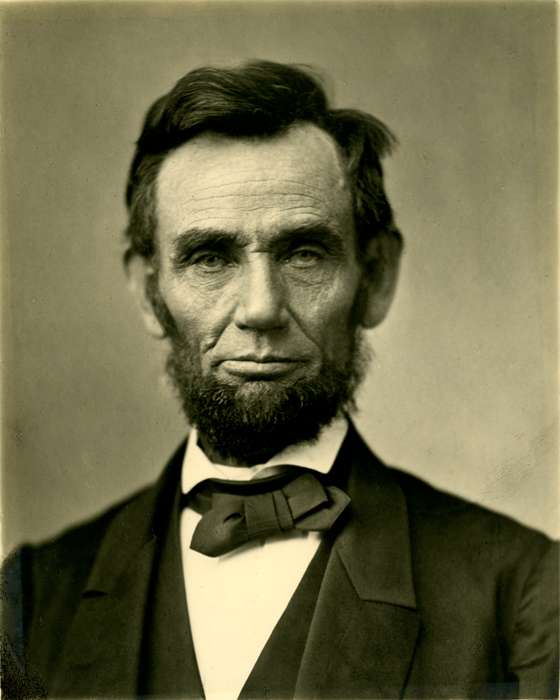
May 18, 1860: Abraham Lincoln Wins the Republican Presidential Nomination
On May 18, 1860, Abraham Lincoln secured the Republican Party’s nomination for president, becoming his party’s standard-bearer in the 1860 presidential contest. The nomination is remembered as a defining moment in Lincoln’s political career and is noted in a historical entry marking the date.
By Josh Blackman
1,014 views
On May 18, 1860, Abraham Lincoln was chosen as the Republican Party's nominee for President of the United States, a milestone that marked his formal emergence as the party's standard-bearer in the 1860 presidential contest. The brief notice of this anniversary appears as part of a "Today in Supreme Court History" feature, the recurring series of short historical entries published at the Volokh Conspiracy. The nomination came on the final day of the Republican National Convention, which met May 16–18 at a purpose-built wooden hall in Chicago known as the Wigwam — only the second national convention in the young party's history, and the first major party gathering held in what was then the western frontier.
Lincoln entered the convention very much an underdog. The presumed front-runner was Sen. William H. Seward of New York, backed by the formidable political machine of Thurlow Weed, and the field also included Salmon P. Chase of Ohio, Edward Bates of Missouri, and Simon Cameron of Pennsylvania. Lincoln, a largely self-taught Illinois lawyer who had lost his 1858 Senate bid to Stephen A. Douglas but had since built a national reputation through the Lincoln-Douglas debates and his Cooper Union address, was positioned as a moderate who could carry the crucial northern swing states where Seward looked vulnerable. Working through agents on the convention floor, Lincoln's managers pressed delegations to make him their second choice. Seward led on the first ballot but fell short of a majority; the gap narrowed on the second; and on the third ballot delegates broke decisively toward Lincoln, who clinched the nomination as the hall erupted in celebration. The convention named Sen. Hannibal Hamlin of Maine as his running mate. In a pattern that would shape his presidency, Lincoln ultimately brought several of his defeated rivals — Seward, Chase, Bates, and Cameron among them — into his Cabinet, the "team of rivals" that would govern through the Civil War.
This entry's inclusion in a "Today in Supreme Court History" feature highlights how political milestones are frequently recorded alongside judicial and legal history. The connection is not incidental: Lincoln's election later that year precipitated southern secession and the Civil War, and his presidency reshaped the constitutional order through the Emancipation Proclamation and, ultimately, the Thirteenth, Fourteenth, and Fifteenth Amendments — developments that remain central to American constitutional law. Although the notice itself is succinct, marking May 18, 1860, calls attention to a formative episode in American political life and preserves the date as part of the broader historical record. Observing such anniversaries offers a way to recall the sequence of events that compose the nation's political past and the moments that elevated particular figures to national prominence.