Mass Protests in Albania Over Trump Family-Linked Coastal Development Put Prime Minister Edi Rama Under Pressure
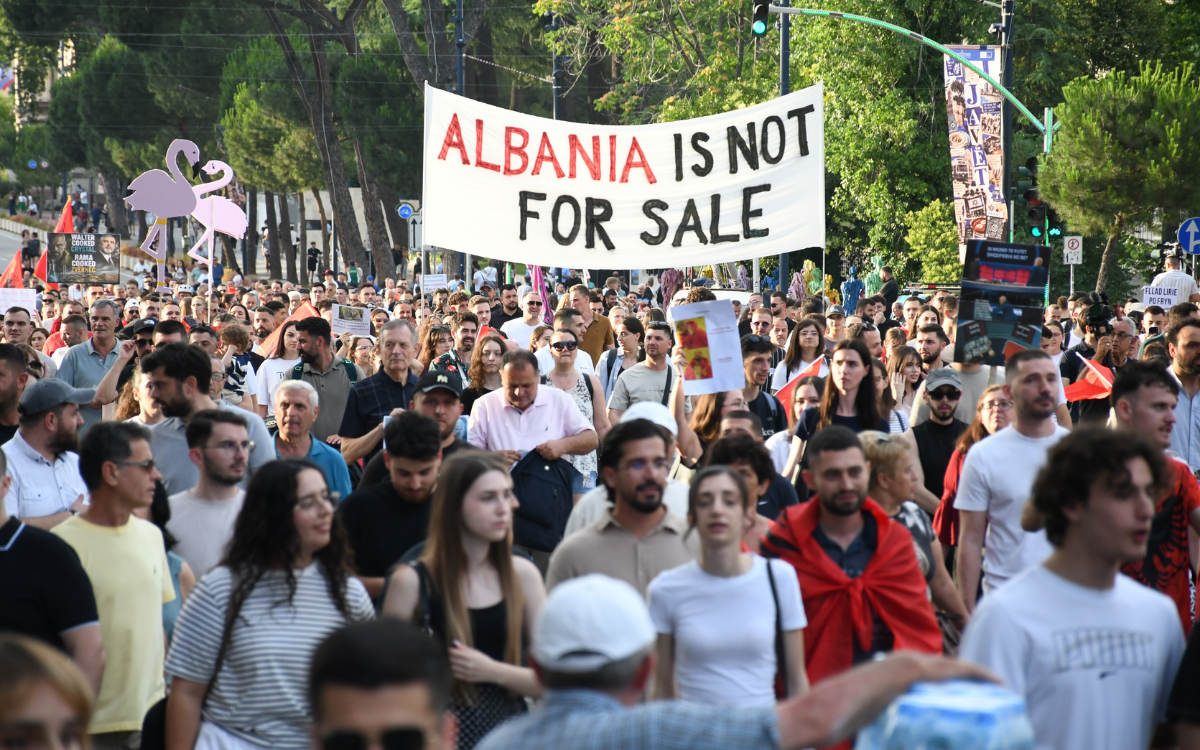
Large-scale demonstrations have erupted across Albania after bulldozers began clearing protected coastal land tied to a $1.5 billion investment associated with Ivanka Trump and Jared Kushner. Tens of thousands rallied in Tirana and other cities, chanting “Arnavutluk satılık değil” and “Biz Dubai olmak istemiyoruz,” accusing Prime Minister Edi Rama of privileging foreign investors over environmental protection and local rights.
By Arif Şentek
886 views
Mass demonstrations spread across Albania this week after authorities moved to clear a large tract of coastal land for an upscale development project linked to Ivanka Trump and Jared Kushner, triggering violent confrontations between residents and police and mounting political pressure on Prime Minister Edi Rama.
According to local reporting, the $1.5 billion investment is being made through Affinity Partners and has close ties to Jared Kushner, who is described as a de facto special envoy for former U.S. President Donald Trump among regional and Middle Eastern financial circles. Ivanka Trump recounts discovering the largely undeveloped Karaburun Peninsula and nearby Sazan Island during a private Adriatic sailing trip several years ago and said international architects were commissioned to design luxury seaside settlements. The development has been promoted by Albanian authorities as a source of jobs, tourism revenue and a boost to the country’s European Union prospects.
Opponents say the area — including Karaburun and Sazan Island in the Bay of Vlora (Avlonya) — is an environmentally sensitive zone with unique natural values that should be protected, not turned into high-end resorts. Protests escalated after, earlier this year, a substantial parcel of land was fenced off and bulldozers began cutting roads through what local campaigners say is protected territory. Demonstrators tore down perimeter fencing around the site and clashed with police officers tasked with protecting the development site, witnesses and media reported.
The unrest quickly expanded beyond the immediate coastal communities. By the time of reporting, tens of thousands had gathered in the capital, Tirana — a significant turnout in a country of about 2.7 million people where the capital’s population is roughly 600,000. Protesters chanted slogans including “Arnavutluk satılık değil” and “Biz Dubai olmak istemiyoruz,” targeting Rama directly and accusing him of acting as the project’s chief advocate. The demonstrations have been described by some participants as a defense of land rights, environmental protection and local decision-making against opaque foreign-led investment.
Prime Minister Edi Rama, leader of the Socialist Party since 2005 and Albania’s prime minister since 2013, has defended the project, arguing it will create employment, increase tourism revenue and accelerate European integration. Rama is a figure well known beyond politics for earlier cultural and urban projects — as former mayor of Tirana he famously led initiatives to repaint building facades and redesign public spaces — and he has cultivated close personal ties with international leaders and investors. Critics say his approach to the Trump-family-linked deal reflects longstanding patterns of elite-driven development that sideline public consultation and environmental safeguards.
The dispute has broader diplomatic and regional implications. The Bay of Vlora area has a complicated history: Sazan Island and the Karaburun Peninsula were at times used for military bases, including by the Soviets in the 1950s, and the Paşalimanı naval base at the southern tip of the bay has been the subject of bilateral arrangements involving Turkey. The region also has a notable ethnic Greek population; reports that police forcibly removed and detained a protester holding Greek citizenship have added to tensions between Athens and Tirana. Some local owners with Greek heritage also fear expropriation of their property in the wake of the development plan, prompting diplomatic concern in Greece.
Organizers and observers have compared the demonstrations to other popular mobilizations in the region and beyond. Protesters have adopted symbolic imagery — including pink flamingo models referencing the wildlife in the protected zone — and commentators have invoked the term “Pembe Devrim” while noting that the movement’s targets and rhetoric differ from previous U.S.-associated “color revolutions.” The domestic opposition and civil society point to earlier anti-corruption protests led by figures such as Sali Berisha as precedent for sustained public pressure on governance issues.
As roadworks and site preparation continue, so too do street rallies and calls for accountability. The confrontation highlights tensions between fast-tracked, high-profile foreign investment and local demands for environmental protection, transparent land deals and meaningful public consultation. With thousands in the streets and diplomatic sensitivities emerging, the crisis poses an immediate political test for Edi Rama’s government and raises questions about how Albania balances investor-led projects with citizens’ rights and ecological preservation.