Mass copyright complaints used to silence critics in Kyrgyzstan, activists and journalists say
At least two prominent Kyrgyz social media accounts that criticize the government have reported coordinated waves of copyright complaints that have removed or blocked dozens of videos and, in some cases, suspended accounts. The incidents involving a satirical animator and an environmental activist mirror a wider pattern across Central Asia, where journalists and outlets in Uzbekistan and Kazakhstan say similar tactics have been deployed to suppress dissent.
By Blake Marriott
1,033 views
Two social media accounts in Kyrgyzstan that regularly criticize the government say they have been hit by waves of coordinated copyright complaints that have resulted in dozens of videos being blocked or deleted and, in at least one case, the temporary suspension of an account.
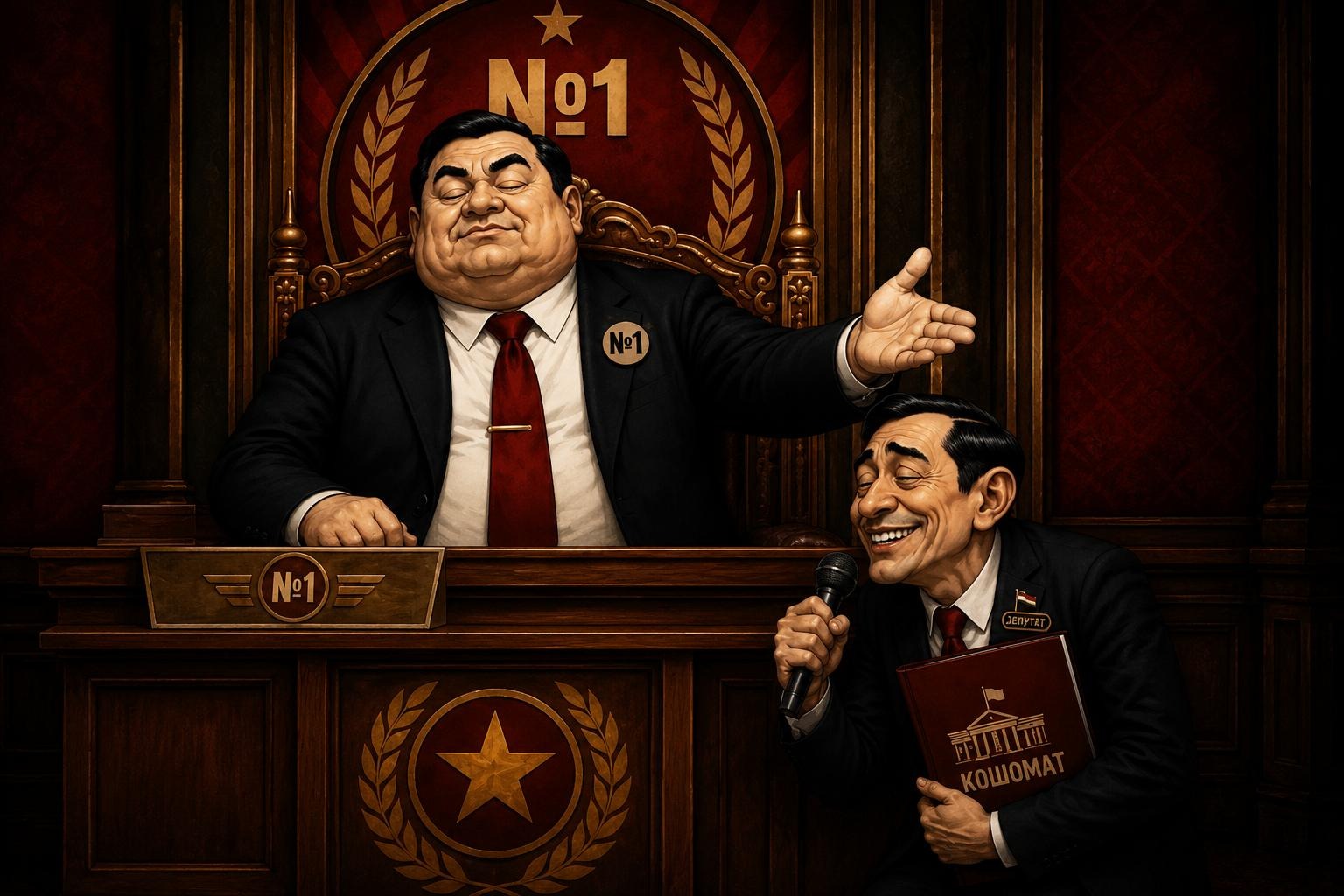
The account Satyr Jutarov, known for posting satirical animated videos about President Sadyr Japarov across multiple platforms, reported that mass complaints alleging copyright infringement began on July 24. While most of the account’s profiles have since been restored, the authors say dozens of videos remain blocked or removed and that new complaints continue to arrive. The account’s Instagram page, which has about 11,000 followers, has been inaccessible for more than two weeks.
Environmental activist and campaigner Samat Kushbekov has faced a similar campaign. Kushbekov, who frequently criticizes the government and President Japarov in his online posts, said his Instagram account — followed by roughly 76,000 users — has been blocked and that some 60 videos have been affected by the complaints. His Facebook account remains active, but Kushbekov estimates that about 83 videos were removed from that platform as a result of copyright claims. "Я подаю апелляцию к каждому видео, но у меня уже сил не хватает", he told Kloop, saying he has been appealing every removal but is exhausted by the process.
Kushbekov added that this is the fourth time Instagram has blocked his account. The first suspension occurred in May after he began opposing plans to hold a Formula 1 race on Lake Issyk-Kul.
Digital rights researchers and content creators say that mass copyright complaints have become an effective — and increasingly common — tactic to censor or temporarily silence critics. Social media companies typically respond rapidly to copyright notices, often removing or disabling access to content automatically. A subsequent appeals process can take weeks and does not always restore the material. When many complaints are lodged against multiple pieces of content from the same account, platforms may block or delete the entire profile. The technique has been used both by scammers seeking to hijack popular accounts and, according to critics, by governments targeting independent media and dissidents.
Kloop’s reporting situates the Kyrgyz incidents within a broader regional trend. Journalists and outlets in other Central Asian countries have reported similar waves of copyright complaints in recent months. Uzbekistan-based journalist Yusuf Ruzimurodov told Kloop his social media accounts have been blocked since January 2026 after a string of complaints he says originated from a single email address. His YouTube channel was the first to be taken down. Ruzimurodov said complaints targeted not only recent videos but clips uploaded up to five years earlier; he added that he appears on camera in his material and had previously had no strikes. "До января я даже подумать не мог, что профили заблокируют. У меня ни одного страйка не было, если не ошибаюсь", he said, and accused Uzbekistan’s authorities of organizing the complaints. He said appeals, even with legal help, were unsuccessful and that at one point he received an email warning him to stop contesting the claims, with threats to block his accounts on other platforms if he persisted. «Так и произошло. Сначала Фейсбук, потом Инстаграм. Их практически одновременно заблокировали», Ruzimurodov told Kloop.
Kazakh independent outlet Respublika has also reported repeated problems. The publication’s website was blocked by authorities in November 2025. In December 2025 its Instagram page was first suspended after copyright complaints tied to a post that republished material alleging that a security service employee was deleting pages belonging to journalists, bloggers and activists. Respublika says that post had amassed nearly 350,000 views. On July 10, the outlet reported a fresh round of complaints aimed at its YouTube channel; nine videos were removed, and editor Irina Petrushova said the notices targeted video thumbnails rather than the videos themselves. She said she suspects the Kazakh presidential administration — "Акорда [резиденция президента]" — or security services may be hiring outside agencies to carry out these campaigns: "Мы считаем, что это Акорда [резиденция президента] или спецслужбы нанимают специальное агентство". Petrushova added that the effort appears designed not only to remove content but to exhaust journalists’ time and resources: "Они же понимают, что когда они все это делают, то мы теряем силы, средства. Средства — это же не всегда деньги, это временные затраты. И это просто изматывание". She described the complaints as a new facet of pressure: "Это реально какая-то последняя фишка у них [у властей], потому что до этого у всех [коллег] жалобы были именно на видео".
Observers say the pattern poses a growing threat to freedom of expression in Central Asia. Automated or bulk copyright claims exploit platform moderation systems to remove content quickly and impose a prolonged burden on creators who must navigate appeals procedures. When targeted at journalists, activists or satirists, the tactic can curtail public debate, limit access to information and create a chilling effect on criticism of powerful actors. The incidents documented by Kloop in Kyrgyzstan, and the similar cases in Uzbekistan and Kazakhstan, illustrate how such mechanisms of platform moderation can be repurposed as tools of political pressure across the region.
The affected creators and media outlets continue to appeal removals and seek to restore their pages, but the process is slow and uncertain. Social media companies did not publicly comment in Kloop’s reporting on the specific complaints described by these accounts. For now, the episodes add to growing concerns among rights advocates about the weaponization of copyright rules to silence dissent and about patterns of cross-border and coordinated interference with independent media in Central Asia.