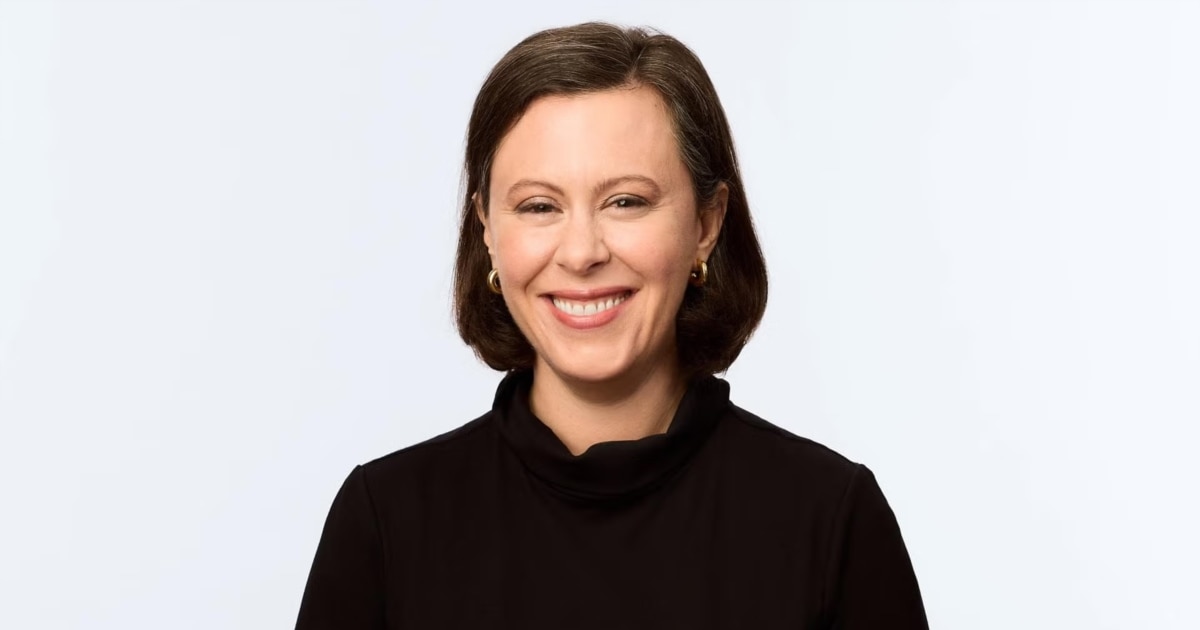
Mary Kissel: Iran’s Nuclear Ambitions Must Remain Central as Maritime Tensions Test Diplomacy
Hudson Institute fellow Mary Kissel warns that recent missile exchanges and incidents in the Strait of Hormuz are straining a 60-day diplomatic window with Iran and risk allowing Tehran to divert attention from its nuclear program. Kissel argues that Washington must keep dismantling Iran’s nuclear capabilities the core objective while pressuring Tehran, rallying Gulf partners and encouraging European support to secure maritime transit.
By Alex Raufoglu
812 views
Washington’s tentative diplomatic effort with Iran is being tested by renewed missile exchanges and maritime incidents in the Strait of Hormuz, Mary Kissel, a senior fellow at the Hudson Institute, told RFE/RL. The incidents, which have included attacks on tankers, mine concerns that have forced ships to avoid traditional lanes, and warnings from Tehran about alternative routes, are straining a 60-day window opened by a US-Iran memorandum and raising questions about whether diplomacy can deliver durable security.
Kissel said those developments are consistent with long-standing behavior by the Tehran government, and warned that the regime will “test you until you decide to push back and force them to stop.” She stressed that the central question for Washington is what the diplomatic process is meant to achieve: merely conversation, or the concrete strategic goal of preventing Iran from acquiring nuclear weapons.
“The United States' strategic goal is very clear,” Kissel said, noting what she called a history of Iranian violence: “This regime has killed thousands of Americans, not to mention tens of thousands of its own people, and it wants nuclear weapons.” She argued that Tehran’s recent maritime pressure should not be allowed to eclipse the primary objective of dismantling Iran’s nuclear program and ensuring verifiable limits on assets that could produce a bomb.
On commercial traffic through the Strait of Hormuz, Kissel said Tehran appears to be attempting to convert short-term military pressure into long-term political leverage over a critical global waterway. Yet she pointed to market signals that, in her view, undercut Iran’s strategy: oil prices falling toward $70 a barrel and global energy-importing nations finding alternative supplies. Over the medium term, she added, pipelines and alternative routes could reduce dependence on the strait.
Kissel also warned against letting maritime security become the sole focus of negotiations. She said one of Tehran’s tactics is to distract from its nuclear program by demanding immediate resolution of the crisis it created. “Don’t worry about the nuclear program right now — let's solve this crisis we've created first,” she said, describing this as a “real danger.” She criticized any approach that would allow Iran to redefine control over navigation in the region without addressing the broader proliferation threat.
The Hudson Institute fellow described the broader context as a strategic contest in which Iran is allied with Russia and China against the United States, Israel and Gulf partners such as the United Arab Emirates, Bahrain, and Kuwait. She noted uncertainty about who speaks for Tehran, asking whether the Islamic Revolutionary Guards Corps is the sole actor or whether other figures are communicating through back channels. That opacity, she said, complicates US assessments of whether Iranian interlocutors can follow through on commitments made at the negotiating table.
Kissel questioned whether diplomacy alone can provide the guarantees Gulf partners expect, given ongoing attacks on shipping and reports she cited of foreign assistance to Iranian operations. She urged Gulf states to contribute diplomatically by encouraging European partners to provide military assets to secure maritime transit, saying that these regional economies — Doha, Dubai, Riyadh and others — have much more at stake than energy alone due to deep integration with global financial markets.
Addressing the possibility of military escalation, Kissel argued that both sides have demonstrated a willingness to use force and said President Donald Trump has been explicit about his readiness to act militarily. She recalled past US experiences with Iranian-linked violence in Lebanon and Iraq and described the current Iranian regime as a destabilizing force across the Middle East. Yet she emphasized that lasting resolution would ideally deprive Iran of nuclear capability while moving toward a more peaceful region.
Kissel outlined several indicators to watch in coming days: whether Washington is serious about permanently dismantling Iran’s nuclear program and how any dismantling would be verified; the degree of US tolerance for continued Iranian attacks in the strait; signals from oil prices and insurance markets about Iran’s leverage over global energy; and renewed attention to Iranians protesting the regime at home. “They're the regime's biggest victims,” she said of the Iranian people, urging greater international focus on their calls for freedom.
On what lasting success would look like, Kissel sketched several scenarios. The most hopeful — but perhaps least likely — would be a free and democratic Iran. Another outcome might be fragmentation along ethnic lines. A third would be the rise of a military leader willing to cooperate with the United States and Israel to dismantle the nuclear program: a stabilized but not democratic state, “something resembling Venezuela,” she suggested. All, she implied, hinge on keeping the nuclear file at the center of diplomatic efforts while not ceding strategic advantage to Tehran through capitulation to short-term military pressure.