Marine heatwaves: beneath the surface, the Mediterranean is entering a new regime
As marine heatwaves grow longer and fiercer, the Mediterranean is entering a new regime, with hidden mass die-offs beneath the surface and a warming, "tropicalising" sea that raises a harder question than temperature records: how fast can ecosystems and coastal economies adapt?
By Martin Bertrand
988 views
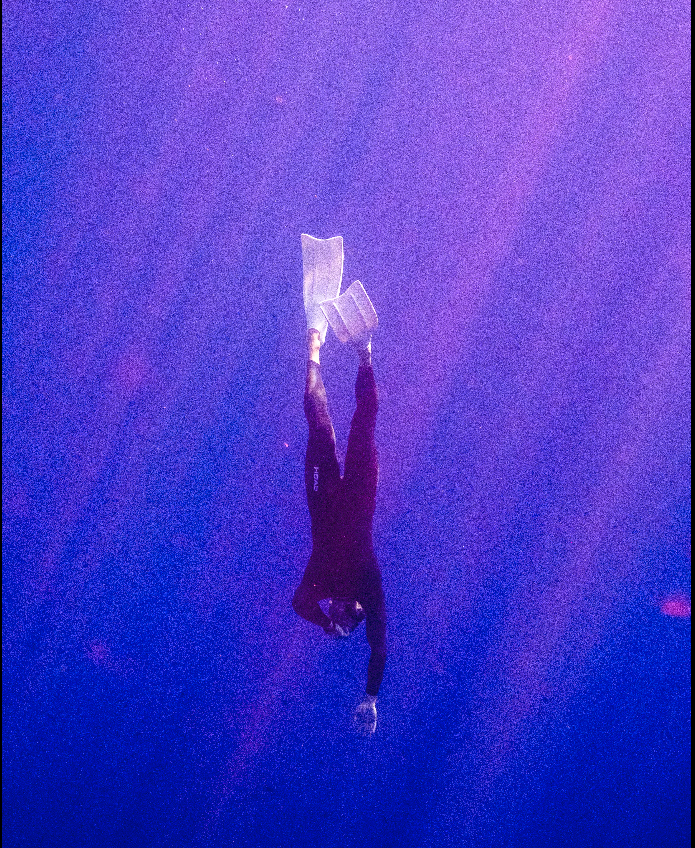
Photo: by Martin Bertrand
At the surface, the change can almost seem pleasant. Warmer water, longer swimming seasons, a Mediterranean that in some places reaches tropical temperatures. Underwater, the picture is very different. Gorgonians, sponges, molluscs, sea urchins, seagrass meadows and fish are being exposed to heat events that are becoming more frequent, more intense and longer-lasting.
For Robin Degron, former director of Plan Bleu, the issue can no longer be reduced to a succession of summer records. Plan Bleu is one of the Regional Activity Centres of the United Nations Environment Programme’s Mediterranean Action Plan. For nearly half a century, it has produced studies and scenarios to inform Mediterranean decision-makers on environmental and sustainable development issues. Degron, a graduate of ENA and ENGREF, has worked on these policies for around thirty years, including at the French Ministry for the Environment and France Stratégie.
For him, the most concerning development is the combination of three trends: marine heatwaves that are becoming more frequent, more intense and longer, with effects that are no longer confined to surface waters.
The summer of 2022 had already shown what this could mean. In the Ligurian Sea, the marine heatwave lasted 115 days and the maximum sea-surface temperature anomaly reached 4.46°C at the end of July. Further west, in the north-eastern Gulf of Lion, observations showed that exceptionally warm water had penetrated to depths of around 30 to 40 metres. Gorgonian mortality was particularly severe, especially around Marseille.
Degron fears that after the high temperatures observed in 2026, further mortality events may be discovered below the surface. He speaks of a possible “invisible slaughter”. At this stage, however, this is a warning from him rather than a consolidated scientific assessment of the summer.
That invisibility is precisely part of the problem. A wildfire or a drought is immediately visible. A mass mortality event several dozen metres underwater can go almost unnoticed. Yet data accumulated over the past decade give some indication of the potential scale. One study covering the period from 2015 to 2019 recorded mass mortality events affecting 50 taxa from eight phyla, across thousands of kilometres of Mediterranean coastline and down to depths of 45 metres.
In the longer term, Degron highlights two major transformations: the weakening of structural habitats such as gorgonian forests and Posidonia oceanica meadows, and the progressive “tropicalisation” of the Mediterranean. Species adapted to warmer waters are gaining ground, while others are seeing their distribution change. He points in particular to blue crabs along the Tunisian coast. Two non-native species are now present in the Mediterranean, Callinectes sapidus and Portunus segnis. In Tunisia, Portunus segnis, originally from the Indo-Pacific, has expanded dramatically and severely disrupted small-scale fisheries before commercial markets began to develop around its capture.
Malta offers a particularly interesting observation point for these changes. In April 2026, the University of Malta hosted a scientific workshop by the International Commission for the Scientific Exploration of the Mediterranean devoted specifically to the tropicalisation of the basin. Maltese researchers presented several years of temperature measurements taken between depths of 5 and 50 metres, identifying several marine heatwave events in the waters around the archipelago.
Another study published in 2025 provides a local indication of the possible effects of thermal stress. Researchers examined Posidonia oceanica meadows exposed to chronic warming caused by a thermal discharge. This was not a marine heatwave as such, but it offered an analogue for observing the effects of sustained higher temperatures. Near the heat source, researchers recorded reductions in leaf length, shoot density and photosynthetic biomass, as well as lower fish-community richness.
These ecological changes can quickly become economic. “Marine heatwaves reduce fishery resources, increase losses in aquaculture and degrade the attractiveness of coastal areas for tourism,” Degron explains. Organisms farmed in open waters, including certain bivalves, are directly exposed to thermal stress and lower oxygen availability. Underwater landscapes that attract divers and visitors can also be altered by the disappearance or degradation of emblematic species and habitats.
For Malta, where tourism, fisheries, aquaculture and coastal activities all play an important role, what happens below the surface can therefore have highly visible consequences on land.
The issue also has a political dimension. “The scarcity or redistribution of marine resources can exacerbate tensions over fishing quotas, access to fishing grounds and coastal food security,” Degron says. As certain species redistribute across different areas, depths or jurisdictions, management rules and agreements between states may come under pressure.
This is also what makes the Mediterranean such an important climate laboratory. “The Mediterranean, a semi-enclosed and rapidly warming sea, is considered a hotspot where we are seeing in advance what other marine regions may experience,” he explains.
Mediterranean states are beginning to adapt their tools. In December 2025, the parties to the Barcelona Convention adopted the Regional Climate Change Adaptation Framework for the Mediterranean Marine and Coastal Areas 2026–2035, alongside the new Mediterranean Strategy for Sustainable Development 2026–2035. For Degron, however, the response remains too fragmented between fisheries, aquaculture, habitat protection and economic policy. “There is therefore a real awareness that still needs to permeate all areas of public policy and all economic activities exposed to the growing risks of atmospheric and marine heatwaves.”
Beneath the surface, the Mediterranean is already changing. The question is no longer simply how high its temperature can rise, but how quickly its ecosystems, coastal economies and the societies that depend on them will be able to adapt.