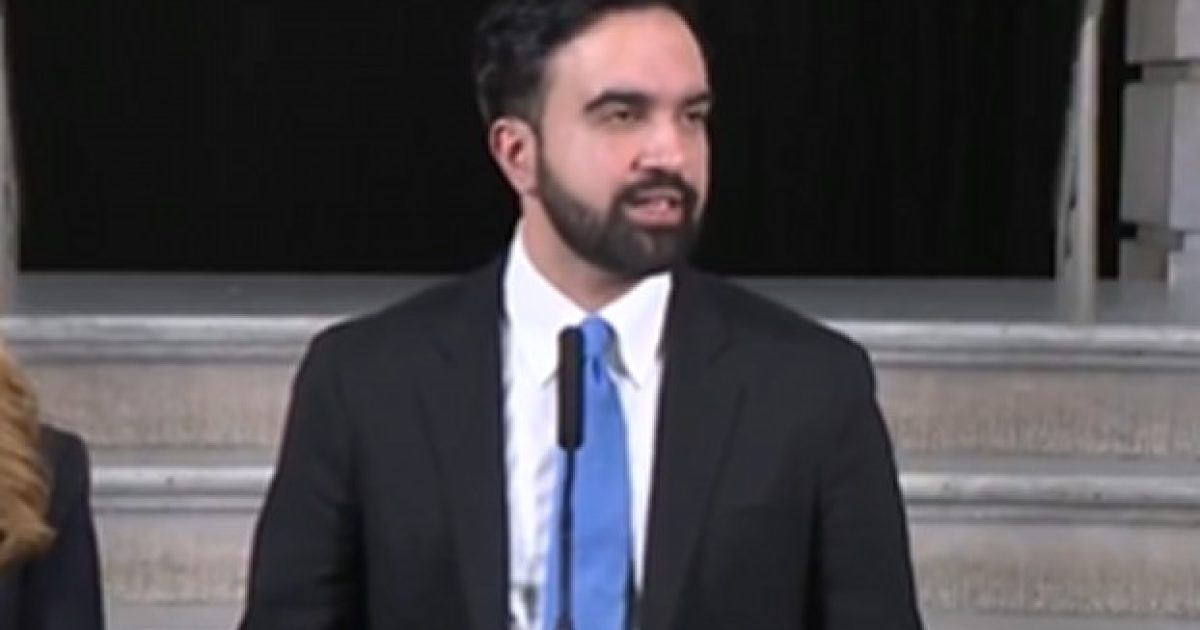
Mamdani’s Plan for City-Run Grocery at La Marqueta Draws Pushback from East Harlem Grocers
Mayor Zohran Mamdani has proposed opening a city-operated grocery store at La Marqueta in East Harlem next year, backed by roughly $30 million in city funds as part of a broader initiative to establish publicly run grocery outlets across New York's five boroughs. Local grocers and a recent analysis say about 45 other food retailers lie within a 35-minute walk of the proposed location, prompting concerns that a government store could undercut existing small businesses already operating on slim margins.
By Mike LaChance
954 views
The store would be a roughly 9,000-square-foot facility built from the ground up on a city-owned vacant lot beneath the Metro-North railroad viaduct, near Park Avenue and East 116th Street. The city's Economic Development Corporation has said it is working to open the East Harlem store by 2029, while a separate, first municipal store at another site is expected to open sooner, around late 2027. Construction at La Marqueta is estimated to cost about $30 million, drawn from the city's capital budget. Because the land is already city-owned and the store would operate rent- and property-tax-free, officials argue the model strips out overhead costs that private retailers typically pass on to shoppers, allowing for lower prices on staple goods. Notably, although the stores are described as "city-owned," the administration does not plan to operate them directly; the city would own the infrastructure while a private operator runs the store under the arrangement.
Mamdani has cast the choice of La Marqueta as a deliberate echo of the city's own history. The market opened in 1936 under Mayor Fiorello La Guardia as the Park Avenue Retail Market, created to bring the neighborhood's then-predominantly Jewish and Italian pushcart vendors under one roof and expand access to fresh food for working-class residents. As waves of Puerto Rican, Dominican, Cuban, and Mexican immigrants reshaped the area into Spanish Harlem, the market evolved and acquired its current name, becoming a long-standing cultural and commercial hub. Though its footprint has shrunk over the decades, it still supports more than 20 small businesses and roughly 120 workers, including restaurants, artists, and community organizations, and the new store would occupy a portion of the market that is not currently in use. At the announcement, Mamdani invoked La Guardia directly, describing the project as a "full-circle moment" and citing the market's peak, when it served some 25,000 New Yorkers, as evidence that public infrastructure can cut overhead and lower consumer costs.
City officials have grounded the initiative in affordability data. Grocery prices in New York City have risen nearly 66 percent over the past decade, significantly outpacing the national average, and the administration says the stores are designed to deliver meaningful savings on everyday staples while strengthening food access in underserved neighborhoods. The mayor's office has said it selected sites based on grocery-store density, the gap between local income levels and the cost of living, and population density. By those measures, East Harlem registers as a neighborhood of high need: Mamdani noted that around 65,000 New Yorkers live within a 10-minute walk of La Marqueta, that thousands of public-housing residents live nearby on either side of Park Avenue, and that nearly 40 percent of East Harlem households received public assistance or SNAP benefits in the past year. The broader program, which would ultimately comprise five stores, has been tied to a funding request of roughly $70 million in capital dollars, which the City Council must still approve. Mamdani has suggested the money could come in part from scaling back an existing program that offers tax breaks and regulatory relief to private supermarkets that open in food deserts.
The proposal has drawn a mixed response on the ground and firm opposition from segments of the grocery industry. Among East Harlem residents, reactions have ranged from enthusiasm to skepticism. Some say they would welcome lower prices than those at nearby stores, while others question whether a single store of that size could carry enough inventory to meaningfully affect what neighboring retailers charge. Groups representing traditional private grocers and bodega owners remain strongly opposed, arguing that the city should not use taxpayer resources and tax-exempt status to undercut businesses that pay rent, pay taxes, and comply with regulations. Critics have also pointed out that East Harlem is not without options: within roughly a half-mile of the proposed site there are several conventional grocery stores, including a City Fresh Market and a Fine Fare around the corner and a Shop Fair two avenues away, as well as a Costco and an Aldi a short walk away at the East River Plaza shopping center. The neighborhood is also well served by public transit, with multiple subway and bus lines giving residents additional ways to reach stores not within easy walking distance. Coverage emphasizing the existing store count has argued that residents already have a range of choices, from national chains to neighborhood bodegas.
Skeptical analysts have raised questions about the model's economics as well as its necessity. Some have argued that the discount operating models of chains like Aldi and Lidl may already offer a more cost-effective answer to food affordability without public subsidy, and that the plan's twin goals — undercutting local prices while paying store employees union wages — may be difficult to reconcile without additional public money over time. The City Council will need to approve the proposed La Marqueta lease, and Council leadership has so far been noncommittal, with concern expressed about the potential impact on local businesses.
Beyond local merchant concerns, the proposal has attracted pointed criticism on social media, where opponents have used sharp and at times inflammatory language to attack both the measure and the mayor. One widely shared post characterized Mamdani in hostile, identity-based terms — calling him "the city's Islamic Marxist ruler" — and framed the plan as a $30 million taxpayer-funded effort to compete with struggling local businesses, writing: "He's spending $30M in taxpayer money to compete with local businesses already struggling." Such posts, which lean on rhetoric rather than the specifics of the policy, encapsulate part of the ideological opposition the plan has encountered, even as the substantive debate among residents, grocers, and analysts has centered on price, inventory, and competitive impact.
City officials have continued to emphasize the affordability goals behind the initiative while fielding questions about its necessity and its potential effects on existing merchants. As the pilot moves toward City Council review and, if approved, construction, local grocers, neighborhood groups, and analysts are likely to keep scrutinizing whether a publicly owned option can deliver lower prices for consumers without unduly harming the private retailers that currently serve East Harlem. The proposal touches on a broader policy debate about the proper role of government in directly providing retail services and how municipal interventions interact with existing market structures. For now, the La Marqueta project remains a test case for the city's ambitions to influence grocery affordability while balancing the economic health of the small, neighborhood businesses around it.