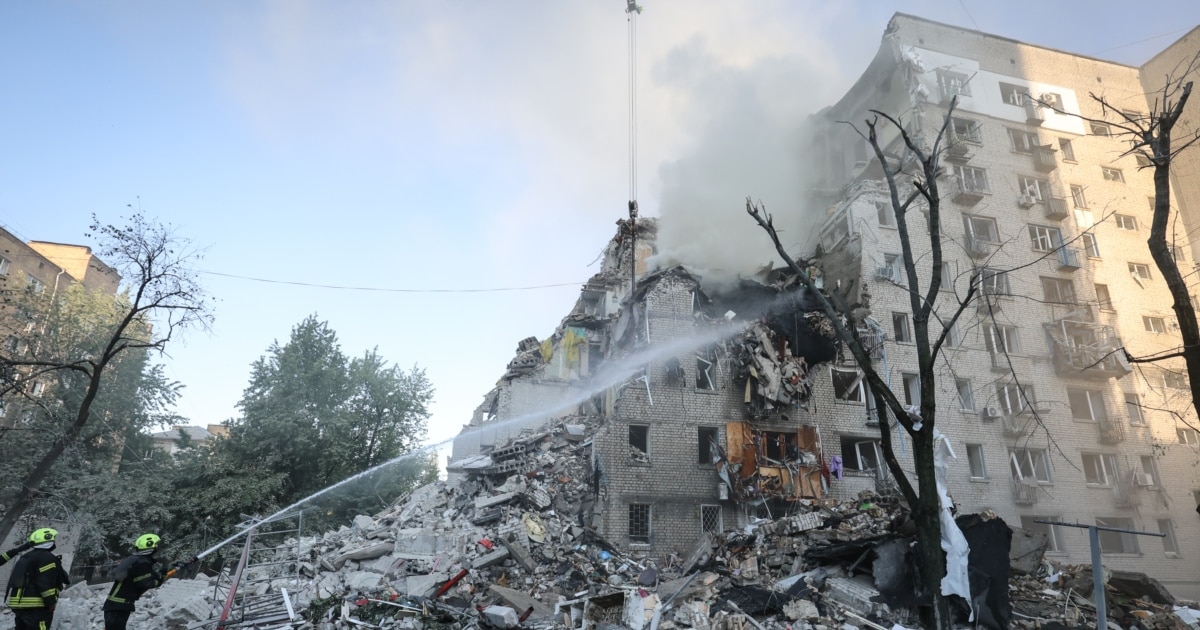
Major Russian Strike on Kyiv Kills Nearly 30; U.S. and European Officials Renew Calls for Tougher Measures
A broad Russian attack on Kyiv on July 2 killed at least 27 people and inflicted heavy damage on civilian infrastructure, Ukrainian authorities say. The strike has prompted senior U.S. lawmakers and European parliamentarians to press for increased military assistance, stricter sanctions, and accelerated air-defence support ahead of a NATO summit in Turkey.
By Christopher Manley
976 views
A large-scale Russian strike on Kyiv on July 2 killed at least 27 people and wounded dozens more, Ukrainian authorities said, setting off international condemnation and fresh calls in Washington and Europe for tougher military, economic and defensive measures against Moscow. The assault caused fires and severe damage to civilian infrastructure and residential buildings across several districts of the Ukrainian capital.
The scale of the attack heightened political pressure in the United States, where debate over future aid to Ukraine remains a contentious issue in Congress. Longstanding U.S. backers of Kyiv urged faster and firmer assistance, saying the strike underlined Russia’s continued willingness to target civilians and its desperation on the battlefield. Republican Representative Joe Wilson of South Carolina, a longtime supporter of U.S. aid to Ukraine, characterized the assault as evidence of Russian decline: „Această oribilă crimă de război este încă o dovadă că Rusia pierde războiul”, he told Radio Free Europe/Radio Liberty. He added that allies should expand support, saying the current strategy is working and that Russia is faltering.
Other senior U.S. lawmakers echoed calls for more robust support. Representative Don Bacon of Nebraska, a senior member of the House Armed Services Committee, urged the administration to provide more offensive and defensive weaponry and to tighten sanctions on Moscow. „Ar trebui să ajutăm Ucraina cu rachete și sisteme de apărare aeriană și ar trebui să impunem sancțiuni dure împotriva Rusiei”, Bacon said, while criticizing what he called insufficient strategic focus from U.S. civilian defense leadership. He warned that perceived weakness and ambiguity would stain U.S. policy: „Conducerea civilă a Pentagonului a dat dovadă de slăbiciune în fața Rusiei și a NATO”, adding that „tăcerea față de crimele de război rusești” și „ambiguitatea morală” vor lăsa o pată de neșters asupra politicii SUA.
Leaders of the bipartisan congressional Group for Ukraine — including Democrats Marcy Kaptur and Mike Quigley and Republicans Brian Fitzpatrick and Joe Wilson — issued a joint statement urging immediate action. „Camera Reprezentanților s-a pronunțat – Statele Unite ar trebui să înarmeze imediat Ucraina cu mijloacele de care are nevoie pentru a-și apăra poporul și a pune capăt războiului Rusiei”, the group said in a communique provided to RFE/RL.
Ukrainian President Volodimir Zelenski renewed appeals for expanded cooperation on air-defence systems after the attack, emphasizing Kyiv’s interest in domestic production of PATRIOT batteries. Ukraine currently operates MIM-104 Patriot systems manufactured in the United States — the only systems in its inventory capable of intercepting Russian ballistic missiles — but Zelenski said Kyiv needs local production capacity. „Pentru a proteja viețile în mod fiabil, avem nevoie de propria noastră producție”, he said in a social media video, urging U.S. authorities, including President Donald Trump, to accelerate discussions on co-production and industrial cooperation. He also suggested that European co-production alongside allied partners could strengthen U.S. industrial capacity.
At the same time, senior members of the Group of Conservatives and Reformists (ECR) in the European Parliament traveled to Washington and held meetings with White House and State Department officials ahead of the NATO summit in Ankara on July 7–8. The ECR delegation — which included Patryk Jaki, Adam Bielan, Assita Kanko and Stephen Bartulica — said they „condamnă cu fermitate” the latest Russian attack. After meetings with U.S. officials and policy institutes, the delegation reported detecting cautious optimism among American interlocutors that an armistice could be possible within the year: „Am aflat de la interlocutorii noștri că sunt destul de optimiști cu privire la posibilitatea de a ajunge la un armistițiu în acest an”, they said.
Despite diplomatic hopes, many Central and Eastern European leaders and parliamentarians stressed that continued and possibly expanded military support for Kyiv remains essential. With NATO leaders due to convene in Turkey, questions about the alliance’s long-term strategy toward Moscow and its capacity to defend member states and support Ukraine are expected to dominate discussions. For U.S. lawmakers and European delegations alike, the July 2 strike on Kyiv has sharpened the urgency of decisions on air-defence capabilities, sanctions and military assistance — decisions that could shape the conflict’s trajectory and the protection of civilian populations in Ukraine.
The attack and subsequent international reactions underscore the persistent humanitarian toll of the war and the political stakes for the transatlantic community as it weighs further measures to deter and punish attacks on civilians and critical infrastructure. As NATO prepares to meet, Washington and its European partners face renewed pressure to define concrete steps to bolster Ukraine’s defenses and to hold Moscow accountable for strikes that have inflicted significant civilian suffering.