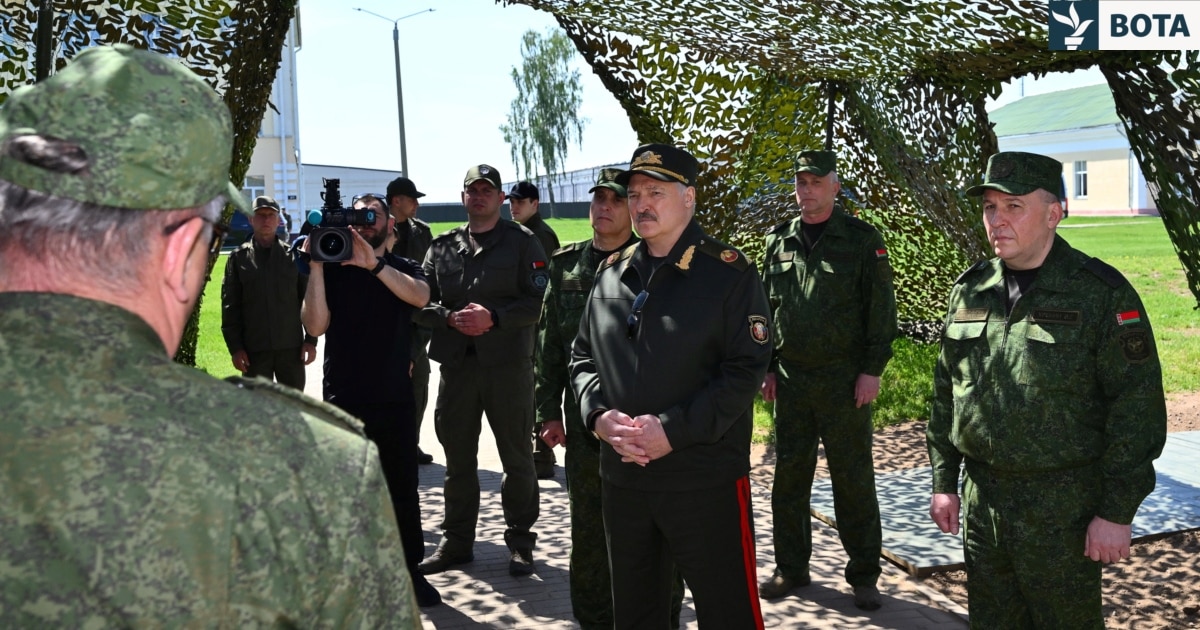
Lukashenko seeks to keep Belarus out of war after Zelensky’s ultimatum over transmission stations
Belarusian President Aleksandr Lukashenko is under pressure to ensure Minsk does not become a direct participant in the Russia-Ukraine war after Ukrainian President Volodymyr Zelensky warned he would act against alleged Belarus-based transmission stations aiding Russian attacks. Analysts and former diplomats say Lukashenko faces no easy choices: antagonize Moscow and risk losing crucial support, or tolerate activity that could drag Belarus into open conflict and inflame domestic opposition.
By Christopher Manley
1,140 views
Belarusian President Aleksandr Lukashenko is navigating a high-stakes diplomatic and domestic dilemma after Ukrainian President Volodymyr Zelensky publicly demanded that Minsk disable transmission equipment Kyiv says is being used to help Russia direct missiles and drones at Ukrainian targets. Zelensky set what he described as a tight deadline and warned that Ukraine might act if Belarus did not comply, placing Lukashenko in a position where he must demonstrate that Belarus will not be drawn into the fighting while still managing Moscow’s expectations.
Speaking at a June press conference, Zelensky alleged that “Rusia po përdorte stacione transmetimi sinjalesh në Bjellorusi për të ndihmuar në drejtimin e raketave të saj drejt objektivave në Ukrainë,” and added a direct appeal to Minsk: “Çfarë kuptimi ka që [Lukashenko] thotë se nuk dëshiron të jetë në luftë? Le ta heqë këtë pajisje, le ta fikë atë. Mendoj se një javë do të jetë e mjaftueshme që ai ta bëjë këtë.” He concluded, “Nëse ai nuk e bën, do ta bëjmë ne.” Zelensky reiterated that message on social media and in television interviews, further intensifying pressure on Minsk.
Analysts quoted by Radio Free Europe/Radio Liberty say the ultimatum exposes the fraught calculus at the heart of Lukashenko’s rule. Vadim Mozheiko, director of the Kraków-based Institute Kosciuszko, told Current Time on June 22 that “Lukashenko e kupton se është i cenueshëm. Dhe, Ukraina po flet nga pozita e të fortit.” Mozheiko argued that Belarus’s leader understands the domestic political cost of entering a wider war: public support for direct military involvement would be low and could threaten the regime’s stability.
Former Belarusian diplomat Valery Kavaleuski, now head of the Agency for Euro-Atlantic Affairs, said Minsk’s public silence was consistent with a longer-standing policy aimed at avoiding direct military confrontation. “Ky është një nga synimet e pakta që bashkon si qeverinë bjelloruse, ashtu edhe opozitën demokratike në mërgim: shmangien e përballjes ushtarake dhe parandalimin që Bjellorusia të bëhet pjesëmarrëse e drejtpërdrejtë në konflikt,” he told RFE/RL’s Belarus service. Kavaleuski added that the regime’s relatively consistent non-confrontational rhetoric in recent months has helped prevent a further deterioration of the situation.
The current standoff must be understood against the backdrop of the 2020 mass protests in Belarus and the subsequent crackdown, which saw mass detentions, beatings, and allegations of torture as the state moved to crush dissent after disputed presidential elections. That period increased Minsk’s dependence on Moscow: the Kremlin provided financial support and signalled readiness to back Lukashenko militarily, and in turn Minsk allowed Russian forces to use Belarusian territory when Russia launched its full-scale invasion of Ukraine in February 2022.
Minsk has so far resisted calls to send Belarusian troops into Ukraine, but analysts say the presence of Russian forces and equipment on Belarusian soil complicates any effort to appear neutral. The alleged use of transmission infrastructure in Belarus to guide Russian strikes adds another dimension: Kyiv’s ultimatum forces Lukashenko to weigh the domestic and international consequences of either disabling infrastructure that may be aiding Russian operations or risking Ukrainian action that could draw Belarus directly into the conflict.
Moscow has not been passive. Kremlin spokesman Dmitry Peskov said on June 22 that President Vladimir Putin and Lukashenko would speak “në të ardhmen e afërt” and that “kjo është një mundësi e mirë për të diskutuar këtë dhe çështje të tjera,” indicating that Russia views the episode as an issue to be managed bilaterally. Analysts caution that any Ukrainian strike on Belarusian territory could be welcomed in Moscow as a pretext to deepen Belarus’s involvement in the war, a scenario that Western capitals would see as dangerous escalation.
European governments and the United States are likely to press for de-escalation. Kavaleuski suggested the solution would require tension-reducing steps from all sides, including avoiding Ukrainian strikes inside Belarus while Minsk addresses concerns about the contested transmission infrastructure. He also predicted informal consultations between the EU, the U.S., and regional actors aimed at preventing the conflict from expanding into a broader regional confrontation.
For Lukashenko, the imperative is political survival as much as foreign policy. Analysts say he must avoid decisions that would inflame public opinion or erode the fragile acceptance his regime has retained since the violent suppression of 2020 protests. That tightrope — balancing demands from Russia with the need to prevent domestic backlash and international isolation — is the central constraint shaping Minsk’s cautious public response to Kyiv’s ultimatum.