Lukashenko Promises Not to Send Belarusian Troops to Fight in Ukraine, Calls Pressure a 'Hybrid' Attack
Belarusian President Alexander Lukashenko told military graduates on July 6 that he would not send Belarusian soldiers to take part in hostilities in Ukraine, describing sustained external pressure on Belarus as a 'hybrid attack.' His remarks came amid reports of two separate incidents in which Belarusian passenger buses were damaged in suspected drone strikes and follow Belarus's continued material support for Russia since the 2022 invasion.
By Alexander Walter
866 views
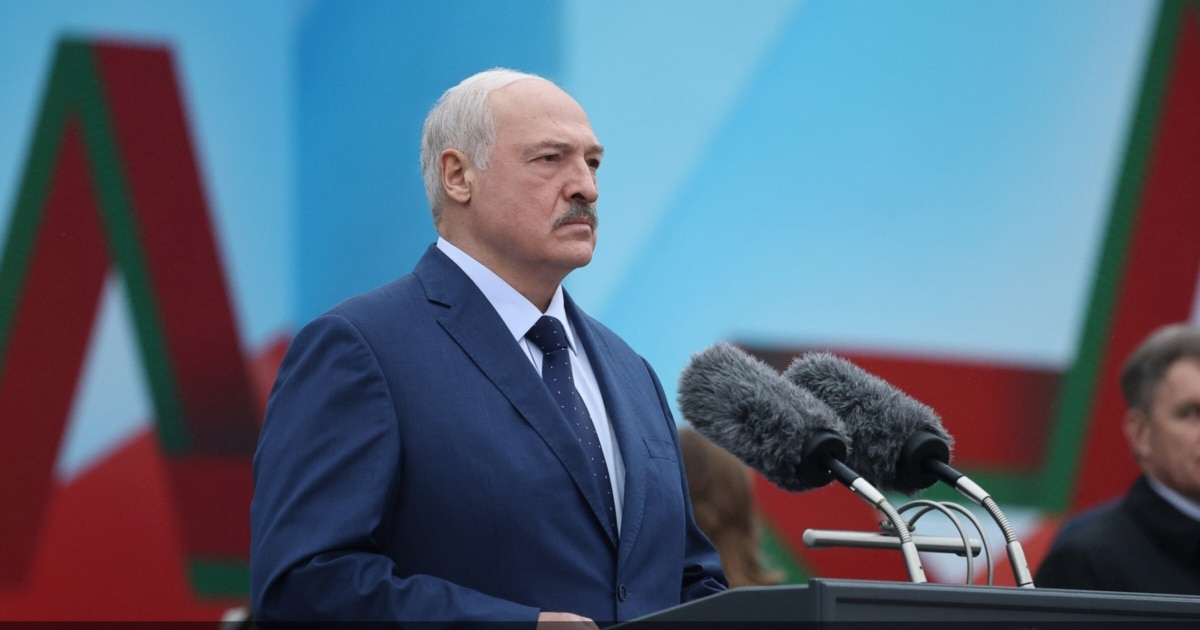
Belarusian President Alexander Lukashenko said on July 6 that he will not send Belarusian troops to fight in Ukraine, framing recent tensions around Belarus as part of a broader "hybrid" campaign against his country. Lukashenko made the remarks while attending a ceremonial event honoring graduates of higher military institutions and the senior officer corps, speaking publicly on the fourth day after returning from a tour of Asian countries, the local service of Radio Svoboda reported.
Addressing the assembled officers and graduates, Lukashenko said Belarus is experiencing "економічний диктат, політичний та інформаційний тиск" that is compounded by what he termed "active blackmail and provocations on our southern borders." He suggested that some Western politicians are irritated by Belarus's independence, its alliance with Russia, and what he described as Minsk's commitment to a peaceful settlement of the conflict in Ukraine. Speaking directly to the military, he reassured them with the words: "ніхто вас на цю бійню не відправить" — "nobody will send you to that slaughter."
Lukashenko reiterated that Belarus does not want war and positioned his government as a proponent of diplomatic resolution: "Нам не потрібна війна. Погано, що війна йде в Україні. Ми прихильники мирного врегулювання питання. Але міжнародна партія війни цього не хоче." At the same time, he emphasized the importance of a strong armed force to preserve sovereignty, saying that a truly sovereign country is one that maintains a powerful, well-armed, and loyal military.
The president's remarks came against the backdrop of two recent incidents in which Belarusian passenger buses were damaged in what the authorities described as drone-related attacks. On June 17, a Belarus-registered bus in Russia's Bryansk region was hit in an incident Minsk attributed to a Ukrainian-made drone, a version Lukashenko said was intended to provoke Belarus and draw it into the conflict. He called for a "sincere response" from Ukraine regarding that event. A second incident occurred on July 2 near the Belarus–Russia border, when a Minsk–Anapa bus was damaged shortly after crossing into Russia; passengers quoted by Belarusian state media said the apparent drone may have been targeting nearby trucks rather than the bus itself, with at least one truck reportedly burned and two more damaged.
Observers have noted that since the start of Russia's full-scale invasion of Ukraine in February 2022, Belarus has effectively supported Russian military operations. The article reports that nearly all military and civilian industrial enterprises in Belarus have been working to supply the Russian armed forces, fulfilling orders across multiple economic sectors. This sustained cooperation has heightened scrutiny of Minsk's role in the conflict and raised concerns among some international observers about Belarus's sovereignty and the potential for deeper involvement in hostilities.
Lukashenko's public pledge not to deploy Belarusian servicemembers to Ukraine adds a formal element to Minsk's messaging amid these tensions, but it exists alongside ongoing cooperation with Russia that critics say makes Belarus complicit in the wider conflict. The incidents involving damaged buses have also fed domestic narratives of external provocation and heightened the security rhetoric used by the Belarusian leadership. The Ukrainian General Staff has publicly disputed some Russian claims about responsibility for attacks on passenger buses, adding another layer of contested accounts around the incidents referenced by Minsk.
Lukashenko's comments are likely to be watched closely by regional governments and international rights monitors because any shift in Belarusian policy or force posture would have direct implications for civilians in Ukraine and the security calculus in the region. For now, Minsk frames its stance as defensive and tied to preserving national sovereignty, even as its economic and industrial ties to Russia continue to fuel questions about its role in the ongoing conflict.