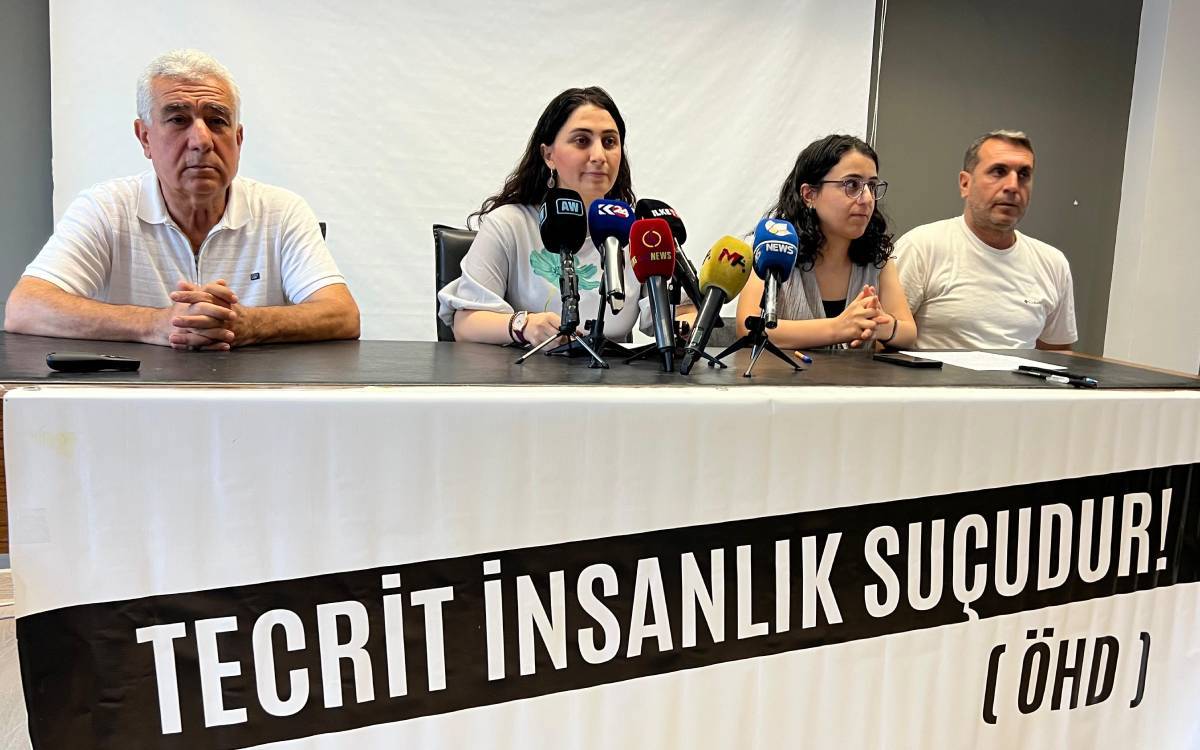
Lawyers' group report documents medical neglect, discriminatory release denials and publication bans across Marmara prisons
A six-month review by Özgürlük İçin Hukukçular Derneği’s Istanbul Prison Commission found chronic and worsening structural problems across 18 prisons in Turkey’s Marmara region, including medical neglect that preceded a prisoner’s death, the use of handcuffs during medical care, severe restrictions on publications and books, and systematic postponement of releases by Administrative and Observation Boards. The commission calls for immediate legal and administrative changes, including removal of Adli Tıp Kurumu as sole authority on health-related execution decisions and an end to ideologically driven discrimination in prison policies.
By Ferhat Yaşar
1,075 views
Özgürlük İçin Hukukçular Derneği (ÖHD) İstanbul Şubesi Hapishane Komisyonu has published a detailed report covering human rights violations in prisons across Turkey’s Marmara region for the period January–June 2026. The review covers 18 penal institutions — including facilities in Edirne, Tekirdağ, Kocaeli, Gebze, Düzce, Sakarya, Bolu and multiple Istanbul prisons (Marmara/Silivri, Bakırköy, Metris, Maltepe, Ümraniye) — and is based on lawyer visits, letters from inmates and interviews with families.
The ÖHD commission concludes that structural problems in these facilities have become chronic and that the execution regime is taking on an increasingly punitive character. The report documents numerous and varied forms of rights violations: medical neglect and obstruction of treatment, punitive use of handcuffs during medical care and transfer, intensified isolation and restrictions on cultural life, rigid book quotas and unofficial bans on certain publications, and the systematic blocking of releases for prisoners who have completed long sentences.
The report details individual medical cases to illustrate its claims. It records that M.E.T., a prisoner at Marmara 5 Nolu L Type who had undergone 18 angioplasties and had eight stents and suffered from heart failure, COPD and diabetes, died on 24 March 2026 after the Adli Tıp Kurumu (ATK) issued a report stating he could remain in prison. ÖHD frames this as an example of how "treatment processes have turned into torture," arguing that institutional decisions and modalities of medical transfer and care contribute to preventable deaths.
The commission documents recurring use of double handcuffs and the forced practice of handcuffed medical examinations in many prisons, including Bolu, Edirne and Kocaeli. Prisoners who refuse to submit to handcuffed examinations are, the report says, sometimes returned to the facility without treatment. It describes prolonged waits in narrow compartments of transfer vehicles (ring araçları) and in hospital holding cells. In one instance at Düzce T Type prison, inmates S.T. and F.K. were reportedly not taken to hospital after refusing a jandarma-imposed oral cavity search and were subsequently sanctioned with a ban on family visits.
The report also highlights cases in which health-based deferments of execution were not granted despite severe disability: E.A., who has both arms amputated and an ATK report saying he could not maintain life independently, did not receive postponement of his sentence. ÖHD argues that reliance on a single institution (ATK) as the definitive authority on health issues leaves seriously ill prisoners without effective protection.
Administrative practices governing release are another central concern. ÖHD documents that İdare ve Gözlem Kurulları (İGK) routinely delay or refuse paroles and releases for people who have completed long sentences, particularly 30-year terms. The report asserts that boards ask ideologically framed questions such as "Pişman mısın?", "PKK terör örgütü müdür?", "Niçin bağımsız koğuşa geçmiyorsun?" and then use prisoners’ answers or lack of participation in social activities as grounds to postpone release for three- to six-month intervals. Ö.Y. and T.A. at Kocaeli 2 Nolu F Type are named as examples whose releases were postponed; ÖHD reports 14 prisoners in Bolu F Type are in similar situations.
Isolation and restrictions on information and culture appear widespread, the report says. Several newspapers and a journal — Yeni Yaşam, Evrensel, Xwebûn and Demokratik Modernite — are reportedly withheld from inmates on ideological grounds or because they are not on a