Lancaster County Council Unanimously Denies Permit for Proposed Mosque After Heated Public Testimony
Lancaster County Council voted unanimously to reject a conditional-use permit for a proposed mosque and community center in the Indian Land area after more than two hours of public comment in which residents voiced both practical concerns about traffic and ideological objections centered on Sharia law. Council leaders attempted to confine the hearing to land-use issues, but several speakers made explicit cultural and religious objections before the permit was denied.
By Cassandra MacDonald
814 views
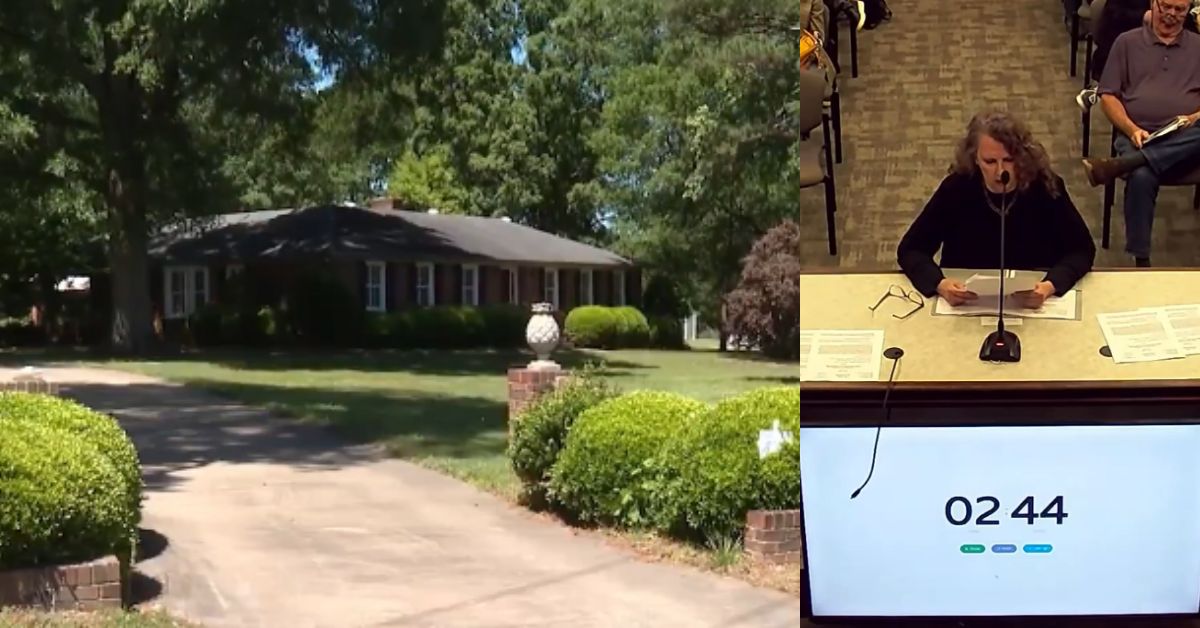
Lancaster County Council in South Carolina voted unanimously on May 11 to deny a conditional-use permit for a proposed mosque and community center on Harrisburg Road in the fast-growing Indian Land area, just south of Charlotte. The decision followed a public comment period that ran more than two hours, during which council members heard from residents both for and against the proposal. Council Chair Brian Carnes repeatedly tried to steer testimony back to land-use and infrastructure questions — such as traffic and compatibility with the surrounding residential neighborhood — reminding speakers that the proceeding was quasi-judicial and could not weigh religious beliefs directly. Despite those reminders, several speakers made cultural and ideological objections explicit, with one resident asserting that "Islam is not a religion, it's a takeover" and another declaring, "We do not want Sharia law in this area." The vote came after the county Planning Commission had already recommended against the permit in late April.
The applicant named in county records is Arafath Mohammad of Waxlan Investments LLC, who purchased the roughly 5-acre residential property in January. Mohammad had sought permission to build or convert the site into a facility of approximately 3,000 square feet to serve as both a mosque and community center, with a plan to demolish the existing home on the low-density residential lot. He sought to reassure the council about the project's footprint, describing it as "a standing assembly" of roughly 100 people and only about 28 cars, which he characterized as a very light use. The site sits less than two miles from the Islamic Community Center of South Charlotte in nearby Fort Mill. Under conditional-use permit procedures, the county was required to weigh factors such as traffic, neighborhood compatibility and land-use standards in evaluating the proposal.
Much of the opposition centered on practical concerns about growth and congestion on the area's smaller roads. Wilfredo Rivera, who lives next door to the property, said neither he nor other neighbors had been informed of the mosque plans before learning of the planned construction, and told local reporters that he and his wife had put their home up for sale in response, describing the situation as "a nightmare." Longtime residents along Harrisburg Road echoed the traffic concerns, recalling a once-quiet road increasingly strained by the area's rapid development. Council member Stuart Graham, explaining his vote, said that adding a place of assembly "in this location, on this road, at this time" was not something he could support — framing the denial in land-use terms even as much of the public testimony had ranged well beyond them.
Members of the local Muslim community and other supporters urged approval, arguing the facility would serve residents already living in the county. "For many of us, this is a place of worship and a place of peace, reflection and learning," one community member told the council. A former Rock Hill planning commissioner, Jonathan Nazeer, who is Muslim, said he understood the role traffic and growth play in such decisions but suggested compromise options could make the project a "win-win," adding that residents should be able to worship where they live rather than driving to other cities.
Lancaster County's decision comes against a backdrop of state-level debate over how courts and public institutions consider foreign legal concepts. South Carolina has a legislative history of explicitly resisting Sharia law in its judicial system; in 2016 the state House passed a bill that barred the consideration of Sharia in state courts. Opponents of the proposed facility invoked that context in arguing that the mosque would introduce foreign legal or cultural norms incompatible with local practices.
Supporters of religious freedom and civil-rights advocates often argue that zoning and land-use decisions must not be made on the basis of religion alone and that places of worship are entitled to the same consideration as other community uses under federal and state law. Federal law in particular — notably the Religious Land Use and Institutionalized Persons Act — limits the ability of local governments to impose zoning restrictions that substantially burden religious exercise or treat religious assemblies less favorably than comparable secular ones. At the Lancaster County hearing, however, opponents' testimony and the council's unanimous vote resulted in the denial of the conditional-use permit, and detailed legal findings accompanying the decision had not yet been publicly released.
The decision concludes this particular application but could lead to future actions by the applicant, including potential appeals or revised proposals that address the traffic and compatibility issues raised at the meeting. For now, the county's vote reflects a local community's opposition to a proposed religious facility and underscores the tensions that can arise when questions of land use intersect with deeply held cultural and political concerns.