Kyrgyz President Reprimands Emergency Minister as Officials Dismissed and Criminal Probe Launched After Teenager Dies in Ala-Archa Gorge
President Sadyr Japarov issued a formal reprimand to the head of Kyrgyzstan’s Ministry of Emergency Situations after the death of 14-year-old Amir Kunakunov in the Ala-Archa gorge exposed serious lapses in search-and-rescue coordination. The prime minister dismissed several senior ministry officials the same day, and the military prosecutor has opened a criminal investigation into alleged negligence.
By Christopher Manley
1,112 views
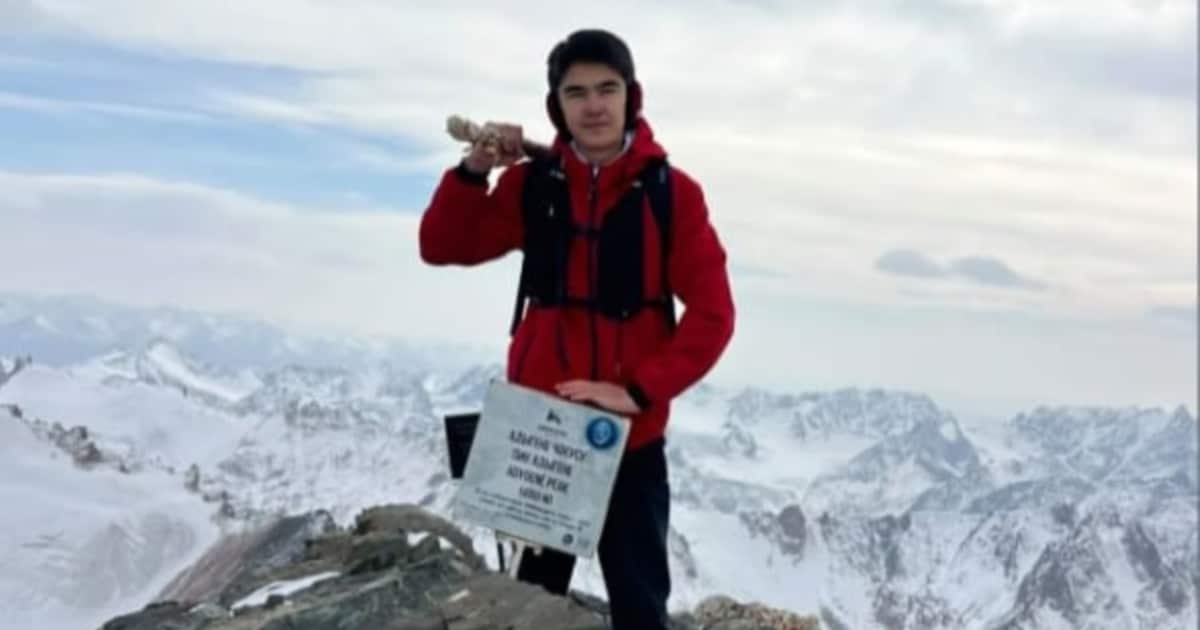
President Sadyr Japarov on November 11 publicly issued a strict reprimand to Kanatbek Chynybaev, head of Kyrgyzstan’s Ministry of Emergency Situations (MChS), after a 14-year-old boy died in the Ala-Archa gorge amid what authorities described as failures in the ministry’s response. The death of Amir Kunakunov, whose body was recovered two days after he was reported missing, prompted a wave of public criticism, senior-level dismissals and a criminal inquiry by the military prosecutor’s office.
The incident began on November 7, when Amir—who had reportedly gone to take part in a running competition in the Ala-Archa area but was denied a start because of his age—set out toward the Adygene gorge. Relatives say that at about 19:02 that evening the boy called the emergency number 112 to report that he had become lost while descending from the mountain. The duty operator established his approximate location by geolocation and identified that Amir was near the Elektro peak.
According to the government account, a private volunteer rescue group known as “Edelweiss” was in the area at the time but did not receive information about the missing teenager until around 22:00. The ministry has attributed this delay to poor mobile coverage in the mountains and the fact that the descent from the rescue group’s location to a viable search-start point would take roughly two hours. Search operations continued overnight and into the next day; Amir’s body was found on November 9 at around 16:00 on rocks in the vicinity of Elektro peak. A preliminary forensic examination identified severe hypothermia as the cause of death.
Public anger over the handling of the case intensified after details emerged that information had not been relayed in a timely manner to responsible MChS leadership and that coordination between duty services and rescue teams was inadequate. In response to the outcry, Prime Minister Adylbek Kasymaliev announced the immediate dismissal of several senior MChS officials: deputy minister Almazbek Asanov, head of the Crisis Management Center Azis Egemberdiev, and the head of the State Rescue Training Center Tynarbek Murashov. Earlier, Deputy Minister Asanov acknowledged that the ministry felt a “moral guilt” over the incident.
The government also confirmed that the military prosecutor’s office has opened a criminal case on suspicion of negligence. Officials say that legal assessments and further accountability measures will be determined following the conclusion of the formal investigation. Prime Minister Kasymaliev has ordered the MChS to carry out a comprehensive review and corrective work to eliminate identified shortcomings in operational response, information flow and interagency coordination.
A preliminary government statement detailed what it described as “serious shortcomings” in the organisation of operational response, the timely transmission of information, coordination of rescue units and internal oversight. Specifically, the review found that information about the disappearance did not promptly reach the leadership of the relevant MChS units, interactions between duty services and rescue teams were insufficient, and errors were made in organising and coordinating search-and-rescue activities.
The death has broader implications for public trust in state emergency services and for reforms of search-and-rescue procedures in Kyrgyzstan’s mountainous regions, where mobile communications are often unreliable and volunteer groups frequently operate alongside state teams. The case also drew attention because Amir was the son of former Jogorku Kenesh (parliament) deputy Maksat Kunakunov, who is currently held in pretrial detention in Bishkek on suspicion of large-scale fraud; the State Penitentiary Service allowed him to attend his son’s funeral.
As the criminal probe proceeds, authorities face pressure to demonstrate concrete improvements in rapid response capabilities, information transmission and interagency coordination to prevent similar tragedies. The minister’s reprimand, senior dismissals and the prosecutor’s investigation mark an escalation in official accountability measures, but many in Kyrgyzstan will be watching whether institutional reforms and legal consequences follow to address the failures highlighted by this case.