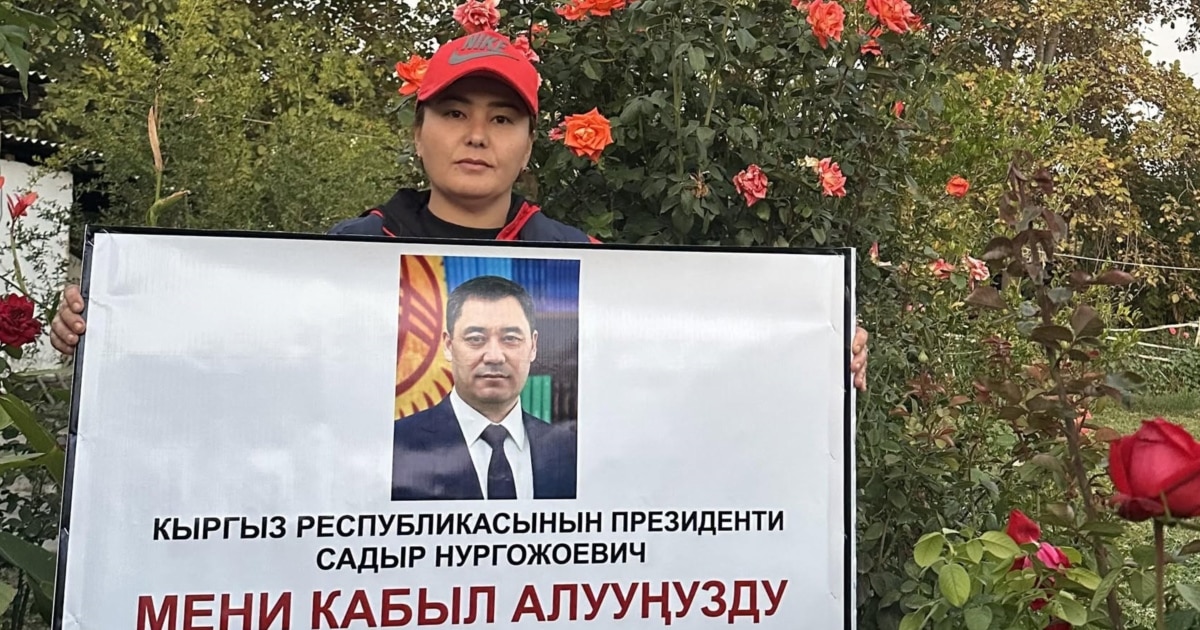
Kyrgyz Activist Who Walked from Batken to Seek Justice Says President Did Not Meet Her
An activist who walked from Kyrgyzstan’s southern Batken region to the capital to press for justice was not received by President Sadyr Japarov, Azattyk reports. Separately, a resident of Jalal-Abad has filed a complaint with the president accusing heads of a state special service and the prosecutor’s office of misconduct, raising concerns about access to accountability for alleged abuses.
By Alexander Walter
969 views
An activist who traveled on foot from the southern Batken region to Bishkek to seek redress was not received by Kyrgyz President Sadyr Japarov, according to reporting by Azattyk. The activist, identified in the report as Batma Zholbolduyeva (also spelled Zholdubaeva), had walked to the capital in an effort to draw attention to grievances and to ask for intervention from the highest levels of government.
Azattyk’s coverage notes that a resident of the Jalal-Abad region has separately lodged a complaint with the president alleging wrongdoing by senior figures in a state special service and by leaders of the prosecutor’s office. The news brief did not provide further details on the specific allegations or on whether formal investigations had been opened in response to the complaint.
The refusal or failure of the presidential administration to meet the walking activist highlights recurring challenges faced by citizens seeking accountability from powerful state institutions. Walking protests and pilgrimages to the capital have in the past been used by Kyrgyz activists as a way to draw public attention to unresolved grievances when formal channels appear inaccessible or ineffective.
The incident also touches on broader concerns about transparency and oversight of security and prosecutorial bodies. When complaints against such institutions are not publicly addressed or are dismissed without independent inquiry, affected individuals and communities can be left without effective remedies. Independent and impartial investigation of allegations against officials is a key element of upholding the rule of law and protecting citizens’ rights.
Azattyk’s report did not include a response from the Office of the President, the named state special service, or the prosecutor’s office. It is not clear from the available reporting whether the president’s refusal to receive the activist was a formal denial, an inability to meet due to other commitments, or the result of an administrative decision. The lack of clarity underscores the difficulty of verifying government responses to citizen complaints in some instances.
Human rights groups and observers generally say that access to authorities and the ability to have grievances heard are essential for trust in public institutions. The case of the Batken activist and the Jalal-Abad complainant will likely be watched by activists and rights monitors for any follow-up, including whether the allegations prompt internal disciplinary measures or independent inquiries.
For now, Azattyk’s brief report serves as a snapshot of these unresolved tensions: an activist who undertook a public and strenuous effort to seek justice was not granted a meeting with the head of state, and a formal complaint against security and prosecutorial leaders has been filed without further public information about any response. Observers say transparent procedures for handling such complaints are necessary to ensure accountability and protect citizens’ rights under the law.