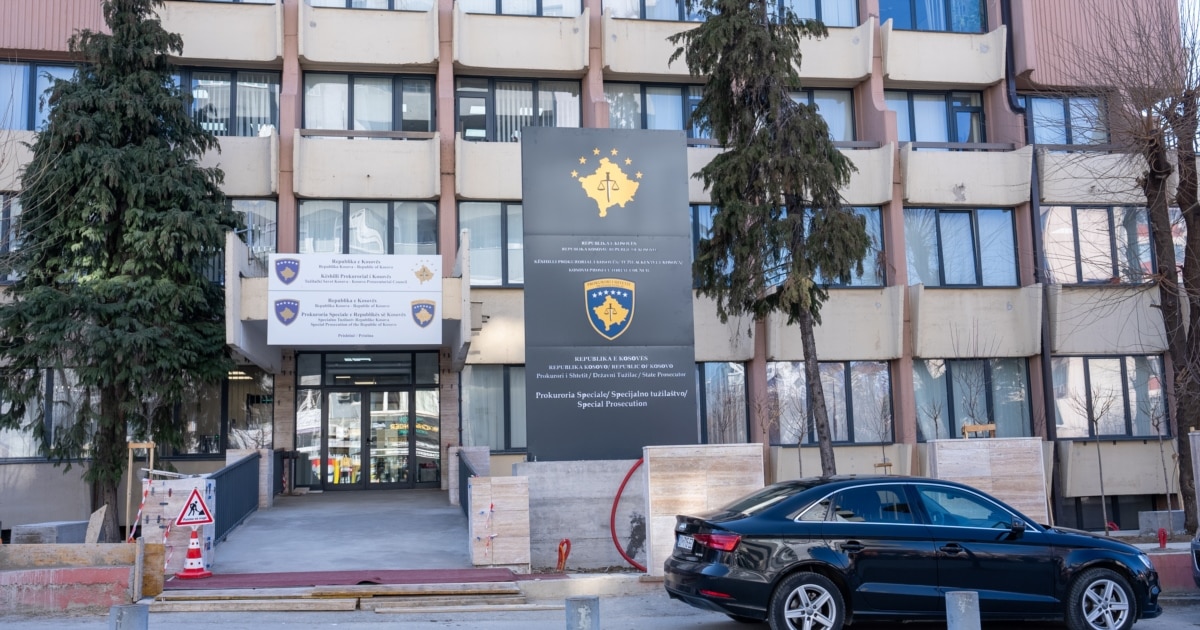
Kosovo Special Prosecution Indicts 20, Including Millan Radoiçiq, Over Gjakova War Crimes
Kosovo’s Special Prosecution has filed an indictment charging 20 people — among them Millan Radoiçiq — with war crimes in Gjakova, alleging they participated in the killing of 107 civilians during a major military-police operation in 1998–1999. Prosecutors say women and children were separated and plundered, dozens of men were executed at homes and at a site known as 'Ura e Taliqit', and many victims’ bodies were subsequently found in a mass grave in Serbia.
By Vanessa Bergmann
998 views
Kosovo’s Special Prosecution has brought an indictment charging 20 individuals, including prominent Kosovo Serb politician Millan Radoiçiq, with war crimes in Gjakova during the 1998–1999 conflict, Radio Evropa e Lirë reports. The indictment accuses the group of participating in the killing of 107 civilians and requests that any trial be held in absentia.
Prosecutors have identified the accused largely by initials: M.K., R.C., M.D., P.R., S.K., L.O., Zh.S., S.S., L.D., Z.R., D.G., Ç.B., V.B., R.B., R.R., L.R., M.Sh., M.R., S.G., and T.A. The indictment says that, during 1998–1999, M.K., in his capacity as head of the Secretariat of Internal Affairs in Gjakova; R.Ç., as commander of Special Police units; and M.D., as commander of the 52nd Rocket Artillery Brigade, together with the other accused and including Radoiçiq, participated in a broad military-and-police operation that led to the deaths of civilians.
According to the document issued by the Special Prosecution, during the operation the accused first separated women and children from men. Women were stripped of their valuables — including gold jewelry, money and other items of value — while many of the men were executed either inside their homes, in their yards, or at a location known as ‘Ura e Taliqit’. Prosecutors additionally allege that houses in the area were set on fire during the same operation.
The Basic Prosecution in Gjakova previously issued arrest warrants in April 2025 for Radoiçiq and 19 other ethnic Serbs on suspicion of participation in the killings. Prosecutors say the bodies of victims were later discovered in a mass grave in Batajnicë (Batajnica), Serbia. The arrest warrant documents detail that from 7 May until 10 May 1999, members of Serbian military and police forces in uniform, together with the defendants, entered houses in the area, forcibly removed residents, separated the men from the women and children, and subsequently killed 106 ethnic Albanian civilians. It further states that more than 300 ethnic Albanian civilians were arrested and held in improvised detention facilities where conditions were inhumane, lacking regular food, hygiene and medical care; many detainees were later transferred to various prisons in Kosovo and freed after June 1999 with assistance from international organizations.
Victims’ families in Gjakova have long named Radoiçiq and others as participants in killings and expulsions during the war. In 2025, Radio Evropa e Lirë interviewed relatives of people murdered in 1999 who said Radoiçiq’s name had been mentioned by families since that time. Luljeta Sharani, who lost her husband, two sons and two brothers-in-law on 10 May 1999, told RFE/RL that names of Serbs involved in the expulsions and killings had been submitted to prosecutors. “Është folur jo vetëm emri i [Millan] Radoiçiqit, por i të gjithë të tjerëve që kanë marrë pjesë në vrasje,” she said.
Another Gjakova resident, Ngadhnim Bicurri, who lost his father and two uncles on the same day in May 1999, told RFE/RL he saw the people who took his family to be executed. “Emrat nuk ua kam ditur, por i kam mësuar pasi ka ndodhur rasti,” he said, describing how he later identified some of the actors involved.
Radoiçiq is also wanted by Kosovo authorities over a separate 2023 armed attack in Banjskë, for which he claimed responsibility; an attack that killed a Kosovo police officer. Kosovo has labeled the 2023 incident a terrorist act and accused Serbia of involvement — an allegation Belgrade denies. Radoiçiq is a former deputy leader of the Serb List, the main Serb political party in Kosovo that is known to enjoy support from Belgrade.
The indictment by the Special Prosecution marks a significant step in attempts to secure accountability for alleged wartime atrocities in Gjakova and underscores lingering tensions between Kosovo and Serbia over unresolved wartime crimes, mass graves and the fates of missing persons. Prosecutors’ request for trials in absentia reflects ongoing challenges in bringing suspects into Kosovan judicial custody, particularly when they reside outside Kosovo or are protected by political networks. The case is likely to draw close attention from victims’ families, human rights groups and international observers monitoring transitional justice and the handling of wartime crimes in the Balkans.