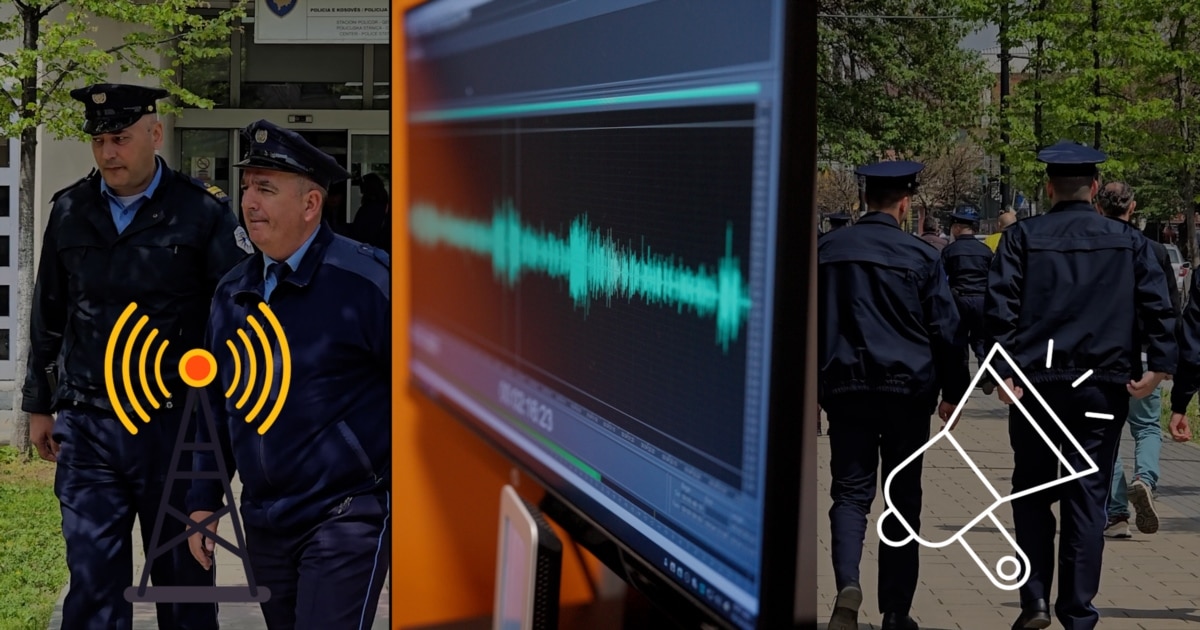
Kosovo Police Radio Draws Criticism Over Risk of Becoming State Mouthpiece
An announcement that the Kosovo Police is preparing to launch its own radio station has prompted debate and criticism from observers concerned the outlet could evolve into a state-controlled medium used for political purposes. While authorities appear to be moving forward with plans, crucial details about editorial independence, funding, and oversight have not been disclosed.
By Christopher Manley
963 views
Kosovo Police are preparing to launch a radio station of their own, a plan that has prompted immediate debate and criticism over the potential for the broadcaster to be used as a state-controlled medium. The announcement of the project has drawn scrutiny from media-watchers and rights advocates who warn that such a platform, if not properly safeguarded, could be deployed for political messaging rather than for impartial public information.
What is publicly known is limited: the police force intends to establish a radio channel, and news of the initiative has been made public. Beyond that basic fact, the details remain sparse. The exact legal and institutional framework for the station has not been publicly explained, nor have officials provided a clear statement on editorial arrangements, the sources of financing, or the mechanisms intended to protect journalistic independence and impartiality.
Critics have focused on the central risk: that a media outlet under the auspices of a security agency could morph into an instrument of state communication that privileges official narratives and sidelines critical or independent voices. In societies where public trust in institutions is fragile, the establishment of a policing body’s own media outlet raises particular sensitivities about accountability, political neutrality, and the possible chilling effect on independent journalism.
Missing information leaves open several essential questions. Who will be responsible for the station's editorial policy? Will journalists working for the radio enjoy independence from police command structures? How will funding and staffing be handled, and what legal protections will exist to prevent political interference? The answers to these questions are decisive for assessing whether the initiative will serve legitimate public-interest functions—such as emergency communication, community outreach, and crime prevention—or whether it will erode the separation between state power and independent media.
The debate around the proposed police radio also touches on broader standards for media in democratic societies. International norms and press-freedom advocates generally stress that any publicly affiliated media must operate with clear guarantees of editorial independence, transparency in funding, and oversight by impartial bodies to prevent misuse. Without such safeguards, citizens and independent media outlets are likely to view a police-run broadcaster with suspicion.
The announcement has generated enough public interest that Radio Free Europe/Radio Liberty prepared a video explainer to outline what is known and what remains unclear about the plan. That coverage highlights the immediate questions for policymakers and civil society: Will the authorities publish a detailed plan? Will there be consultations with media regulators, journalists' associations, and civil-society groups? And what regulatory framework will govern content, access, and accountability?
The stakes go beyond one station. How a state shapes the relationship between official institutions and media outlets speaks to the health of democratic debate and the protection of fundamental freedoms. If the Kosovo Police proceed with establishing a radio, transparency about the station’s mission, firm legal safeguards for editorial independence, and meaningful oversight mechanisms will be crucial to prevent the instrument from being perceived—or used—as a partisan tool. Until more information is released, the controversy surrounding the plan is likely to continue, reflecting enduring concerns about the space for independent journalism and free expression in Kosovo.