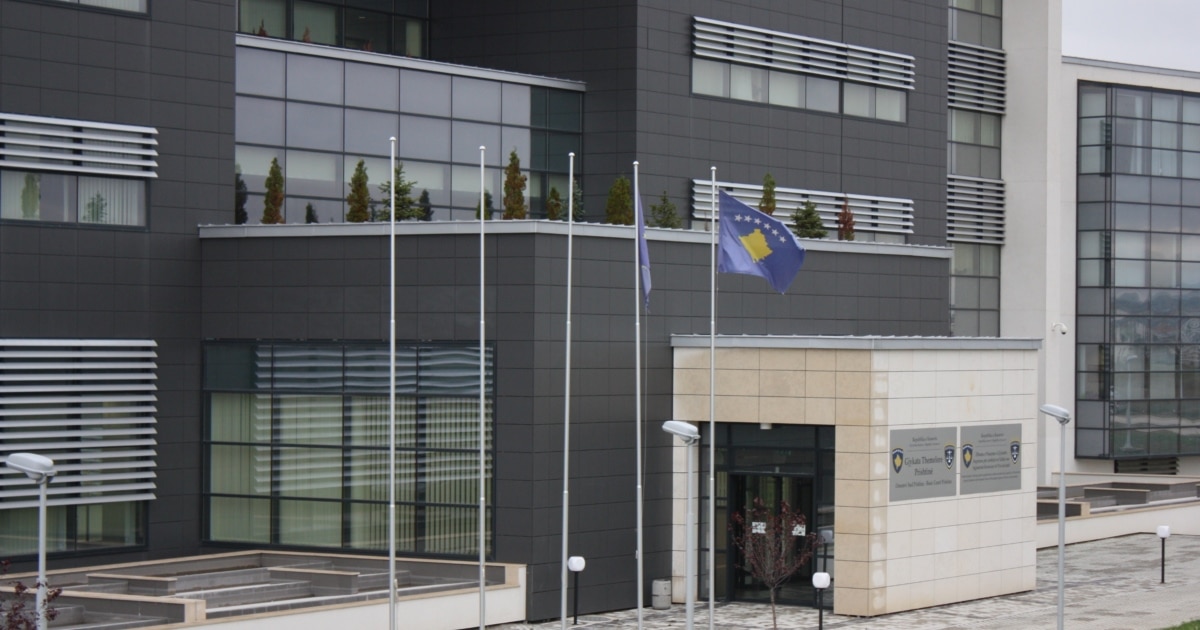
Kosovo court sentences Ekrem Bajroviq to 12 years in prison in retrial for 1999 war crimes
A court in Pristina has sentenced Ekrem Bajroviq to 12 years in prison after finding him guilty in a retrial for crimes committed against ethnic Albanian civilians in Istog municipality during the 1998–1999 conflict. The retrial followed a Supreme Court decision to overturn an earlier conviction because key witness statements had not been included in case files.
By Alexander Walter
1,174 views
A court in Pristina on Friday handed Ekrem Bajroviq a 12-year prison sentence in a retrial for war crimes against ethnic Albanian civilians committed in and around the Istog municipality during the 1998–1999 Kosovo conflict. The conviction again finds Bajroviq guilty for acts carried out in villages including Staradran, Zallc, Gurrakoc and surrounding settlements in early 1999.
The retrial followed a ruling by the Kosovo Supreme Court last year, which sent the case back for rehearing after concluding that the initial proceedings had not considered statements some witnesses had previously given to international missions. The original conviction by the Basic Court, issued in July 2024 and later upheld by the Court of Appeals in 2025, was quashed by the Supreme Court on the grounds that witness statements recorded earlier by UNMIK and EULEX were not present in the case files and should have been secured and reviewed with the other evidence.
According to the judgment delivered in the retrial, Bajroviq participated on 7 and 8 May 1999 in an operation by Serbian forces directed against the ethnic Albanian civilian population. The court concluded that civilians were forced from their homes and ordered to leave toward Albania. During the forced movement, Bajroviq allegedly separated men from women, participated in looting, and, together with Serbian forces, took at least 16 ethnic Albanian civilians to a house in Staradran where they were executed, the ruling states.
The court further found that on 7 May 1999 Bajroviq was involved in the arrest and mistreatment of 84 ethnic Albanian civilians. The judgment describes how men were separated from a column of civilians, had their money and valuables taken, and were then transported to Gurrakoc to a place identified in court as the premises of Sh.S, where they were allegedly tortured and treated in an inhumane manner. The following day those detained were taken to the police station in Gurrakoc, where the court said Bajroviq led the column of detainees.
Bajroviq’s sentence in the retrial includes credit for time already spent in pre-trial detention, dating from 19 October 2022. He retains the right to appeal the current first-instance verdict.
The case is one of a number of prosecutions in recent years relating to crimes committed during the Kosovo war. More than 13,000 civilians — the majority ethnic Albanians — were killed during the conflict, and thousands more were disappeared. Authorities and human rights investigators estimate that more than 1,500 people remain missing, most of them ethnic Albanians.
Investigations into alleged war crimes in Kosovo were initially led by the United Nations Interim Administration Mission in Kosovo (UNMIK) between 2000 and 2008 and subsequently by the European Union Rule of Law Mission (EULEX) after 2008. In 2018 EULEX transferred many case files to Kosovo’s domestic authorities. Since then, Kosovar institutions have arrested numerous suspects and brought a series of indictments; dozens of suspects have been convicted by both domestic and international courts since the end of the conflict.
The retrial conviction of Bajroviq underscores ongoing efforts by Kosovo’s judiciary to address wartime abuses, while also illustrating procedural challenges that have affected earlier proceedings — notably the handling and preservation of witness statements taken by international missions. The outcome may influence further accountability efforts and potential appeals as Kosovo continues to confront the legacy of the 1998–1999 war.