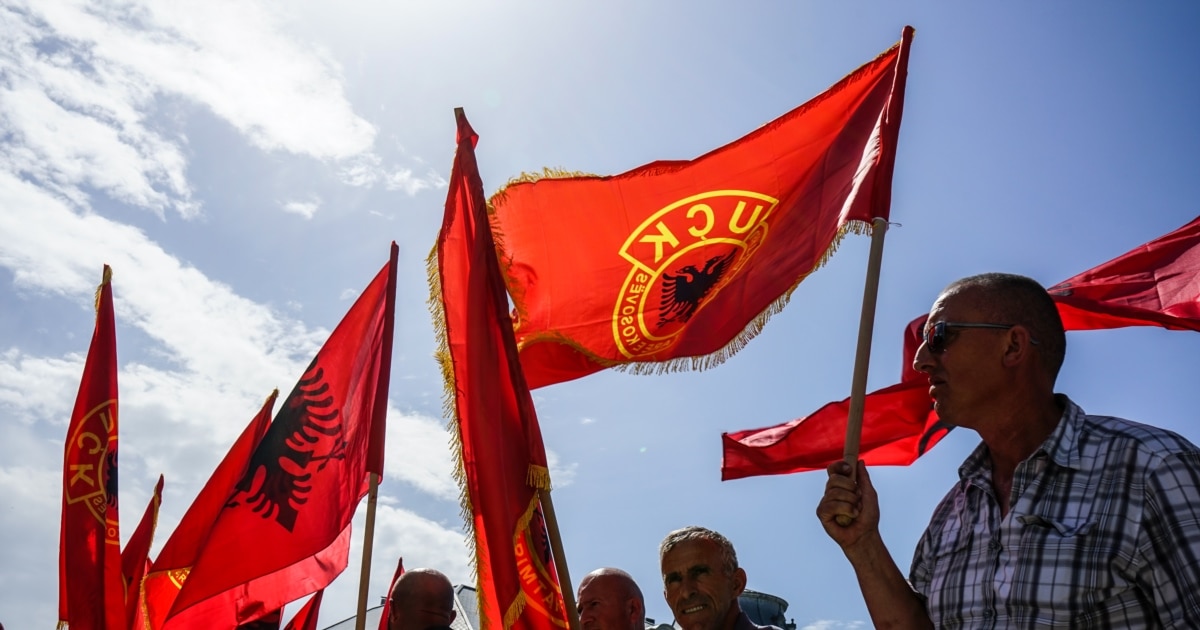
Kosovo Appeals Court Overturns Convictions in 'Veterans' Case, Acquitting Former PM Agim Çeku and Nine Others
The Court of Appeal in Kosovo has annulled one-year prison sentences imposed on former prime minister Agim Çeku and nine co-defendants in the controversial 'Veterans' case, ruling that prosecutors did not prove intentional misuse of office. The appellate panel also affirmed earlier acquittals for two other defendants following a prosecution challenge.
By Vanessa Bergmann
1,049 views
Kosovo’s Court of Appeal has annulled one-year prison sentences previously imposed on former prime minister Agim Çeku and nine other officials in the long-running “Veterans” case, concluding on September 9 that prosecutors failed to prove the defendants intentionally abused their positions. In its decision, the appellate bench found the evidence presented did not meet the necessary standard to establish that the individuals, either individually or collectively, had deliberately committed the criminal acts for which they had been convicted by a lower court.
The appeal decision reverses a summer 2025 ruling by the Pristina Basic Court, which had found Agim Çeku and nine others guilty and sentenced each to one year in prison. Those convicted at first instance included former defense minister Rrustem Berisha, former Member of Parliament Shkumbin Demalijaj, and eight others named in the indictment: Sadik Halitjahan, Qelë Gashi, Shukri Bujë, Ahmet Daku, Faik Fazliu, Fadil Shurdhaj and Xhavit Jashari. The lower court had held that they abused official duties and caused damage to the state budget estimated at more than 88 million euros.
Two additional defendants in the same case, Nuredin Lushtaku and Smajl Elezaj, were acquitted by the Pristina Basic Court at an earlier stage. Prosecutors appealed those acquittals, but the Court of Appeal upheld the lower court’s decision and maintained Lushtaku’s and Elezaj’s not-guilty verdicts.
The indictment underpinning the prosecutions was prepared by former special prosecutor Elez Blakaj. It alleged that, between 2011 and 2017, the accused operated as members of a government commission responsible for recognizing and verifying statuses such as martyr, invalid, veteran, combatant and internally displaced person related to the Kosovo Liberation Army. Prosecutors alleged the commission members exceeded their competences, failed to perform official duties, and knowingly facilitated the unlawful acquisition of veteran status by others in a way that harmed the state budget.
Prosecutors had argued that the number of unlawful beneficiaries could be substantial — potentially up to 19,000 people — and that the improper recognition of veteran status resulted in significant fiscal losses. Those allegations underpinned the gravity of the charges and the public interest in the case, which attracted wide attention in Kosovo due to the prominence of the accused and the centrality of veteran benefits in post-war social policy.
The Court of Appeal’s ruling, however, underscored the gap between allegations of systemic irregularities and the court’s requirement to demonstrate, beyond reasonable doubt, that the named individuals intentionally engaged in criminal conduct. The appellate panel concluded the prosecution’s evidence did not reach the threshold needed to prove that each defendant, with intent, committed the crimes for which they were convicted in the first instance.
Kosovo government data show that more than 53,000 people hold veteran status, with nearly 37,000 receiving benefits under the veterans’ scheme, according to the Kosovo Agency of Statistics. Veteran pensions, provided since 2015 to unemployed combatants from the 1998-1999 conflict, were raised by 20 percent in January of this year and now amount to 204 euros per month.
The Appeal Court’s decision represents a significant development in a politically sensitive prosecution touching on post-war entitlements and public finances. While the ruling clears Çeku and other prominent figures of criminal liability in this matter, it may prompt further public debate and scrutiny over how veteran benefits are administered and the evidentiary challenges prosecutors face in proving individual criminal responsibility in cases involving complex administrative processes.