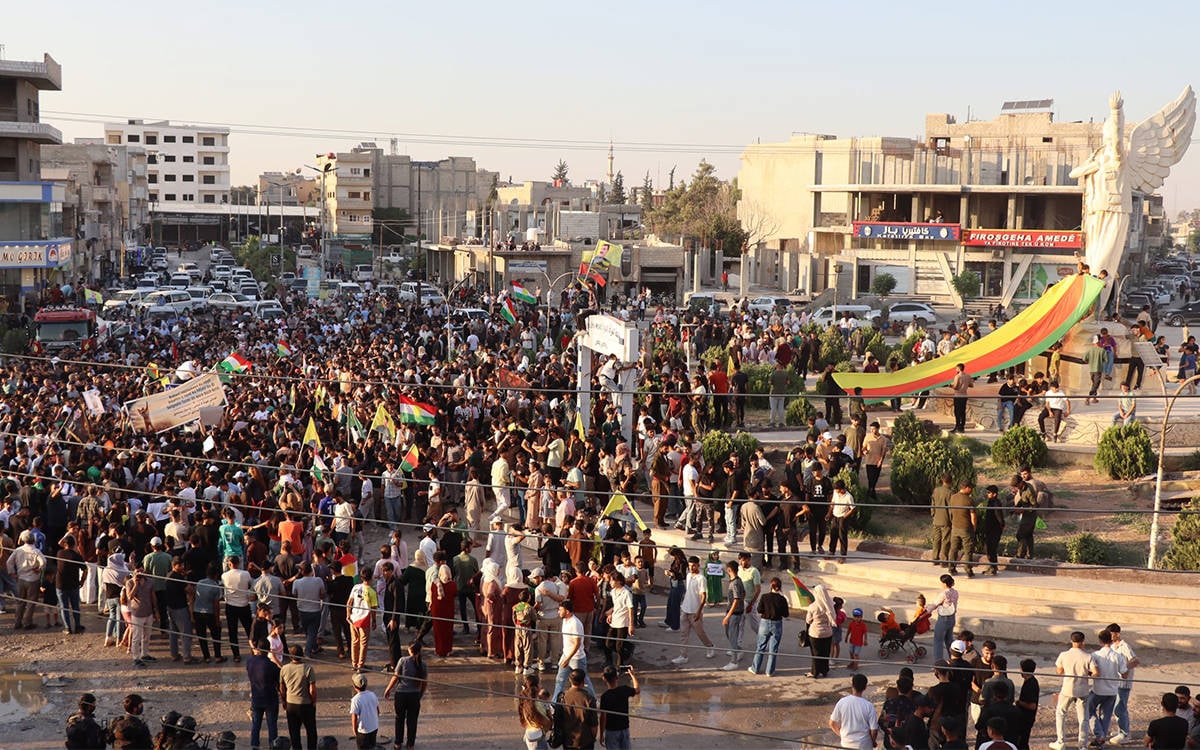
Kobanî residents protest Arabic naming of their city; mayor vows to keep 'Kobanî' on official records
Tensions have arisen during a phased integration following a January ceasefire between the Syrian Interim Government and the Syrian Democratic Forces, as Kurdish-Arabic bilingual signage has been removed and some city names are being recorded in Arabic. On 9 July, residents of Kobanî held a mass protest against the use of “Ayn el-Arab” in official documents; Kobanî Mayor Elmaz Romî said authorities are pressing to preserve the town’s Kurdish name and identity.
By Nalin Öztekin
847 views
A contentious debate over place names and public signage in northeastern Syria has erupted into public protests in Kobanî, as local residents, activists and municipal officials push back against steps they say amount to the erasure of Kurdish identity. The dispute comes amid a phased process of military and administrative integration following a ceasefire agreement signed on 30 January between the Syrian Interim Government and the Syrian Democratic Forces (SDG).
Residents and local leaders say that during the integration process bilingual Kurdish–Arabic signs that were used by institutions under the period of self-administration in North and East Syria have been taken down and replaced with Arabic-only signs. In recent weeks, some municipalities’ records and documents have begun to use Arabic place-name alternatives — a move that opponents describe as an effort to “Arabize” city names.
The decision to record Kobanî’s name as “Ayn el-Arab” in official documents provoked a mass protest in the town on 9 July. Organised under a campaign to protect the city’s name, the march included activists, journalists and intellectuals who carried banners and chanted in defence of Kobanî’s historic name. Demonstrators emphasized that the name “Kobanî” carries symbolic weight beyond administrative utility and demanded that it be retained in official records and signage.
Speaking to bianet, Kobanî Mayor Elmaz Romî said the name issue has been raised in talks with officials in Damascus and with the bodies overseeing integration. She said the municipality and the local Integration Committee have both advocated that the town’s Kurdish name remain unchanged in all official and public usages. Romî spoke emphatically about the population’s position: "Kobanî halkı hiçbir zaman ‘Ayn el-Arab’ demeyecek ve bu ismin Arapça yazılmasını kabul etmeyecek." She added that the people of Kobanî and their supporters are united in insisting on official recognition of the Kurdish name.
Romî framed the name dispute as tied to the city’s recent history and symbolic significance. She pointed to Kobanî’s prominent role in resisting the Islamic State (IŞİD), saying the town has become “a symbol of a great resistance and dignity” for Kurds and international supporters. The mayor noted that the battle to expel IŞİD from Kobanî was not only a local struggle but also a contribution to protecting broader humanity from a global threat, a reason why “World Kobanî Day” on 1 November draws solidarity from around the world.
Romî’s own background underscores her local connections and civic role: born in the village of Helınce, she graduated from a sports faculty in Aleppo and worked with teachers’ unions before taking on responsibilities in youth and sports programs following the declaration of the Autonomous Administration. She led the Youth Sports Club after the 2015 Kobanî conflict and later coordinated women’s work within Kongra Star. Romî also worked in public relations for the Democratic Union Party (PYD) and served in ecology-related roles before being appointed Kobanî mayor in April 2026 on the recommendation of the SDG.
The dispute over signage and place names reflects broader tensions in the post-ceasefire integration process, where questions of administrative control, cultural recognition and minority rights intersect. For residents and local officials in Kobanî, the issue is not merely linguistic but concerns the recognition of the town’s identity, the preservation of memory tied to recent conflict and the protection of minority cultural rights amid negotiations with Damascus-backed institutions. The outcome of these discussions could set precedents for how other localities across the region balance centralised administrative practices with the cultural and linguistic pluralism of their populations.