June 30 in History: Vitebsk’s First Tram, Einstein’s Manuscript — and Recent Belarusian Political Prisoner Developments
June 30 has marked a series of widely varied events over more than a century, from the opening of tram services in Vitebsk in 1898 and the arrival of Albert Einstein’s 1905 manuscript at Annalen der Physik to the Tunguska explosion and the Night of the Long Knives. The date also carries contemporary resonance for Belarus: entries note arrests and long prison sentences in 2021 and the March 20, 2026 release of one political prisoner through U.S. mediation.
By Blake Marriott
1,014 views
June 30 has long been a date on which a broad range of historical events are remembered — scientific breakthroughs, urban milestones, violent purges and wartime atrocities — and, in recent years, also a date linked to developments in Belarus’s ongoing human-rights crisis. A compilation of events tied to the day includes both century-old moments that shaped global history and very recent episodes that reflect present-day political realities in Belarus.
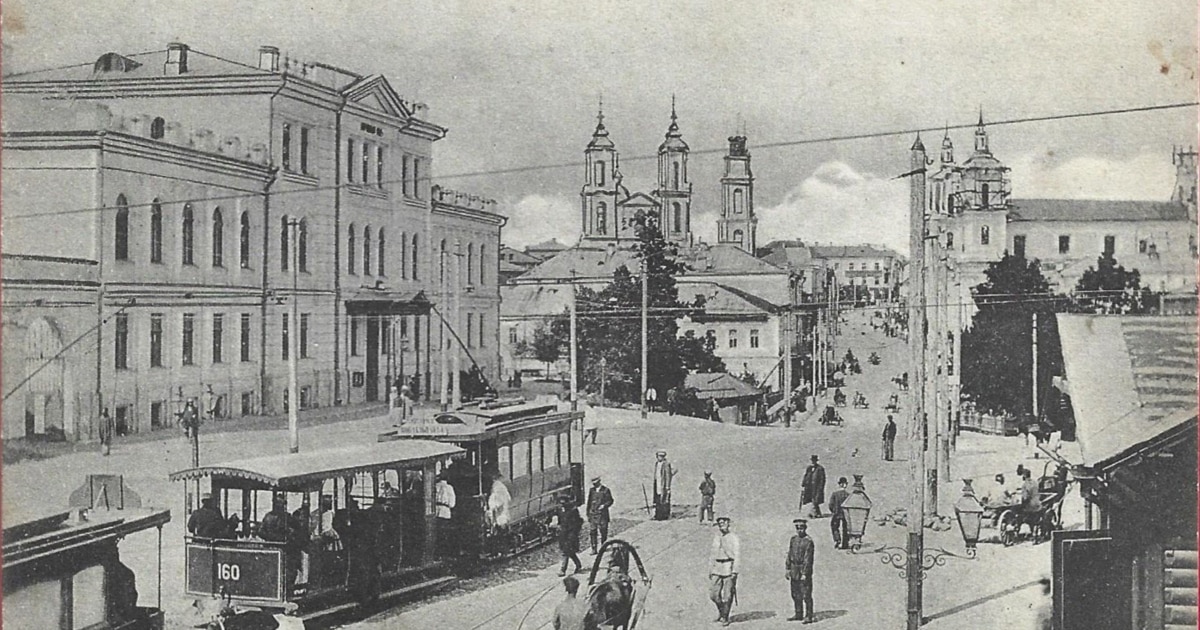
Among the earlier entries is the opening of tram service in Vitebsk in 1898, an urban-transport milestone for the city that remains part of local civic memory. The date is also associated with scientific history: in 1905 the journal Annalen der Physik received Albert Einstein’s manuscript “Пра электрадынаміку рухомых цел” (On the Electrodynamics of Moving Bodies); three months later his article introducing the theory of special relativity appeared, a publication that transformed twentieth-century physics.
June 30 is also tied to dramatic natural and political events. In 1908 the Tunguska explosion — the devastating aerial blast over Siberia — occurred, an event that has prompted scientific inquiry and speculation for more than a century. Politically, the date recalls the 1934 “Night of the Long Knives” in Nazi Germany, when Hitler ordered the purge of Sturmabteilung (SA) leadership; the killings extended through July 2 and eliminated key rivals within the Nazi movement.
The day further bears the memory of wartime atrocities. On the night of June 30, 1944, the Kaldychevsky concentration camp in the Baranavichy district was destroyed; German forces executed approximately 2,000 people there and deported another 300 to Germany, according to the listing. These entries join other commemorations of births and deaths on the date, including cultural figures such as the poet and Nobel laureate Czesław Miłosz and political figures such as Itzhak Shamir.
Interwoven with these historical notes are recent items directly tied to human-rights concerns in Belarus. The compilation records that in 2021 political scientist Валерыю Касьцюгову was arrested; together with a colleague from ЭГУ, Тацянай Кузінай, they were sentenced to 10 years of imprisonment. That same year, the listing notes that in Minsk Вольгу Сінялёву was sentenced to two years of “хатняй хіміі” after refusing to surrender an apartment to deputy prosecutor Аліне Касьянчык, who is identified as having been involved in political trials. The entry does not expand on the precise legal nature of “хатняй хіміі”; it records the sentence and the allegation that Sinyalova’s refusal to vacate prompted the conviction.
A more recent development recorded for this date in the compilation is the March 20, 2026 release of Валерыю Касьцюгову. The entry states that, as part of a group of 250 political prisoners, she was freed through U.S. mediation and was allowed to remain in Belarus. The listing frames these contemporary items alongside the older historical events, underscoring how June 30 now carries meanings that bridge local milestones, global scientific achievements and the persistent realities of political repression.
Taken together, the events remembered on June 30 illustrate contrasting aspects of human experience: innovation and cultural life, sudden natural forces, orchestrated political violence and the ongoing struggle over rights and accountability. The inclusion of recent Belarusian cases in the same register as century-old world events highlights the enduring relevance of dates in public memory, and the way days of remembrance can draw attention to both historical and contemporary questions of justice, governance and human rights.