First, the Norwegian newspaper was placed on Russia's list of undesirable media.
Then the Russian authorities went after the journalists who worked there. Three
Russian journalists at the Barents Observer in Norway have now been sentenced or
put on the wanted list. The latest is Denis Zagore. He faces a severe penalty if he
returns to Russia
By Jesper Enerstvedt
1,055 views
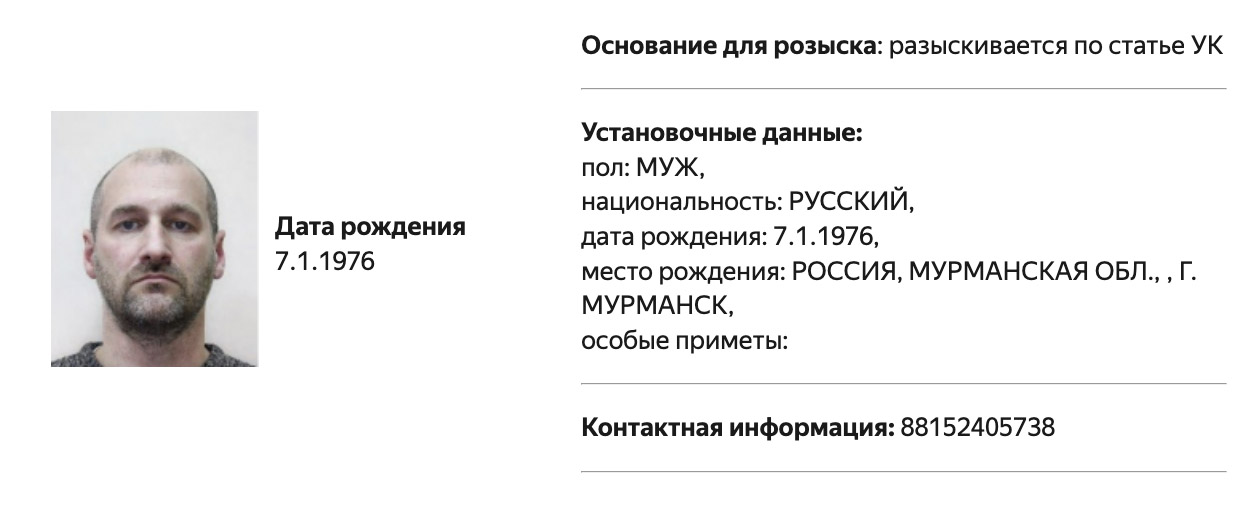
Photo: Journalist Stein Olav Krosby (left) together with editor and author Jesper Enerstvedt at Kirkenes Airport. Inset above is the wanted poster for the Kirkenes-based journalist Denis Zagore. The town lies just a few kilometres from the Russian border in the far north of Norway. Photo: Jesper Enerstvedt. Inset: Russian Ministry of Internal Affairs (MVD).
My colleague Stein Olav Krosby and I are both Norwegian journalists. We do not believe any country has a completely free press, and Norway is no exception. But we have never had to think about whether an article could send us to prison. For our Russian colleagues in Kirkenes, it is different. They have a state on the other side of the border that wants to punish them for what they write. We think journalists should say something about it.
Zagore fled Russia in 2022 and moved to the Norwegian border town of Kirkenes. The town lies far to the north, just a stone's throw from the Kola Peninsula. This is where the Russian Northern Fleet has its headquarters, in the closed city of Severomorsk. Murmansk is also located on the Kola Peninsula. The city is just 224 kilometres from Norway, a little over three hours by car from the Norwegian town of Kirkenes.
Kirkenes is a small town far above the Arctic Circle. In the polar night the sun does not rise for about two months each winter. On the other side of the border lies the Kola Peninsula, one of the most militarised places on earth. Here the Russian Northern Fleet keeps its nuclear submarines. According to U.S. intelligence, the peninsula holds about two-thirds of Russia’s second-strike nuclear forces. The shortest route for missiles between Russia and the United States goes over the Arctic. This is NATO’s frontline in the north. And it is here, in this little town, that the Russian journalists sit and write their stories.
In recent weeks, the Russian journalist has attracted international attention because he has been placed on Russia's wanted list. According to the Barents Observer, Zagore's name first appeared in the Russian Ministry of Internal Affairs' database on 21 September. This led a dedicated investigative committee in Murmansk to ask a court to order Zagore's detention in absentia.
Zagore previously worked as a journalist in Petrozavodsk. He now lives in Norway with his wife and children. He will have to stay here if he does not want to end up in prison in Russia or be forcibly sent to the front in Ukraine. Fortunately, he now has both a residence permit and permanent employment with the Norwegian newspaper Barents Observer.
Barents Observer was declared an undesirable organisation as early as February 2025. Zagore was registered as a foreign agent in October 2025. According to the Council of Europe's Platform for the Safety of Journalists, the Russian authorities have brought criminal charges against Zagore under two separate provisions. He is charged under Article 284.1 of the Russian Criminal Code, which concerns "participation in the activities of an organisation declared undesirable". Zagore is also charged under Article 330.1 of the Criminal Code, concerning his status as a foreign agent.
Zagore himself is taking the whole matter calmly. He has told his own newspaper that he has no intention of changing anything in his life because of the wanted notice. As he puts it: "They (Russia) could have found me without putting me on the wanted list."
Zagore is not the first Barents Observer journalist to find himself in this situation. Journalists Olesia Krivtsova and Farida Kurbangaleeva have already been sentenced to prison in absentia in Russia. Half of the newspaper's staff journalists are now on Russia's wanted list. In the office in Kirkenes, the newspaper has put up the photographs of the wanted journalists on a wall.
Journalist Olesia Krivtsova was sentenced to six years in prison in July 2026. Farida Kurbangaleeva was first hired by Barents Observer in April 2026, after being sentenced to eight years in prison in July 2025. The Russian sentence is therefore not connected to her work for the Norwegian newspaper. But the Russian authorities are unlikely to look more favourably on her now that she has taken a job with an undesirable organisation.
The war in Ukraine has had enormous consequences for life in Norway's northern regions. The area between Kirkenes and the Kola Peninsula in Russia is highly sensitive. Huge oil reserves have been discovered in the Barents Sea, which is shared by Norway and Russia. The major cod fisheries also take place off the coast. The Northeast Arctic cod migrates between Norwegian and Russian waters, and its nursery areas cover large parts of the Barents Sea.
Norway and Russia signed a new fisheries agreement on 23 October 2026. Many fear that all such agreements may soon be worth no more than the paper they are written on. The situation facing the journalists illustrates a highly unfortunate development in relations between the two countries. Instead of hunting cod together, they are now hunting journalists instead.
The war in Ukraine has been a major setback for this cooperation. Many Russians have fled across the border into Norway to avoid military service. This is not viewed favourably by the Russian side. Norwegian media have defended the Russians who flee.
However, Norway has not held back either when it comes to using propaganda as a tool in the media. There has been a stream of one-sided journalism in Norway too, where the media have been a microphone stand for Western military sources. The media houses have obediently adopted propaganda words such as "war of aggression", "full-scale invasion" and "defensive attack".