JD Vance Says Vatican Should 'Stick to Matters of Morality,' Defends Trump After Pope's Criticism
Senator JD Vance, who converted to Catholicism as an adult, told the Vatican it should "stick to matters of morality" and leave American public policy to the president, speaking on Fox News amid a dispute between Pope Leo XIV and critics of U.S. foreign policy. Vance also dismissed the media uproar over a viral AI-generated image associated with Donald Trump as overblown and framed it as a misunderstanding of the president's intent.
By Jim Hᴏft
1,042 views
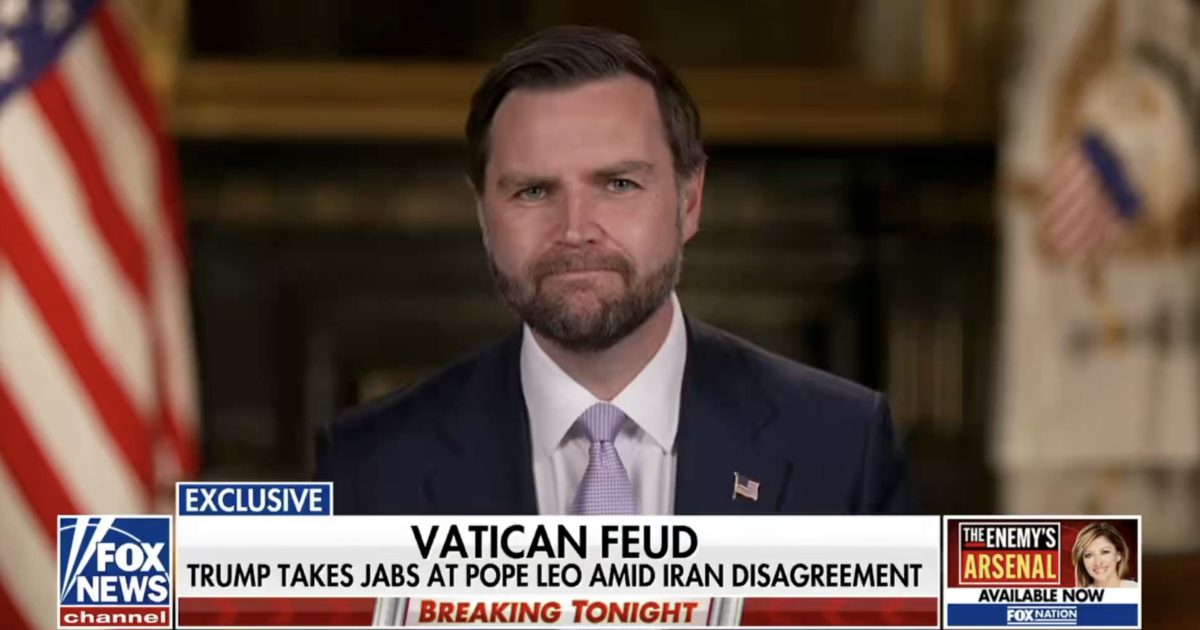
Senator JD Vance, a convert to Catholicism, told the Vatican this week that it should “stick to matters of morality” and leave the conduct of American public policy to the president, in a forceful public response to recent remarks by Pope Leo XIV. Vance made the comments during an interview on Fox News with Bret Baier as tensions between the Vatican and supporters of former President Donald Trump have escalated over criticism of U.S. actions abroad.
The exchange follows a public rebuke of U.S. policy by Pope Leo, who condemned war and warned against using religious messaging to justify violence, saying he will “continue to speak loudly” for peace. Former President Trump had earlier criticized the pope as “weak on crime” and “terrible for foreign policy,” particularly in the context of Vatican commentary on conflicts involving the United States, including disputes connected to Iran.
Addressing Baier’s question on whether the president’s remarks about the pope and the Vatican’s commentary are damaging to the Church, Vance said the president has authority over American foreign and immigration policy and must prioritize U.S. interests. “I think the president has the prerogative to set American foreign policy. He’s got the prerogative to set American immigration policy. He has to look out for the interests of the United States of America,” Vance said.
Expanding on that view, Vance argued that when the Vatican weighs in on public policy, agreement and disagreement are both to be expected. “I think that’s a reasonable thing, Bret. Again, I don’t think that it’s particularly newsworthy, but I certainly think that in some cases it would be best for the Vatican to stick to matters of morality—to stick to matters of, you know, what’s going on in the Catholic Church—and let the president of the United States stick to dictating American public policy,” he said.
Vance framed the disagreement as a recurring but not extraordinary feature of relations between religious authorities and political leaders. “But when they’re in conflict, they’re in conflict. I don’t worry about it too much, Bret. I think it’s a natural thing. I’m sure it’ll happen in the future, and it’s not that big of a deal that it happened in the past,” he added.
In the same interview, Vance addressed a separate controversy surrounding a viral AI-generated image posted by Mr. Trump and later deleted. Vance minimized the media response, calling the uproar driven by coverage rather than the substance of the post. “He doesn't send everything through a communications professional,” Vance said, arguing that the post had been intended as a joke. “The president was posting a joke and of course he took it down because he recognized that a lot of people weren't understanding his humor…"
The comments underscore an ongoing fault line in American public life over the appropriate role of religious leaders in commenting on statecraft and the extent to which political figures should heed religious critique. Supporters of Trump's approach have argued that elected leaders must prioritize national security and other policy considerations, while critics, including some religious leaders, say moral and humanitarian concerns merit vocal engagement from faith institutions.
Vance’s intervention is likely to energize both supporters who see the Vatican’s statements as an overreach into domestic policy debates and critics who view religious leaders’ engagement as a necessary moral counterweight to political power. The public exchange between a U.S. political figure who identifies as Catholic and the pope adds a fresh chapter to longstanding discussions about the relationship between church and state and the influence of religious institutions on international affairs.