Istanbul floods expose a harsh choice for couriers: safety or livelihood
A record-breaking storm on 14 October left at least seven dead in Istanbul, including 30-year-old courier Murat Babacanov, and exposed gaps in protections for delivery couriers. Workers and the Courier Rights Association say late official measures, punitive platform algorithms and employer pressure forced couriers to choose between their lives and their income; they are demanding immediate income guarantees, clearer protocols and timely enforcement of bans.
By Vecih Cuzdan
801 views
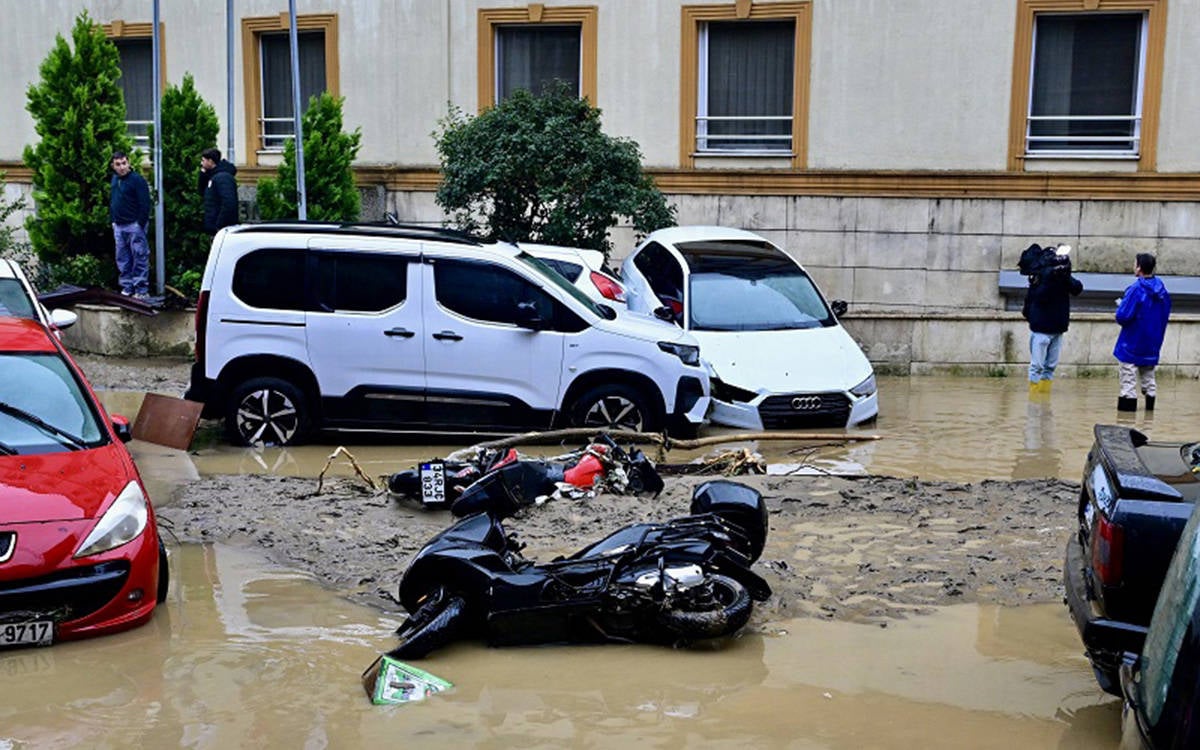
On 14 October, Istanbul was hit by a storm that produced the heaviest recorded rainfall at city stations since 1942, with some districts receiving between 130 and 277.1 kilograms of rain per square meter in a short period. The deluge caused flash floods and inundations that authorities say killed at least seven people. Among the victims was 30-year-old courier Murat Babacanov, whose disappearance during the storm and subsequent recovery of his body in the Golden Horn on 18 October has focused attention on the risks faced by delivery workers during extreme weather.
Meteorologists had warned of heavy rain a day earlier. The General Directorate of Meteorology (MGM) published an alert on 13 October at 14:15 forecasting intense rainfall for Istanbul the following morning and listing likely risks including flooding, landslides and transport disruption. Despite this, the Istanbul Governorship announced a ban on two-wheeled vehicles entering traffic only on the evening of 14 October, at 18:35, to take effect from 21:00 that night — by which time many couriers say streets were already submerged.
Couriers working for online delivery platforms described a chaotic day in which taking refuge or stopping work carried direct financial penalties. One platform courier, identified in reporting under the pseudonym Kaan, said he put his app on break when worsening conditions made deliveries impossible, and many colleagues did the same. He later discovered that the platform’s algorithm had lowered his performance score for the interruption, a penalty that he said prevented him from selecting working hours the following week.
Kaan and others argued that the algorithmic assessment of continuity and delivery performance effectively forced couriers to remain at risk in bad weather to protect earnings. Another courier, using the pseudonym Ogün, said his platform sent weather warnings and increased allowable break times and that his schedule was closed at the start of the ban; he reported no personal penalties. Yet a third courier, Hakan, who works for a restaurant in the Tuzla area and is formally employed, said he was forced to work until 02:00 despite the restriction, claiming his employer issued no warning and kept him on delivery until the end of his shift.
The disappearance of Babacanov illustrates the human cost of these systemic gaps. His friends told reporters he last made contact at 18:50 on the first day of the rain, and his last signal came from the Ayazağa square area. Artur Seydullayev, a friend who took part in search efforts, told the press that Babacanov disappeared during the flood and was later found dead in the Golden Horn on 18 October.
Legal protections for workers who refuse to work in dangerous conditions exist under Turkey’s Occupational Health and Safety Law (No. 6331). Article 4 places responsibility for worker health and safety on employers; Article 13 allows employees who face a serious and imminent danger to apply to workplace safety bodies or, if those are absent, to the employer. If the danger is confirmed, workers may stop work until the hazard is remedied while preserving pay and other rights; in imminently dangerous circumstances, workers may leave the risk area without waiting for formal approvals. However, the law excludes people who provide services on their own account without formal employment, leaving many self-employed or platform couriers in a legal gray zone and without guaranteed income if they refuse to work.
The Courier Rights Association (Kurye Hakları Derneği) has called on central and local authorities and delivery platforms to adopt concrete measures to protect couriers during extreme weather. The group demands that governorates act in a timely manner based on meteorological warnings and enforce motorcycle bans; that platforms publish and follow bad-weather protocols and suspend deliveries when required; that couriers receive paid leave or income support when they cannot work due to extraordinary weather; and that performance penalties tied to delivery times be suspended during weather alerts. The association also calls for free protective equipment, mandatory cooling or rest breaks in extremes, and public-private investment in safe shelters or rest areas where couriers can wait out storms.
Beyond immediate policy changes, advocates argue the episode highlights climate injustice: those who work outdoors—often in precarious conditions—are disproportionately exposed to the harms of extreme weather while lacking the income security and labor protections that would allow them to prioritize safety. As Istanbul reviews both its response to the storm and the regulatory oversight of delivery platforms, couriers and rights groups say meaningful reform must ensure that decisions to stop working during dangerous conditions do not carry the additional cost of lost income or algorithmic downgrades.
In the wake of the floods, calls for stronger enforcement and clearer protocols continue, with couriers urging swift action to prevent further loss of life and to reconcile the needs for public safety, employer responsibility and algorithmic accountability in the gig economy.
(Note: names Kaan, Ogün and Hakan are pseudonyms used to protect interviewees’ identities.)