Iran to Begin Electricity Rationing and Restrict Subsidized Bread After Strikes Intensify Energy Shortages
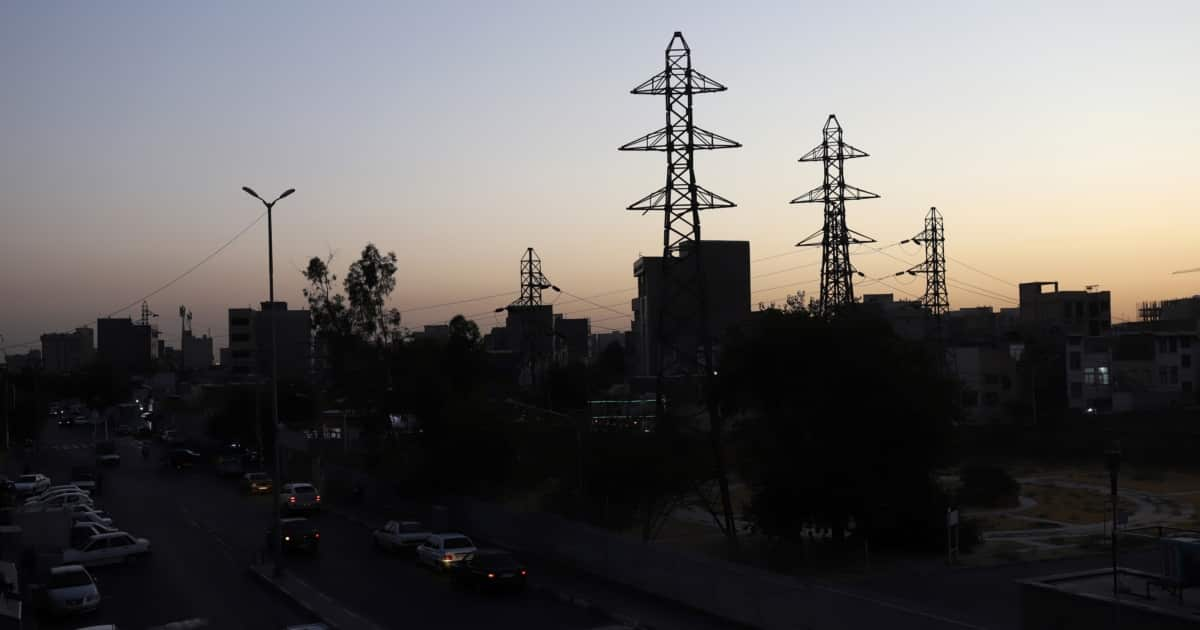
Iran announced that nationwide electricity distribution restrictions will start on November 22 as officials warned that strikes on the country's energy infrastructure have worsened fuel and power shortages ahead of winter. At the same time, an Interior Ministry scheme limiting subsidized bread purchases has been activated in at least three provinces, a move that critics say was implemented without public notice and risks deepening hardship for ordinary families.
By Clémence Desjardins
215 views
Iran said it will impose scheduled electricity distribution restrictions beginning November 22 as authorities scramble to cope with growing fuel and power shortages that officials blame in part on recent strikes against the country's energy infrastructure. Mohammad Allahdad, head of Iran’s national electricity company, told state television on November 21 that, "given the country's fuel supply conditions, the electricity sector will be forced to impose distribution restrictions from Sunday." He said outages are expected to last up to two hours a day depending on location.
President Masud Pezeshkian, quoted by the state news agency ISNA, linked the worsening energy situation to what he described as US and Israeli strikes on Iran’s gas infrastructure that began in late February. "The attack on the country's gas infrastructure has aggravated the situation, and we should therefore expect difficulties this winter," ISNA quoted Pezeshkian as saying. Iran, despite having some of the world’s largest oil and gas reserves, has long struggled to meet domestic energy demand because of an aging power grid, years of underinvestment and the effects of Western sanctions.
The announced power rationing comes as Iranian authorities have also begun limiting how much subsidized bread households can purchase. The Interior Ministry’s new scheme, referred to as "bread purchase management," reportedly was switched on through card readers at bakeries in the provinces of Markazi, Khuzestan and Zanjan without a public announcement or prior briefing for bakers and customers. Local reporting indicated that once a household’s monthly quota is exhausted, buyers must pay more than five times the subsidized price.
Officials have offered conflicting explanations for the bread controls, and the measure has drawn criticism from economists and even some hard-line media outlets. The sudden implementation and the steep price jump for those who exhaust their quota have raised concerns about food security, transparency and the social impact of measures taken without public consultation.
The domestic hardships are unfolding amid an uncertain international environment. US President Donald Trump, speaking in interviews on November 21, said he seeks a "permanent" deal with Tehran that he believes a future president would not be able to reverse, and suggested he has targeted successive groups of Iranian leaders in recent strikes. "Some people talk about regime change, but they need to explain what they mean, because I have already eliminated two regimes. I eliminated the first group, the second group as well. Now we are dealing with the third group," Trump told Fox News.
At the same time, Trump told Israel’s News 12 that he was "not rushing to make any decisions on Iran" and that "we'll see what happens after the new year starts." Media reports, including one by CBS citing unnamed sources, have said the United States and Israel are considering launching new strikes against Iran after months of Qatari- and Omani-mediated talks produced little progress. A week earlier the president had said he was "quite unlikely" to launch fresh attacks while talks were proceeding.
Violence continued in the region on November 21 and into the early hours of November 22. Bahrain reported that an Iranian attack struck a civilian industrial facility, causing a fire but no injuries. Iran’s Islamic Revolutionary Guards Corps (IRGC) said it launched a missile-and-drone attack on US military positions in Bahrain, home to the US Navy’s Fifth Fleet and a frequent target in the ongoing confrontation. The strikes on energy infrastructure, the ripple effects on power and food supplies, and the possibility of renewed military strikes have significant humanitarian and political implications, particularly as the region heads into colder months.
The intersecting pressures of military strikes, diplomatic uncertainty and emergency domestic controls highlight the civilian consequences of the conflict. For Iranians facing planned electricity outages and constrained access to subsidized staples like bread, the crisis raises urgent questions about accountability for damaged infrastructure, the adequacy of social protections, and the pace and transparency of government measures to mitigate harm to ordinary people. International mediators and governments monitoring the situation will likely weigh the humanitarian impacts alongside strategic considerations as negotiations and threats of further military action continue.