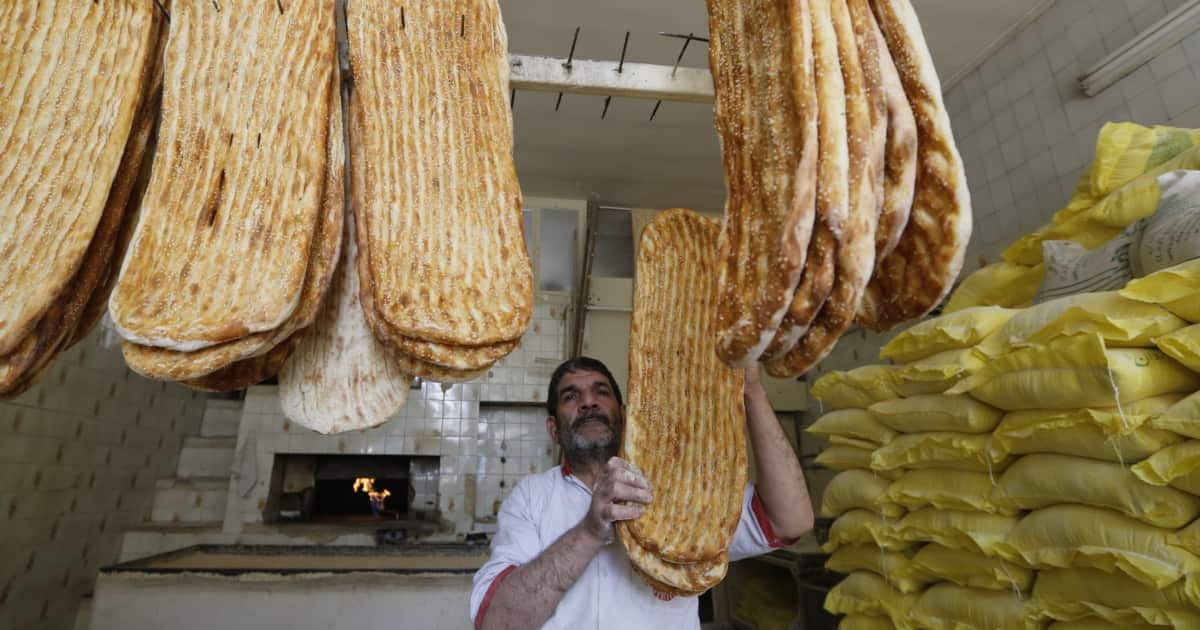
Iran Quietly Caps Subsidized Bread Purchases in Three Provinces, Drawing Rare Criticism
Iranian authorities have introduced a covert scheme limiting how much subsidized bread households can buy in at least three provinces, triggering criticism from economists and even hard-line media. Officials say the move is meant to curb widespread abuse of subsidies, but analysts warn it risks worsening poverty, malnutrition, and social strain.
By Alexander Walter
1,176 views
Iran has begun restricting purchases of subsidized bread in at least three provinces without a public announcement, implementing a system that critics say could deepen poverty and undermine access to a basic staple. The Interior Ministry activated a measure it calls “bread purchase management” through card readers at bakeries in Markazi, Khuzestan and Zanjan provinces, according to Iranian media reports on November 18. Neither bakers nor customers were briefed on the change before it went live.
Under the new arrangements, each person is allotted roughly 8 kilograms of subsidized flour a month at a heavily discounted state price: 23,000 rials per kilogram. When that monthly quota is exhausted, additional bread is charged at the free-market rate of 126,500 rials per kilogram — about 5.5 times the subsidized price. Those rial figures may appear low in U.S. dollar terms, but that is because Iran’s currency has collapsed: the dollar trades at approximately 2.7 million rials on the open market. Iran’s monthly minimum wage of about 166 million rials is worth roughly $61 under current exchange rates, underscoring how acute the affordability problem is for many households.
Media outlets have disagreed over what label to give the policy, with some calling it rationing and others rejecting that term. What has been unambiguous, however, is the domestic political discomfort it has generated. Hard-line outlets — normally supportive of state policies — and reformist publications alike criticized the “quiet” or “secret” implementation. The conservative daily Keyhan, whose editor is appointed by Iran’s supreme leader, accused President Masud Pezeshkian’s government of secretly and suspiciously implementing bread rationing, saying the move had prompted panicked runs on bakeries. The reformist Sharq also criticized the lack of transparency. The conservative website Tabnak defended bread consumption as an indicator of poverty rather than abuse and warned that low-income families rely on bread when they cannot afford other foods.
President Pezeshkian defended the tighter controls on November 18, arguing that abuses of subsidized goods and energy have become widespread. He cited examples such as repeated fuel purchases by the same individuals at petrol stations in a single day, crypto miners exploiting subsidized electricity, and, strikingly, claims that some people had bought up to 18 tons of subsidized bread a month. Officials framing the policy as an anti-abuse measure say it is necessary to preserve scarce state resources in the face of economic strain.
Critics say the measure is symptomatic of deeper fiscal pressures and a blunt approach to a complex problem. Sweden-based Iranian economist Ahmad Alavi told RFE/RL’s Radio Farda that the step follows a familiar pattern: as oil and export revenues contract under what he described as a de facto blockade, the state finds it difficult to raise taxes or sustain subsidies. “First goods are rationed, then the ration is cut and the consumer is sent to the free market,” he said, warning that the resources supposedly saved will be redirected to state priorities such as external conflict, regional proxies and domestic security forces.
Alavi also faulted the per-capita flat quota approach for ignoring differences among households, saying it reproduces the failures of central planning and creates “inverse allocation,” where those who do not need subsidies receive them while vulnerable households lose out. He characterized bread as a public good that should be universally and promptly accessible at low cost, arguing that targeting the end of the supply chain is primarily a pragmatic response to the size of Iran’s informal economy rather than a fair or efficient policy. He warned that the real costs of cutting access to cheap staples will appear later as lost social capital, deeper poverty and increased health-care burdens from malnutrition.
The episode highlights several intersecting concerns: immediate threats to food security for low-income families, the political risk of deploying blunt subsidy controls without public consultation, and the broader fiscal squeeze confronting the Iranian state. The rare fact of hard-line media criticizing the government’s handling of the measure indicates sensitivity across political factions. For now the scheme has been reported in three provinces; whether it will be expanded, rolled back, or adjusted in response to public pressure or logistical complications remains unclear.
Observers say transparency, targeted assistance for the most vulnerable, and measures to address the underlying economic drivers — including currency collapse and shrinking export revenues — would be needed to prevent a temporary administrative fix from producing longer-term human-rights harms. Absent such steps, critics fear the curb on subsidized bread could aggravate poverty and malnutrition, increasing the burden on families and on state health services later on.