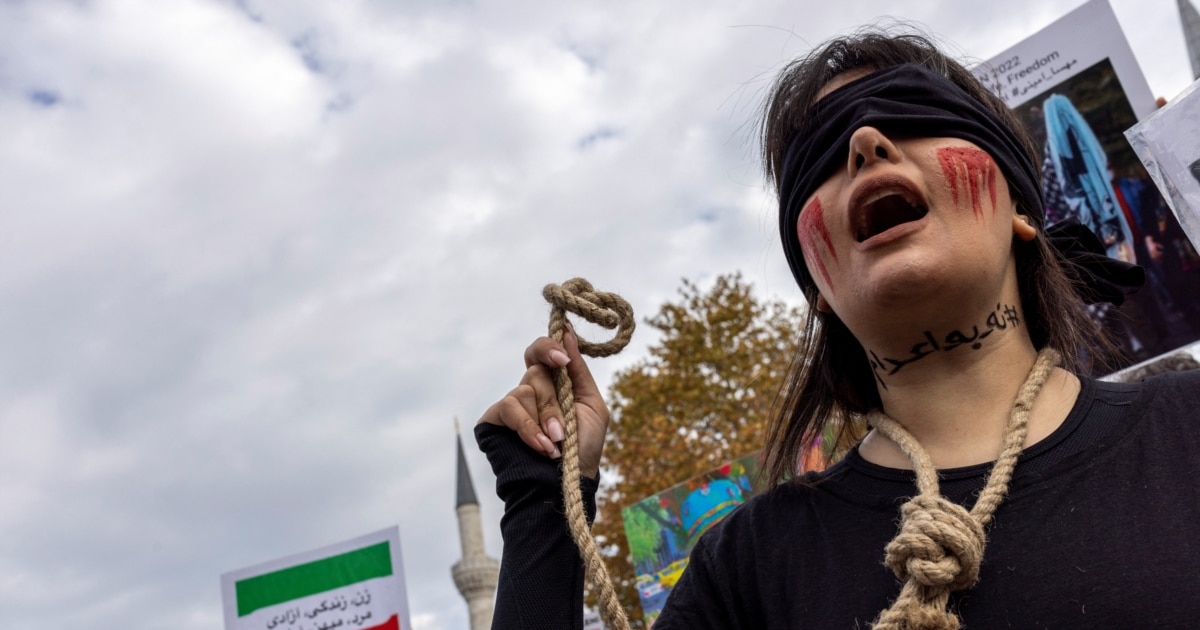
Iran executes two men accused of spying for Israel amid surge in wartime executions
Iranian judiciary-run media said two men, Omid Behzad and Puria Safvat, were hanged on August 3 after being convicted of espionage for Israel’s Mossad. Their executions come amid a broader and contested rise in death sentences in Iran since the outbreak of hostilities with the United States and Israel in late February, prompting condemnation from human rights groups and UN experts.
By Blake Marriott
895 views
Iran executed two men early on August 3 who state-linked media said had been convicted of spying for Israel, the latest in a wave of death sentences that rights groups say target dissent and are occurring with increasing frequency since the onset of the country’s wider conflict with the United States and Israel.
The judiciary-run Mizan news agency identified the two men as Omid Behzad and Puria Safvat. Mizan said authorities accused them of providing “significant assistance” to the Israeli intelligence service, Mossad, during clashes in June 2025 — which Iranian officials have referred to as the Dvanaestodnevni or “Twelve-day” war — and in the continuing hostilities that began on February 28. According to the agency, the assistance included sending coordinates, images and information about military and security installations to Mossad officers and channels linked to the intelligence agency.
Iran’s judiciary stated that intelligence linked to the Islamic Revolutionary Guard Corps (IRGC) identified the two men by “tracking the behaviour” of foreign media, certain news channels and patterns in videos they allegedly sent. Mizan said technical examinations of Behzad’s mobile phone uncovered the activity and that he admitted the conduct during interrogation. The agency also reported that Behzad “explicitly admitted” using location apps such as Google Maps to find and mark coordinates. Safvat was accused of “direct cooperation with Mossad,” the report said, but presented no independently verifiable evidence in its account.
Human rights organizations have long warned that Iranian authorities routinely rely on coerced confessions, obtained under duress or torture, and on opaque trials in national-security cases. The circumstances of Behzad’s and Safvat’s detentions, the conditions under which any statements were made, and the evidence relied upon by the courts were not independently verifiable at the time of the executions. Access for independent monitors, journalists and lawyers to such cases in Iran is frequently limited.
The executions come amid a broader surge of death sentences and executions since the start of the hostilities with the United States and Israel on February 28. Rights groups monitoring the situation say more than 50 people have been executed on security- and politically framed charges since that date, and some reports suggest the figure may be considerably higher. The Iranian authorities have used a range of charges in capital cases during this period, including espionage for hostile states, collaboration with Israel or the United States, moharebeh (waging war against God), and membership in the exiled opposition group Mojahedin-e Khalq.
UN experts have publicly criticized the pattern. In a statement on July 27, United Nations-appointed experts accused the Islamic Republic of attempting to “instill fear in society, deter future demonstrations and silence dissent” through executions. They warned that such measures risk further entrenching grievances and provoke additional unrest rather than restoring stability.
Independent monitoring organizations also point to the broader context of Iran’s domestic unrest earlier in the year, notably the January protests, during which thousands were killed by security forces and tens of thousands detained, according to rights groups. The number of executions recorded in Iran this year has been unusually high: the latest verified figures cited in reporting place the toll at 433 people executed so far in the year, with many of those sentences linked to protests or politically charged criminal cases.
The latest executions underscore persistent international concern about due process, transparency and the use of capital punishment as a tool of political repression in Iran. With independent verification of the specific espionage claims limited and with longstanding allegations about forced confessions and curtailed legal rights, the cases of Behzad and Safvat are likely to increase pressure on Tehran from human rights advocates and international observers seeking greater accountability and legal safeguards.