Iran at the Crossroads: Scenarios for the Morning After an Unfinished War
This war may not topple the Islamic Republic, but it could build something far more dangerous.
By Abdollah Abdi
5,117 views
Some wars redraw borders. Others dismantle political systems. And some reshape the strategic geography of an entire region for generations. The ongoing conflict involving the Islamic Republic, the United States, and Israel has the potential to do all three. That is precisely what makes it uniquely dangerous.
Yet much of the current analysis rests on a false binary: either the regime collapses, or it survives unchanged. Iran’s reality is far more complex. The power structure in Tehran is not a single pillar that falls when struck. It is a layered system of overlapping institutions, from the Supreme Leader’s office to the Islamic Revolutionary Guard Corps (IRGC), from the Supreme National Security Council to competing intelligence bodies, from quasi-state economic networks to clerical authority. This complexity is not a weakness. It is the reason miscalculation is so likely.
The question that Washington and its allies continue to avoid is simple but decisive: what happens the day after? If the Islamic Republic weakens(or even if it survives) what replaces its current balance of power? And will that outcome actually serve Western strategic interests?
Without an answer, tactical success risks becoming strategic failure.
The Illusion of a Short War
The first and most persistent illusion is that Iran resembles Iraq in 2003, a brittle state that collapses under external pressure. It does not.
Iran is a country of 85 million people with a vast and complex geography. Mountain ranges, deserts, and dense urban networks create conditions that make any sustained military occupation extraordinarily difficult. More importantly, the Islamic Republic is not an isolated regime. It possesses a structured, mobilizable social base.
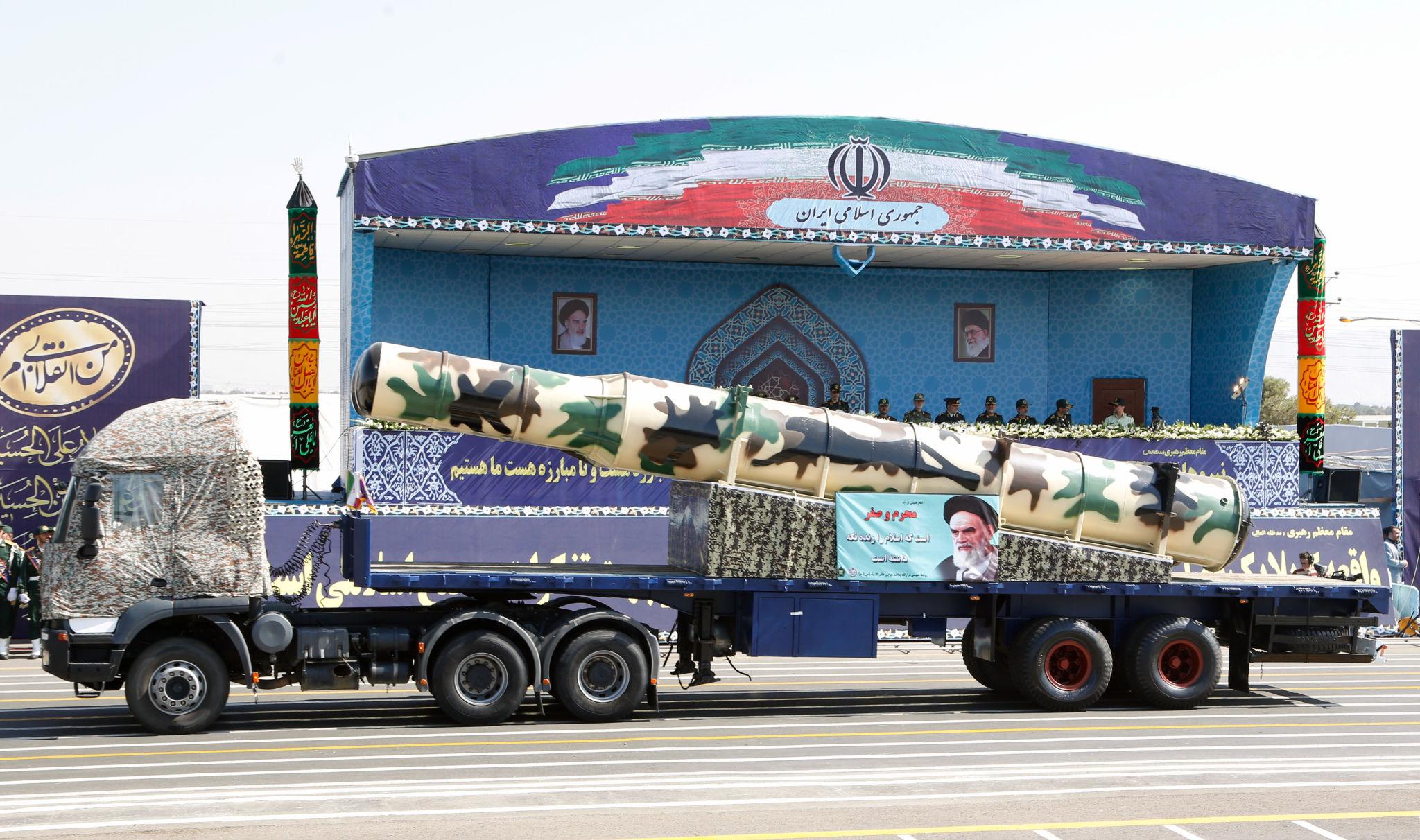
The second illusion is that the IRGC can be neutralized through airpower alone. For four decades, it has prepared precisely for the opposite scenario: asymmetric warfare, decentralized networks, and survival under sustained attack. Its doctrine is not built around winning conventional battles, but around outlasting its adversary.
The third illusion is the most dangerous: that military success automatically translates into political transformation. Recent history suggests the opposite.
From Tactical Gains to Strategic Deadlock
Even if a ground operation were to occur — still unlikely, but not impossible — its early stages might appear successful. Strategic islands in the Persian Gulf could be seized. Multi-front pressure could be applied along Iran’s western borders. Air superiority would ensure initial dominance.
But this is exactly where history begins to turn.
The Iraq War followed a similar trajectory: rapid advance, symbolic victory, and then years of costly attrition. Iran presents an even more complex case — not only because of its geography and military structure, but because of its internal cohesion relative to Iraq under Saddam.
A prolonged ground conflict could result in tens of thousands of American casualties and trillions in financial cost. But beyond numbers lies a more fundamental question: what does victory actually mean?
The Real Levers of Escalation
Much of the discussion has focused on missiles and military strikes. Far less attention has been paid to the infrastructure that could truly reshape the conflict.
The Strait of Hormuz remains one of the most critical chokepoints in the global energy system. Any serious disruption — whether through naval mining or attacks on regional energy infrastructure — could push oil prices to levels that destabilize not just markets, but political systems.
In the United States, energy prices translate directly into political pressure. A surge at the pump quickly becomes a domestic crisis. Tehran understands this dynamic well. Targeting energy infrastructure is not merely retaliation — it is leverage.
But there is an even more fragile vulnerability.
The Gulf states — Saudi Arabia, the United Arab Emirates, Qatar, Kuwait, and Bahrain — rely almost entirely on desalination for their water supply. In some cases, more than 90 percent of potable water comes from these facilities.
Cities such as Riyadh, Jeddah, Abu Dhabi, Dubai, Doha, Kuwait City, and Manama cannot function without them. Emergency reserves typically last only a few days.
In extreme heat, the loss of water is not a crisis. It is systemic collapse.
If these facilities were ever targeted, the region would face a humanitarian disaster unprecedented in its modern history. It is a scenario rarely discussed — but strategically decisive.
The People Factor
Any analysis that ignores Iranian society is incomplete.
In recent weeks, one reality has become increasingly visible: the regime retains a mobilizable base. Not a majority, but a significant and organized minority.
At the same time, Iranian society is not binary. It consists of three segments: committed supporters, active opponents, and a large, decisive middle — those who reject the regime but fear instability more than they desire change.
This “grey” majority will ultimately determine Iran’s future. And it does not trust external actors.
No military intervention can substitute for legitimacy. Without it, any imposed change risks creating a vacuum — and vacuums rarely produce stability.
The Mojtaba Khamenei Variable
At the center of all plausible scenarios lies a largely unexamined figure: Mojtaba Khamenei.
He has remained almost entirely absent from public political life, yet is widely seen as the most probable successor to the Supreme Leadership. This opacity has been politically useful. In the aftermath of war, it becomes a strategic uncertainty.
Two decisions will define his impact.
First, whether he reaffirms the existing religious prohibition on nuclear weapons. Second, whether he alters the internal balance of power — redistributing authority away from the security apparatus and toward formal governance.
If he were to pursue political opening — releasing prisoners, enabling competitive elections — he could align a large portion of the population behind a controlled transition. But there is little evidence to suggest such a course is likely.
The Myth of the Spanish Transition
The idea that Iran could follow a path similar to post-Franco Spain is appealing — and deeply misleading.
Spain’s transition relied on three structural conditions: elite consensus, a successor with independent institutional authority, and a supportive international environment. Iran has none of these.
The IRGC holds vast economic and political power with little incentive to accept a transition that limits its role. The future leadership’s ability to constrain that power is uncertain. And the international environment offers no clear incentives comparable to those Spain faced.
If a transition occurs, it is more likely to resemble Pakistan after Zia ul-Haq — a hybrid system where formal political change masks deeper continuity of power.
The Nuclear Logic
The question is not whether Iran wants a nuclear weapon. It is whether the post-war environment makes it structurally rational.
For states under sustained threat, nuclear deterrence is not ideological. It is strategic. The lessons of Libya, Iraq, and North Korea have not been lost on Iran’s security establishment.
What once constrained this logic was a religious ruling against weapons of mass destruction. That constraint now sits in uncertainty.
If that barrier weakens — even indirectly — the path toward a nuclear program becomes significantly more plausible.
If the Islamic Republic survives this war, the paradox is stark: the very effort to contain it may accelerate the conditions that produce a nuclear Iran.
What Comes Next
Three broad trajectories remain.
The regime survives but becomes more militarized and inward-looking.
- A limited and controlled transition reshapes its outward structure while preserving core power.
- Or the system fractures without a viable successor, producing instability rather than reform.
None of these outcomes can be engineered from the outside.
Conclusion
External powers can shape the battlefield. They cannot determine the political future that follows.
That future will emerge from the interaction of three forces: Iran’s internal power structure, the leadership that consolidates control after the war, and a society that has yet to decide what it is willing to accept.
Between what military force can achieve and what it cannot lies the true arena where this conflict will be decided.
And at the center of that arena is a choice that cannot be avoided: the survival of the system, or the survival of the state.