Investigation Over Intelligence Data Leak in NATO Member Albania Raises Questions Over Regional Security
Albania's Special Court has placed former intelligence chief Vlora Hyseni under house arrest and suspended her over a suspected leak of classified information allegedly benefiting organized crime — the first time a sitting SHISH director has faced such measures. Because SHISH is Albania's principal liaison with NATO allies, the case raises questions that reach well beyond domestic corruption to the reliability of an allied intelligence service its partners depend on.
By Klaudjo Jonuzaj
910 views
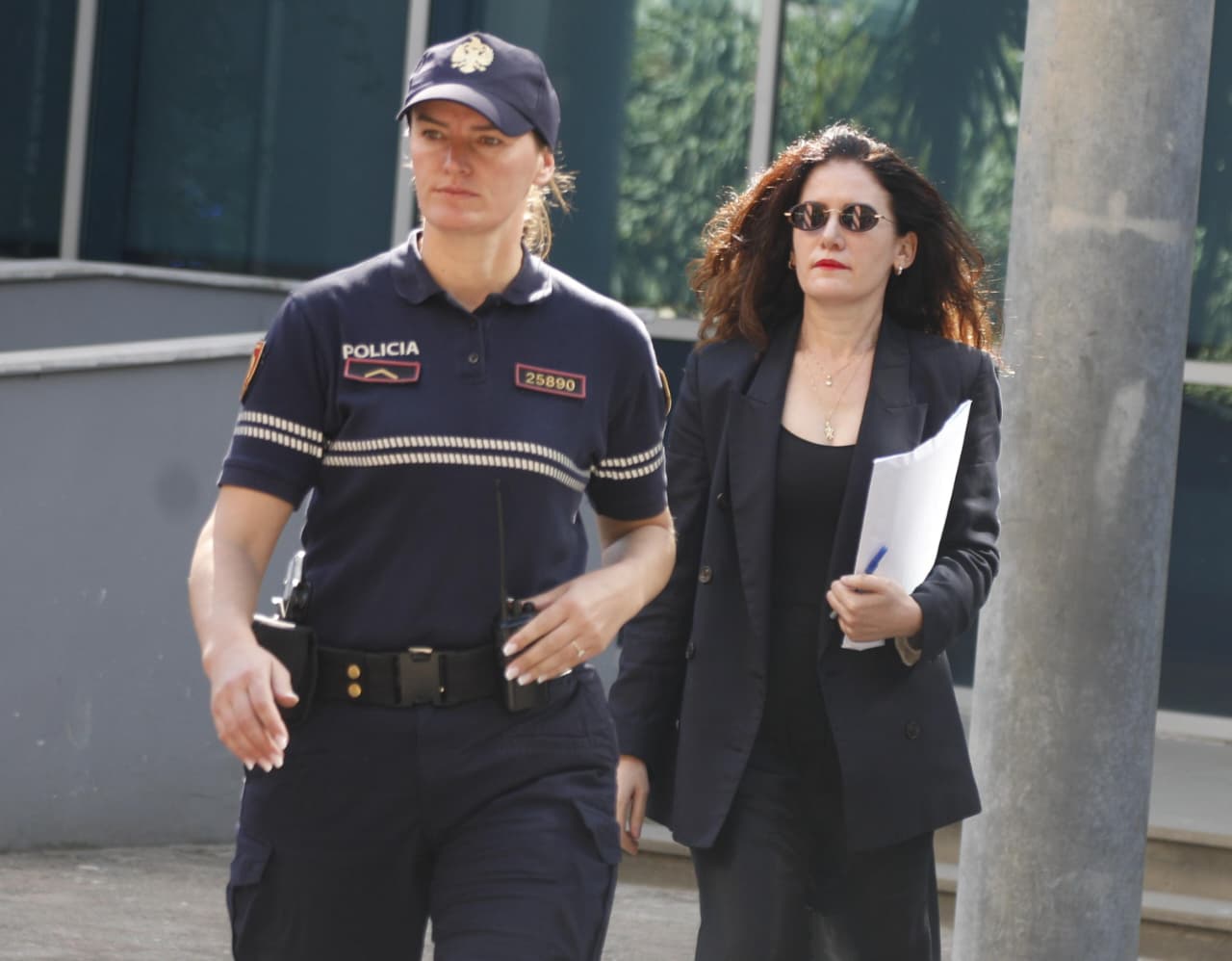
Photo: Vlora Hyseni walking out of GJKKO office on September 24, Credit: LSA
TIRANA – An ongoing investigation in Albania into a suspected data leak by the country's former intelligence chief, allegedly benefiting organized crime, has raised questions about the reliability and integrity of intelligence-sharing between the small Balkan country, also a NATO member, and its allies.
Albania's Special Court Against Corruption and Organized Crime (GJKKO) on Tuesday ordered the country's former intelligence chief into house arrest and suspended her from duty, at the request of the Special Prosecution Against Corruption and Organized Crime (SPAK), a move that has rattled confidence in a NATO member state's security establishment.
Vlora Hyseni, director of the State Intelligence Service (SHISH) since April 2023, is suspected of aiding a criminal suspect and disclosing classified information, according to a document published by SPAK. The measures were issued in connection with a broader corruption probe involving businessman Ergys Agasi, who is already under investigation over alleged manipulation of public tenders and organized crime.
If Hyseni's involvement is confirmed, the development marks one of the most serious internal security crises Albania has faced since the end of communist rule, given SHISH's role as the country's principal liaison with NATO allies on counter-intelligence, terrorism and organized crime, according to the media outlet Balkan Insight.
Albania has positioned itself as a security anchor in the Western Balkans, so a scandal reaching the top of SHISH, involving the alleged leaking of classified information, raises concerns not just about domestic corruption but about the reliability of an allied intelligence service on which partner countries depend for shared intelligence.
Although no evidence has been made public that NATO-classified material was compromised, the case has already drawn scrutiny beyond Albania's borders. Local and international media reports have questioned Hyseni's earlier career in Kosovo's intelligence service, as well as the vetting process behind her 2023 appointment.
Hyseni, who holds both Albanian and Kosovar citizenship, previously served as deputy director of Kosovo's intelligence agency before her dismissal in 2021.
Emails sent to NATO and SHISH requesting comment on the matter went unanswered. Also, Hyseni and her lawyer could not be reached for comment, given the sensitivity of her former position. To date, she has made no public statement on the investigation.
Local experts, meanwhile, said the case is closely tied to regional security and that responsibility should be institutional rather than personal.
Gerti Metani, a security expert, told Radio Free Europe that the allegations are serious specifically because of the position the intelligence chief holds, given her access to information, sources, operational methods, and sensitive relationships with partner services.
He noted that agreements on classified information carry clear restrictions: it must be used only for its intended purpose, must not be passed to third parties without authorization, and access must be limited to those holding the appropriate clearance level.
"An incident like this should be treated not only as an individual criminal matter, but also as an institutional security incident," Metani said.
Fatjon Softa, a security expert, told local outlet Albeu that responsibility for the scandal should be seen as institutional rather than personal. He cautioned against assuming that Hyseni's past in Kosovo's intelligence service automatically meant information had been compromised, saying that conclusion "requires strong data and an assessment of institutional competencies," including exactly when she had access to which classified material. He said Albania-Kosovo security cooperation depends on "institutional transparency, professional controls, and measures adapted to the verified risk," not on downplaying the case.
Lutfi Dervishi, a journalist and political analyst, told BIRN that the political accountability of Albanian Prime Minister Edi Rama hinges on three questions: what the prime minister knew, what he should have known, and what he did once warning signs appeared.
"The head of SHISH does not fall from the sky," Dervishi said, arguing the case cannot be reduced to individual criminal responsibility, given it is the first time a sitting SHISH director has faced house arrest.
Rama, speaking from New York, said: "Everyone is innocent until the final judgment, but no one is above the law," while thanking her for her service.
The case unfolds against a backdrop of heightened strategic anxiety across the Western Balkans, a region NATO has repeatedly identified, including in its Washington Summit declaration, as being of significant importance to the Alliance amid persistent Russian efforts at destabilization.