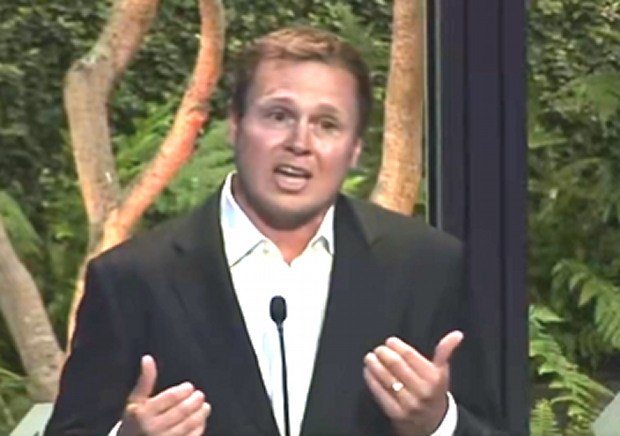
Insurgent Candidate Spencer Pratt Draws Viral Attention After Forceful Debate Performance Against Bass and Raman
Spencer Pratt, a Republican challenger in the Los Angeles mayoral race, drew widespread online attention following a debate in which he criticized incumbent Mayor Karen Bass and Councilwoman Nithya Raman on homelessness, crime and housing. Clips of the event shared on social media showed Pratt pressing both opponents on encampments near schools, policing budgets and whether noncitizens should be allowed to vote in local elections.
By Mike LaChance
1,038 views
Spencer Pratt, an insurgent Republican candidate for mayor of Los Angeles, received a wave of attention online following the first televised debate of the 2026 race, in which he sharply criticized incumbent Mayor Karen Bass and City Councilwoman Nithya Raman over homelessness, crime, and housing. The three leading contenders met Wednesday at the Skirball Cultural Center for a high-stakes hour that was defined by personal attacks and deep divisions over how the nation's second-largest city should confront its intertwined crises of homelessness, public safety, and housing affordability. Clips of the event circulated widely on social media, where Pratt's supporters framed his performance as a breakout moment for an outsider candidate.
Pratt's candidacy is rooted in personal grievance over the disaster that reshaped the race. He lost his home in the January 2025 Palisades Fire, and he has built his campaign around blaming city leadership for the destruction, casting himself as the anti-incumbent. During the debate he traded barbs with Bass directly, at one point calling her an "incredible liar" amid a dispute over the facts of the fire and criticizing the decision to drain a key reservoir for maintenance before the blaze. "Mayor Bass and I are definitely not working together," Pratt said. "I blame this person for burning my house, and my parents' house, and my town." The dynamic produced an unusual alignment on stage: although Pratt and Bass were far apart on policy, observers noted the two often turned their fire on Raman together, in what amounted to a two-on-one exchange against the progressive councilmember.
Much of the debate centered on homelessness, including the contentious question of whether unhoused people should be required to accept shelter when beds are available. Pratt staked out the most aggressive position, declaring that "everybody needs to go inside" and proposing a law-and-order approach that included clearing streets through arrests when necessary and a major expansion of the Los Angeles Police Department. Bass pushed back on criminalization as a remedy, arguing that "making it illegal and arresting people is not the way to solve this problem," while defending her signature Inside Safe initiative as the only citywide program to reduce homelessness two years running, citing a 17 percent decline. Raman, for her part, agreed that people should go inside when shelter is offered but questioned the sustainability of Inside Safe, pointing to its high costs and a significant return-to-street rate, and arguing that Angelenos remain frustrated by limited progress despite enormous spending.
An exchange on the presence of homeless encampments near schools attracted particular attention. Asked whether she supported the ordinance restricting homeless encampments in front of schools and day care centers, Raman was recorded responding haltingly: "uh uh you know I uh I I support keeping our streets safe I did vote against the structure of this particular ordinance" — a response opponents seized on as evasive. The exchange touched a genuine policy record: the Los Angeles City Council passed the ordinance barring encampments within 500 feet of schools and day care centers, and Raman was among a small number of council members who voted against it, consistent with her long-standing skepticism of expanding the city's anti-camping law. Raman has argued that such measures largely shift encampments from one block or district to another without providing shelter or services, and that the city lacks adequate shelter capacity to make enforcement meaningful. Critics, including Bass's office, have characterized those votes as evidence she is too resistant to enforcement around children — a charge Pratt amplified at the debate by pressing for stricter enforcement near sensitive sites.
Pratt also linked public safety to the city's economic health, arguing that crime has driven restaurants and downtown businesses to close or alter how they operate. A social media post paraphrasing his remarks said Pratt explained the city "has gotten so unsafe that some workers are required to eat inside because it's so unsafe" — a depiction meant to tie quality-of-life concerns to business closures, a recurring theme of his campaign. The framing aligns with the broader law-and-order message Pratt has run on since entering the contest, when he vowed "zero encampments," a zero-tolerance stance on public drug use, and investigations into homeless-services nonprofits. On policing, notably, Pratt and Raman found rare common ground in agreeing on the need to hire more officers, even as they differed sharply on nearly everything else and as Bass staked out her own position on the size of the force.
The clips and commentary shared online reflect how the debate was framed by Pratt's supporters: as a moment when an outsider candidate offered blunt, tough-talking solutions to problems many Angelenos describe as urgent. That framing has accompanied a campaign that has gained real traction, drawing endorsements from figures aligned with the national Republican and Trump-aligned right, and viral attention from Pratt's combative campaign ads. His opponents, however, have characterized his approach as importing a politics of grievance, arguing that his rhetoric outpaces workable policy. The contest itself is officially nonpartisan but has broken along sharp ideological lines, with Pratt running as a Republican in a heavily Democratic city, Raman backed by the Democratic Socialists of America, and Bass defending a record under sustained attack from both flanks.
The episode underscores the centrality of homelessness, public safety, and housing in the 2026 Los Angeles mayoral race, with the candidates offering sharply different diagnoses and remedies. Observers say the debate may raise Pratt's profile among voters anxious about those issues, though it remains to be seen how the exchanges will shape voter preferences as the campaign continues toward the June 2 primary, where a large share of the electorate has remained undecided. If no candidate wins a majority, the race would advance to a November runoff between the top two finishers — raising the stakes of every high-visibility moment, including this one, in the weeks ahead.