Inside Bennis, four generations of Moroccan pastry-making
Behind Casablanca’s Bennis pastry shop, more than 30 employees preserve traditional Moroccan recipes through skills passed down across generations. This feature explores the family’s production workshops, the balance between handmade techniques and modern machinery, and the uncertainty surrounding who will carry the business into its next generation.
By Martin Bertrand
1,131 views
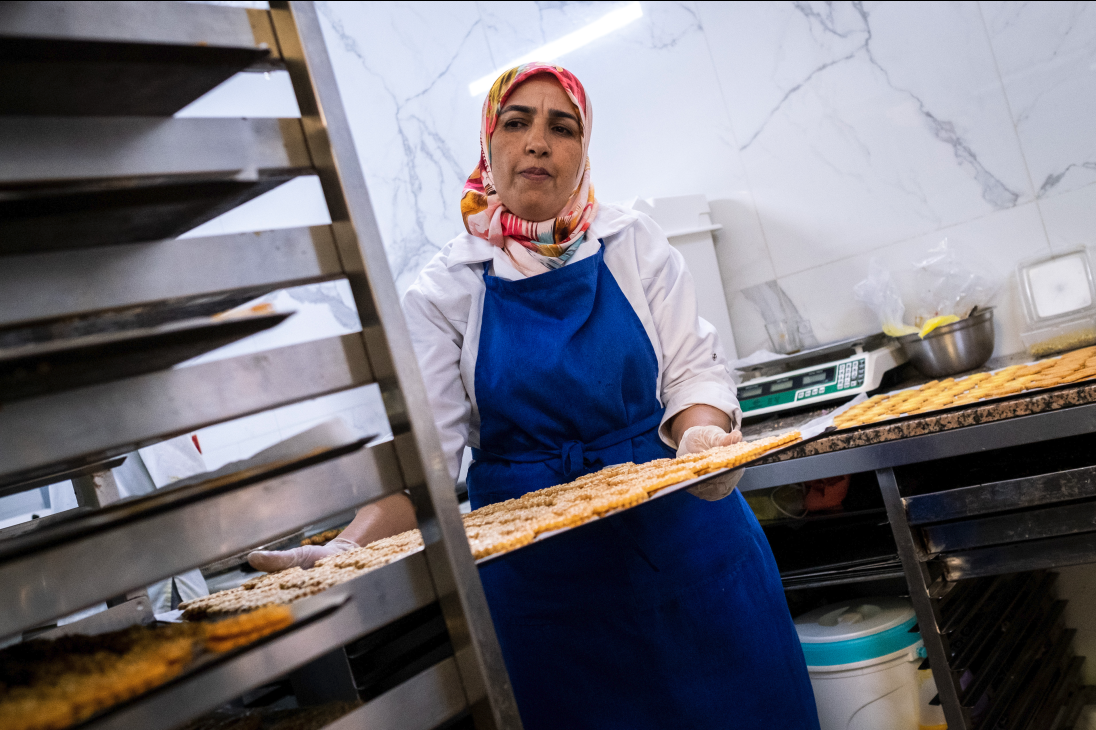
Photo: Woman cooking biscuit based cakes at the Bennis patisserie in Casablanca, Morocco on October 14th 2023. Bennis is a highly reputed family bakery established in the Habous district since 1930, offering traditional home-made Moroccan dishes
Early in the morning, the workshops behind Bennis are already busy. From the street, the pastry shop in Casablanca's Habous district looks modest. Behind the customer-facing room, however, production fills two adjoining multi-storey buildings, with corridors opening onto central courtyards reminiscent of a Moroccan riad. Workers occupy different rooms and floors. Some roll and shape dough, others fill pastries, add small portions of almond paste or prepare trays for baking. The work is divided into stages, and the smell of almonds, orange blossom and sesame moves through the buildings. Across the street, a worker carries a tray towards a small, dim room. Inside, an older man tends a wood-fired oven. Trays of cornes de gazelle, the almond-filled crescent pastries, are being taken over for baking, along with savoury preparations. The workers return to collect what has been cooked. Hakim Bennis, who helps run the family business, believes the oven dates from the 1930s and may be older than the pastry shop itself.
Hakim is the fourth generation of a family that began selling pastries in the Habous during the 1930s. Yet working here was never his childhood ambition. “I never, ever thought I would come and work in the pastry shop. What I originally wanted to do was become a history and geography teacher,” he says. Still, Bennis was part of his daily routine long before he joined the business. He came after school, often stopping by before closing time. Wednesdays offered more time to linger. “I would come to watch the pastry chefs, the stuffed chickens and all of that in the oven,” he recalls. At that age, he was watching what would later become his workplace, although he did not imagine following the same path. His father and grandmother passed on some of their knowledge, and the pastry chefs taught him more by showing him their methods and recipes. A 2023 interview with his sister Sabrina gives another indication of the grandmother's importance: after her husband's death, she took charge of the family business and helped train employees who stayed for decades. Hakim began handling its day-today running in 2012. The man who once wanted to become a teacher now spends his working days among the pastry makers he watched as a child.
On the morning, he moved between his office and the workshops, exchanging friendly words with employees and greeting customers he knew. He did not appear to direct every movement. In the rooms around him, workers carried on with their own stages of preparation, while trays travelled from one workspace to the next. His father Omar has retired, although Hakim says he “always keeps an eye on the pastry shop”. Sabrina contributes to the business's development too, particularly its digital presence and savoury products.
The family is not the only keeper of its recipes. Bennis employs more than thirty people, some of whom have worked there for over thirty years. New employees learn from their more experienced colleagues. “The older ones teach the newcomers, and over time the newcomers teach the younger ones,” he explains. The work is organised by task, with techniques practised at tables and workstations by people who had repeated them for years.
Not everything is made by hand. Hakim estimates that around 80 percent of the work remains manual. Machines have been introduced for certain biscuit-making tasks, particularly during holidays and other periods of high demand. “It makes the work easier,” he says. They can increase output when orders grow, while workers continue to prepare many of the pastries by hand. New recipes have joined the old ones, but Hakim says the family has not abandoned those passed down through earlier generations.
Those recipes extend beyond sweets. Over the decades, Bennis also began preparing pastillas, stuffed chickens, tagines and other savoury dishes. In the shop, customers can choose from cornes de gazelle, briouates, almond mhancha and other traditional pastries. Behind the counter, each product represents a series of tasks carried out in different rooms, then brought together for sale.
The next step in the family's history, however, is uncertain. Hakim does not know whether younger relatives will want to continue the business. Having once intended to become a teacher himself, he does not want to decide their futures for them. “They are still too young. They will do what they want, and then we will see.”