India Has Almost No Domestic Crude Oil – Yet Supplies Diesel to the EU
The EU and India have concluded “the mother of all trade deals.” This is also driving increased imports of energy products – diesel, gasoline and jet fuel. From just a few percent in 2020, India now covers 15–20 percent of the EU’s imported diesel consumption in certain periods.
By Jesper Enerstvedt
924 views
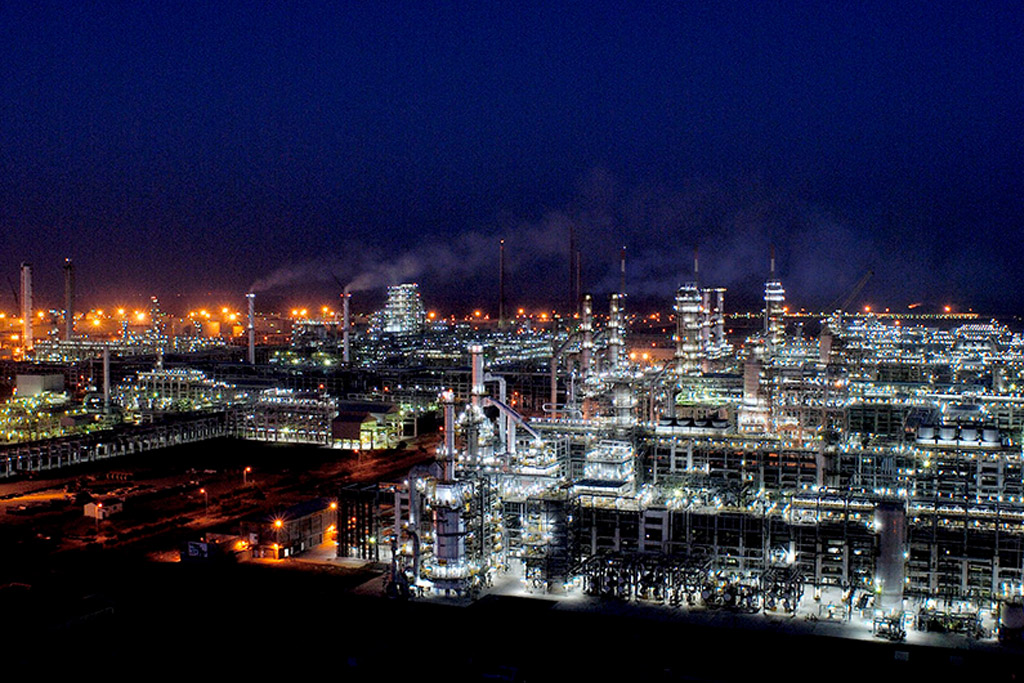
Photo: Reliance Industries/CC BY-SA 4.0 Jamnagar refinery at night. The refinery stopped feeding Russian crude into its export refinery at Jamnagar in November 2025, while still using Russian oil every day at its domestic-tariff plant.
India is heavily dependent on imported oil. According to the Petroleum Planning & Analysis Cell (PPAC) and Indian authorities, the country imports 88–90 percent of its crude. When a major new customer such as the EU appears, India must therefore increase its overall imports. Russia accounts for the bulk of this rise. The EU has nevertheless found a way to wash its hands of sanctioned Russian oil: it requires refined petroleum products to be delivered with documentation proving they do not originate from Russia.
Between 2020 and 2025 the EU reduced its imports of Russian crude oil to its own refineries from 136 million tonnes a year to very low levels. CREA/CSD reported that Hungary and Slovakia together received 8.7 million tonnes of Russian crude in 2024. To replace the lost volumes, the EU has looked for new suppliers. One of them is India.
Given the EU’s rules, the logical expectation would be that countries such as Saudi Arabia would meet India’s increased demand. They have not. According to both Kpler and Eurostat, Saudi Arabia’s share of India’s crude imports has declined somewhat, from 16–19 percent around 2020/21 to 13–15 percent in 2025. It is therefore not the Arab producers who are covering the extra demand. India’s oil imports from Russia have, in just five years, gone from virtually nothing in 2020 to a dominant position of around 33–36 percent of India’s total crude imports. This turnaround ranks among the largest shifts in recent energy history.
For India it is now essential to import enough oil from Iraq and other smaller suppliers so that the numbers add up. India must be able to justify the volumes shipped to the EU with imports from countries that are not Russia. The European ban on oil products refined from Russian crude in third countries entered into force on 21 January 2026. The rules require full documentation of the origin of the crude oil before refining outside Europe. When a customer as large as the EU begins importing significant volumes of Indian refined products, the result is a sharp rise in India’s crude oil imports. The fact that this increase comes from Russia rather than from Iraq or Saudi Arabia does not appear to be an obstacle for the EU.
“The forthcoming trade agreement between the EU and India will be ‘the mother of all deals’ as it will create a common market of around 2 billion people and cover almost a quarter of global GDP.” This was the statement made by European Commission President Ursula von der Leyen at the World Economic Forum in Davos, Switzerland, on 20 January 2026. She said nothing about the fact that the deal would also help Russia maintain its crude oil sales.
To satisfy the EU, India has simply carried out a castling move, as one says in chess. Most countries that import refined petroleum products from India do not care where the gasoline or diesel originally came from, as long as quality and price are acceptable. Major trading partners such as Singapore, the United Arab Emirates (UAE), Malaysia and Australia have no ban. Neither do African countries such as South Africa or Tanzania. India also exports to Latin American countries that have no sanctions rules. India is now rearranging the products so that Russian oil goes in these other directions, while products whose feedstock originates in Saudi Arabia and Iraq arrive in the EU.
One example of such a rearrangement is that Reliance stopped feeding Russian crude into its export refinery at Jamnagar in November 2025, while still using Russian oil every day at its domestic-tariff plant – a facility that previously is believed to have received oil from Saudi Arabia as well. At any rate, Saudi Aramco was a key supplier to the Jamnagar complex under an agreement for 500,000 barrels per day in 2019–2021. But for the Indians, oil is oil. Who receives what after refining is of no concern to India; what matters is that they make money on the sales. Russia offers competitive prices. Therefore, every extra barrel ordered by the EU influences India’s imports from Russia.
India’s imports from Russia stood at approximately 33.3 percent for the whole of 2025, compared with 36 percent in 2024. Full figures for 2026 will not be available until 2027, but current forecasts point to a further decline. Russia is nevertheless expected to remain India’s largest crude oil supplier in 2027 as well. Only five years ago the picture was completely different. Data from 2020 show that Iraq led with 22–25 percent, Saudi Arabia was second with 17–19 percent, the United Arab Emirates third with 9–11 percent, and Nigeria plus West Africa accounted for 8–10 percent. Russia exported no significant volumes to India. In five years two major developments have taken place for India: the EU began ordering enormous quantities of refined products, and India began importing enormous quantities of crude oil from Russia. India today ships around 20 to 25 percent of its total exports of refined petroleum products to the EU.
On paper, therefore, it looks as if India is exploiting a lucrative business opportunity, acting as an intermediary that transforms sanctioned Russian oil into Indian diesel. In 2020 India’s exports of refined oil products – diesel, gasoline, jet fuel and naphtha – went mainly to Asia, the Middle East and Africa. Only smaller volumes reached the United States and Europe. India currently imports 630–640 million barrels of Russian crude oil per year. By comparison, daily volumes from Russia were practically zero before 2022, meaning that Indian refineries today receive almost 1.8 million barrels every single day from a source they barely traded with a few years ago.
India now plays a central role as a fuel supplier to the EU. According to Vortexa, India exported 61.5 million tonnes of petroleum products in the financial year 2025–2026. This is confirmed by Indian authorities. The EU was one of the largest recipients. Enormous volumes of diesel and other refined products such as jet fuel and naphtha are shipped from giant refineries such as the Reliance complex at Jamnagar to European ports, including via the ARA hub in the Netherlands, from where they are distributed further across the rest of Europe.