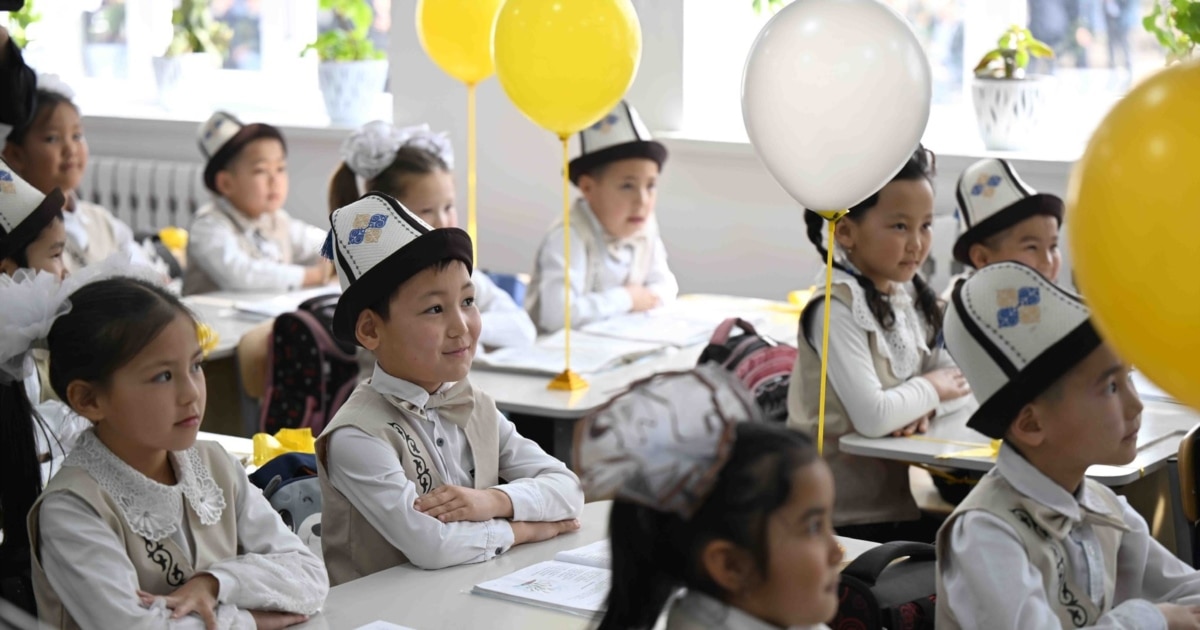
In Kyrgyzstan, President Japarov Announces $80 Million to Address National Textbook Shortage
President Sadyr Japarov has pledged 7 billion soms (about $80 million) to tackle a persistent shortage of school textbooks, his press secretary announced on September 18. The pledge follows parent complaints and parliamentary questions about state-issued books marked "Not for sale" turning up in markets while pupils share copies, highlighting problems with distribution, rising demand and past underfunding.
By Vanessa Bergmann
1,018 views
President Sadyr Japarov of Kyrgyzstan has ordered 7 billion soms — roughly $80 million — to be allocated for the production and distribution of school textbooks, a decision announced on September 18 by his press secretary, Askat Alagozov, via Facebook. Alagozov said the financing question has been resolved but did not specify the exact source of the funds or detail an implementation timetable.
The announcement comes amid mounting complaints from parents, teachers and members of parliament about a shortage of textbooks in schools across the country. On September 16, Jogorku Kenesh deputy Dastan Bekeshev publicly drew attention to the problem, saying that textbooks produced by the state publishing house Uchkun and stamped "Not for sale" were being offered for sale in local markets, while many pupils are forced to share a single textbook between two or three students.
Representatives of Uchkun responded at a briefing on September 17 by saying the publisher is responsible only for producing textbooks to meet orders and is not in charge of distributing them to schools. The Ministry of Education has acknowledged that textbook shortages are not new and said senior leadership is aware of persistent supply gaps.
Alagozov described parents' complaints as justified and acknowledged shortcomings in the current system. He recounted recent levels of financing for textbooks: previously about 100 million soms were allocated annually for publishing, but over the past two years more than 1.3 billion soms (he said this amounts to less than $15 million) were provided. Over that two-year period, officials say more than 9.6 million textbook copies were printed, yet the supply still falls short of demand.
According to the presidential press secretary, maintaining the previous pace of funding would make allocating a lump sum equivalent to 7 billion soms take more than a decade, and at those rates it would require more than 50 years to fully meet current national needs for textbooks. He linked the growing deficit to several structural factors: population growth, Kyrgyzstan's recent transition to a 12-year education system, and the revision and updating of curricula — all of which have increased demand for printed learning materials. Still, Alagozov said, these causes do not justify leaving students without the books they need.
The disclosure that books marked "Not for sale" are appearing on markets raises questions about procurement oversight and distribution channels. If state-printed educational materials are being diverted to commercial sale, that would suggest weaknesses in logistics, inventory control or corruption in the supply chain. Uchkun's insistence that it only fulfills production orders does not address where breakdowns may be occurring after printing: in storage, transport, school allotment, or local-level distribution.
Education advocates and parents say the lack of textbooks impedes learning, forcing teachers to adapt classwork and pupils to share scarce resources. The shortage could disproportionately affect rural schools and low-income families, deepening educational inequality at a time when Kyrgyzstan is carrying out structural education reforms. The government’s pledge of funds may increase production capacity, but analysts and officials stress that money alone will not solve the problem without transparent procurement, accountable distribution, and effective monitoring to ensure books reach schools and students.
Askat Alagozov did not provide a breakdown of how the 7 billion soms will be spent, which agencies will manage procurement, or what oversight mechanisms will be put in place to prevent diversion of materials to informal markets. With parliamentary scrutiny already underway and public concern rising, the efficacy of the new allocation will likely depend on follow-through: a detailed plan for printing, targeted delivery to underserved schools, and clear, publicly reported steps to close loopholes that allow state-printed books to be sold illegally.
The textbook shortfall in Kyrgyzstan highlights broader governance and accountability questions. Ensuring the right to education requires not only the financing of educational materials but also mechanisms to guarantee that those materials reach the children who need them. The government’s announced funding boost addresses the scale of the problem; its implementation and transparency will determine whether students ultimately receive the textbooks they are entitled to.