In Kakuma, learning self-defence is only the beginning
By Martin Bertrand
1,048 views
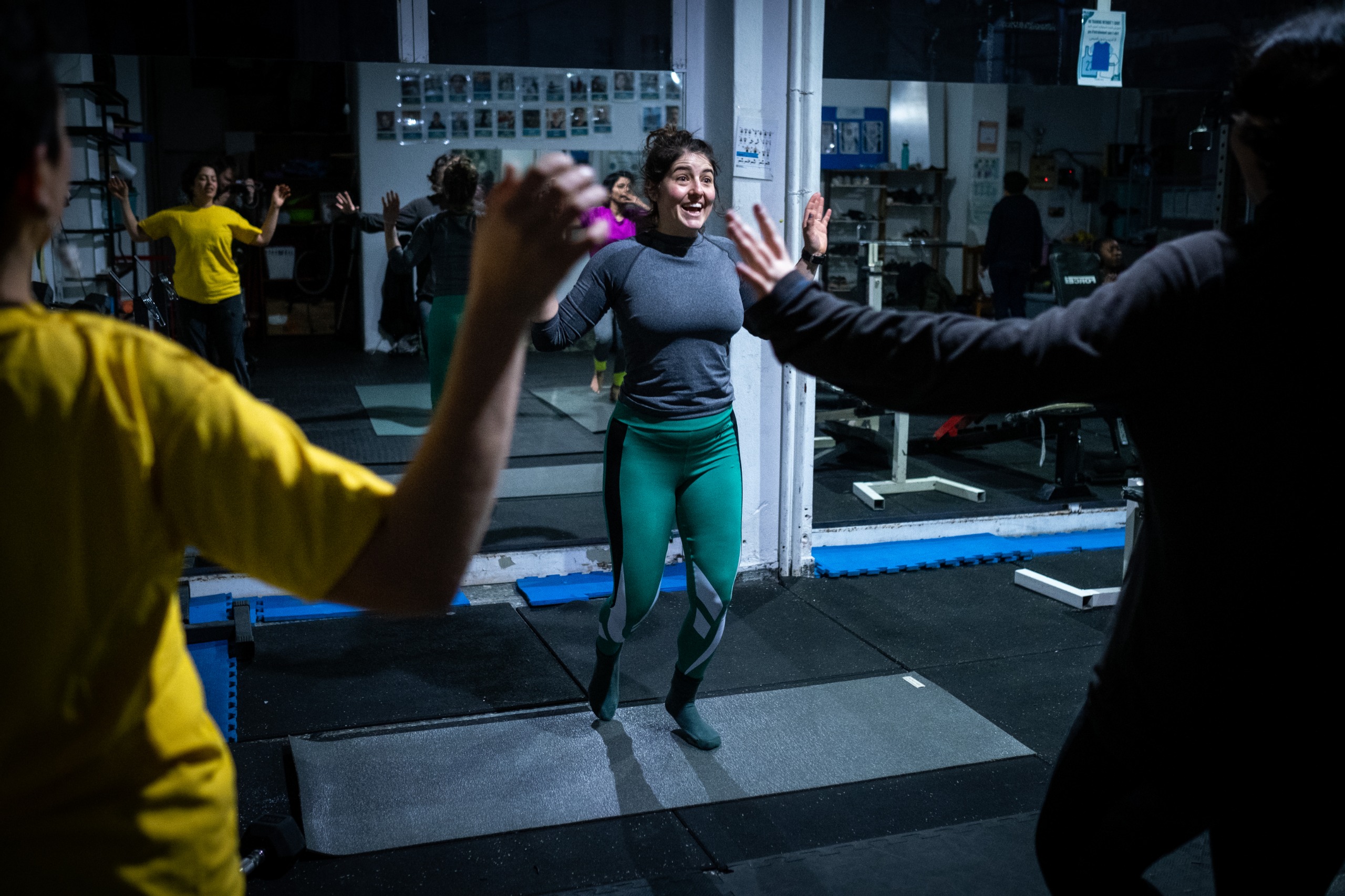
Photo: Claude Jonkmans during a training lesson in Athens.
Chana Santino Ismael was crossing a dry riverbed in Kenya’s Kakuma refugee camp when two men armed with machetes threatened her. According to a testimony published by EmpowerVan, the Sudanese refugee remembered a lesson from her self-defence training: assess the danger and find a way out. She ran towards a nearby farm, where workers came to her aid. Months later, she was teaching other young women the same skills.
Her story illustrates the ambition of EmpowerVan, a small organisation founded by Claude Jonkmans, who is trying to make violence-prevention training last beyond the visits of foreign instructors. In Kakuma, in northwestern Kenya, that means preparing refugees to lead classes themselves and engaging men in challenging the attitudes that allow violence to persist.
Kakuma was established in 1992 and, together with neighbouring Kalobeyei, forms one of Kenya’s largest refugee-hosting areas. Its residents have fled conflicts in South Sudan, Sudan, Somalia, the Democratic Republic of the Congo and elsewhere. Jonkmans, who first visited in 2026, was struck by its scale and by how residents had built markets, schools and local organisations despite difficult living conditions. “It’s really like a whole city,” she said in an interview for us. Her path to Kakuma began in Greece. After losing her hospitality-management job in Berlin, Jonkmans volunteered with Yoga and Sport with Refugees in 2021 and subsequently managed its Athens gym. She trained as an empowerment self-defence instructor in 2022, but soon discovered a problem: women wanted to attend her workshops yet struggled to leave the camps, travel alone or find childcare. “That is where the idea to go to women, to go to people that are displaced, to go to more isolated places, came,” she recalled. She founded EmpowerVan in 2023 and began bringing classes to refugee camps around Athens.
In Kakuma, gaining acceptance involved more than arranging a training space. Jonkmans says she met community elders who could determine whether the programme would operate locally. One man challenged her: “I hope you’re not teaching the women to hit their husbands.” Nervous, she tried to establish common ground, explaining that the training focused on escaping or de-escalating violence rather than encouraging it. According to her account, the leaders eventually agreed to let the programme proceed. The classes combine awareness of danger, communication, boundaries and deescalation with physical techniques. EmpowerVan began with workshops and consultations in early 2026, then organised training for local instructors in June. The programme’s stated target is 20 women trained in empowerment self-defence and 20 men trained as “Male Agents of Change”, supported by a year of mentoring.
For Jonkmans, transferring responsibility is the point. “I really think that the power needs to go to those who are affected,” she said. “The refugees are the ones who are creating the change, and we’re supporting them.”
Chana, who fled Sudan, is now teaching young women aged 18 to 25. She says the training helped her assert boundaries and handle conflict. “I want all the ladies in the space to feel safe,” she told EmpowerVan in a testimony published in September.
Working with men was not part of a model Jonkmans simply brought from Europe. She says Kenyan organisations specialising in gender-based violence urged her to include them. Together with a Kenya-based coordinator, she developed sessions examining consent, gender norms and power. “I don’t think that we would be able to create any lasting change without the support of the men,” she said. One participant, Willson Juma, a refugee from the Democratic Republic of the Congo, has described how the programme made him reconsider beliefs about consent and sexual violence. He now leads discussions with other men, according to EmpowerVan.
The challenge is keeping such efforts going. Jonkmans says she is building partnerships with local groups, including refugee-led organisations, so classes can continue within the camp. But even volunteering carries a cost when time is needed to collect water, find firewood or earn a living. “All of their time is attached somehow to survival,” she said.
Kenya’s Shirika Plan, launched in March 2025, promises greater refugee inclusion and access to employment and services. Jonkmans believes her train-the-trainer approach fits that ambition, though she is cautious about drawing wider conclusions after spending only around two months in Kakuma. She points to discrimination and limited economic opportunities as obstacles that self-defence lessons alone cannot remove.
For Chana and other newly trained instructors, the question is now whether they will have the support to continue teaching long after EmpowerVan’s visiting team has left.