At Yoga and Sport with Refugees, free training sessions bring together people whose lives rarely cross paths. After losing its gym, the association is working to rebuild the space that made those encounters possible.
By Martin Bertrand
1,167 views
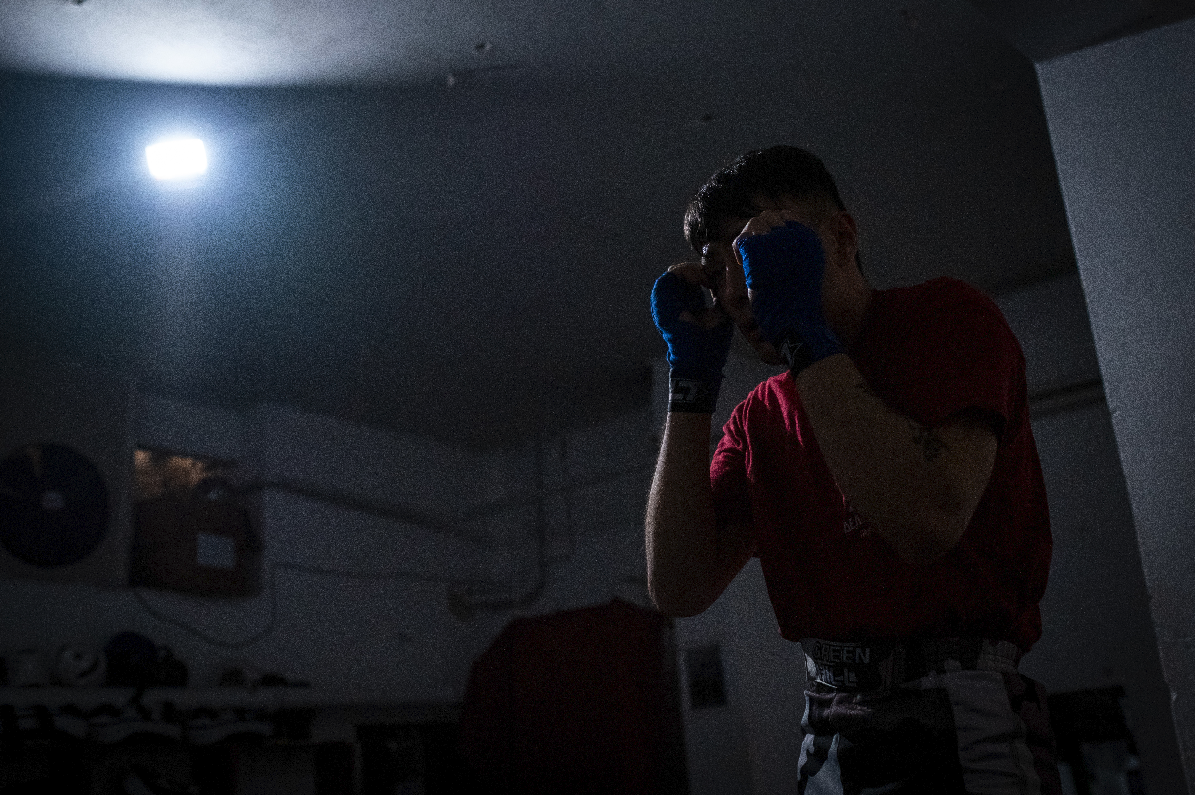
Photo: Greece, Athens, 2023-01-26. Report on the organisation Yoga and Sport for Refugees, which operates not only in Athens but also in Lesbos and Paris. The association s main role is to offer free sporting activities to refugees and migrants and anyone else who wants them, regardless of nationality, age or gender. In Athens, they offer football, parkour, hip-hop, martial arts and combat sports such as boxing and taekwondo. The teachers are also refugees or asylum seekers. Photography by Martin Bertrand.
Inside the former Athens gym of Yoga and Sport with Refugees (YSR), the atmosphere was striking. The enclosed space offered a break from the pressures outside. There was an ease between people who knew one another, a sense of welcome that extended across different languages and backgrounds. Volunteers trained alongside refugees, some of whom had themselves become coaches. For a while, the focus was on exercising, looking after oneself and enjoying time together.
That feeling of safety and mutual respect was central to the place. For people dealing with insecure housing, paperwork or an uncertain future, the sessions offered a chance to breathe. The benefit was not limited to physical fitness. The pleasure of returning to familiar faces, of feeling comfortable among others, mattered too. The gym provided a space for relaxation and emotional well-being, away from the difficulties that could dominate everyday life.
But in October 2025, YSR had to leave the gym it had occupied since 2020. Its activities were spread across parks, partner facilities and other community spaces. Seven months later, the organisation secured another location, though renovations, legal requirements and financing have stood in the way of opening it as a fully functioning sports centre.
Founded in 2017 on Lesbos, the Greek island that became a major entry point for refugees arriving in Europe, YSR expanded to Athens in 2020. The Athens project now offers 11 sports and activities, including martial arts, yoga, Pilates, parkour, volleyball, running and fitness. All are free and open to everyone, with particular attention to refugees and migrants facing barriers to sport. In some months, YSR has recorded around 1,200 attendances, a count of visits rather than individual participants.
“At YSR, sport is our starting point, but it has never been our final objective,” says Carolina Lopes, who manages the Athens project. “What we are trying to create is a space where people feel welcome, safe and part of something, regardless of their background, nationality, gender or legal status.”
A routine in uncertain lives
For many refugees in Greece, legal protection does not bring immediate security. Finding stable housing or employment can remain difficult, while unfamiliar administrative procedures, language barriers and limited professional networks complicate everyday life. Even people who have lived in the country for years may struggle to plan ahead.
“One of the biggest difficulties we see is that receiving protection or arriving in a European country does not automatically mean having the conditions to rebuild a life,” Lopes explains. She points to the gap between expectations placed on refugees, from learning the language to becoming financially independent, and the opportunities available to reach those goals.
Within that reality, a regular class can become a reliable part of the week. Lopes describes participants who first arrive without speaking to anyone and gradually begin making friends, as well as others who become familiar faces and eventually help people around them during training. Sport gives people a reason to turn up; the conversations and friendships continue after the session ends.
The mix of people is essential. Coaches, volunteers, association staff and participants do not all share the same history or legal status. In the former gym, what stood out was how naturally those differences coexisted within an atmosphere of care and respect. Such encounters can be particularly valuable for people who have few spaces where they feel at ease.
From taking part to taking responsibility
YSR also encourages participants to run activities themselves. Some arrive with coaching experience or other professional skills that have been difficult to put to use in Greece. Others gain confidence and experience by volunteering, mentoring or leading sessions. The association is working to expand coaching qualifications and opportunities in the sports sector.
“When someone moves from being a participant to leading a session, they are no longer simply accessing an opportunity; they are creating that opportunity for other people,” Lopes says.
Accessibility remains an ongoing concern. Women with caregiving responsibilities may struggle to attend, while others prefer not to exercise in mixed-gender groups. YSR offers women-only classes with female coaches and is working to better include older people, people with disabilities and LGBTQ+ participants. Free classes help, but transport costs, schedules and the availability of suitable facilities still matter.
The loss of the gym has made those practical questions harder. Staff and volunteers have had to preserve the programme without the single, familiar place where people once gathered. Securing a replacement was a step forward, but the work of making it usable continues.
For the people who passed through its doors, the old gym was somewhere to train, relax, meet others and take a break from difficult circumstances. Recreating that atmosphere, not merely finding a roof and enough room for exercise, is now one of YSR’s biggest challenges.