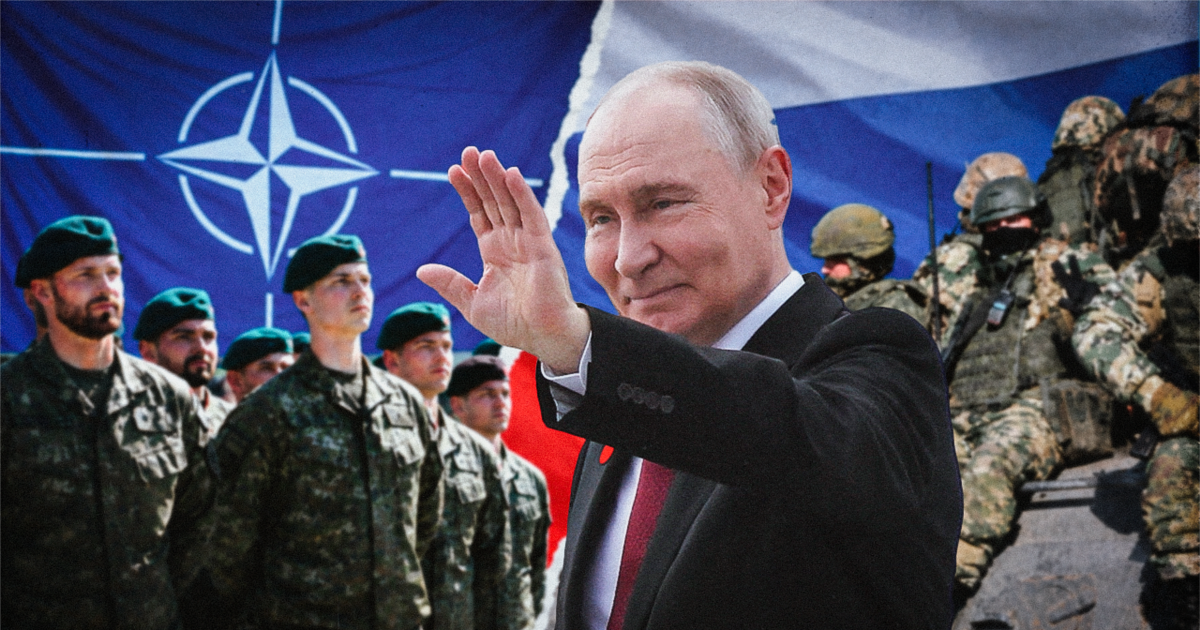
If Putin Clashes with NATO: Analysts Warn Azerbaijan Could Face a Tough Choice — 'May Side with Russia'
Global media and security analysts increasingly regard a Russia–NATO war as a realistic danger, with some identifying 2029–2030 as a critical window for potential escalation. Experts warn that any major confrontation would reverberate beyond Europe, likely destabilizing the South Caucasus and placing Azerbaijan in a stark geopolitical dilemma between its economic ties to Moscow and its energy partnership with Europe.
By Christopher Manley
848 views
The prospect of an armed confrontation between Russia and NATO is no longer treated as a remote hypothetical by many in the international security community. In recent months, global media coverage and analysts have intensified discussion of the likelihood of significant escalation, warning that Europe’s capitals must prepare for hybrid attacks and the possibility of direct clashes. Several experts have pointed to 2029–2030 as a particularly fraught period when the risk of confrontation may peak.
Analysts say that a large-scale escalation between Moscow and NATO would not be confined to the immediate European theatre. Such a conflict, they warn, would have substantial spillover effects that could reach the South Caucasus — a region already shaped by competing influences and recent armed conflict. The analysts argue that an expanded confrontation would create serious instability in the region, amplifying existing tensions and potentially provoking new security and humanitarian crises.
For Azerbaijan, the analysts say, the implications would be particularly acute. Baku maintains deep economic ties with Moscow, including trade and political links that have persisted despite broader regional realignments. At the same time, Azerbaijan has cultivated a strategic energy partnership with European countries: its pipelines and energy exports are important elements of European energy diversification efforts. That dual dependence — economic connection to Russia and energy cooperation with Europe — creates a difficult balancing act for Azerbaijani policymakers.
Faced with a major Russia–NATO confrontation, Azerbaijani leaders would confront a stark geopolitical choice, observers note. On one side is pressure to align with Russia to preserve established economic and political relations. On the other is the imperative to safeguard strategic partnerships with Europe that underpin Azerbaijan’s energy exports and diplomatic outreach. Some commentators have suggested that in a crisis scenario Azerbaijan could side with Russia, a move that would carry significant consequences for the region’s balance of power.
The possible consequences of such a choice extend beyond high politics. Analysts warn that any large-scale confrontation involving Russia and NATO would likely produce humanitarian fallout: displacement of civilians, interruptions to trade and energy transit, and heightened risks to civil liberties and public safety across affected territories. In the South Caucasus, which includes populations still recovering from recent fighting and displacement, such pressures could exacerbate fragility and deepen humanitarian needs.
Security strategists also emphasize the hybrid dimension of potential conflict, including cyberattacks, information operations, and other non-kinetic measures that could be launched to destabilize rivals. European capitals are reportedly preparing responses to such threats, but experts caution that hybrid tactics complicate traditional defense planning and could quickly entangle regional states that are not direct combatants.
Diplomatically, an escalation between Russia and NATO would test international law and alliance cohesion, while also placing regional actors under intense pressure to choose sides or to negotiate neutrality under difficult circumstances. For Azerbaijan, any alignment or perceived alignment could shift regional relations, affecting ties with neighboring states and external partners.
Observers say the discussion over 2029–2030 underlines the urgency of diplomatic efforts and contingency planning. While analysts differ on the specific triggers and trajectories of a potential Russia–NATO clash, there is broad agreement that the geopolitical fallout would reshape regional dynamics. For Azerbaijan, the coming years may require delicate navigation between competing partnerships, and the decisions made in response to any escalation could have long-lasting implications for regional stability and the balance of power in the South Caucasus.