If Albania and Montenegro Join the EU before Kosovo: Implications for Movement, Security and Trade
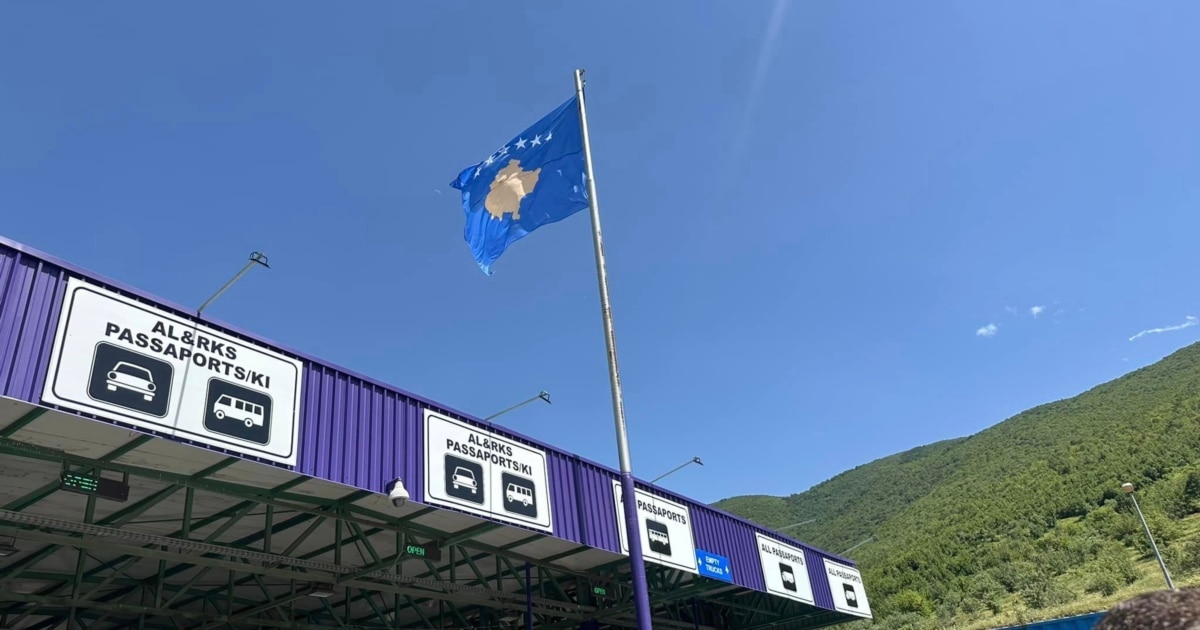
Should Albania and Montenegro become EU members ahead of Kosovo, the EU’s external borders would shift to Kosovo’s frontiers with those countries, with consequences for travel, policing and commerce. Experts say such a development would increase pressure on Kosovo to speed up reforms in rule of law, diplomacy and trade standards to avoid isolation and security vulnerabilities.
By Clémence Desjardins
841 views
In the coming years, Europe’s external border could run along Kosovo’s frontiers with Albania and Montenegro — if both neighbouring states complete their accession into the European Union before Kosovo does. That prospect is becoming more plausible as Albania and Montenegro advance in their EU accession processes while Kosovo remains stalled in its bid for candidate status.
Montenegro has provisionally closed 23 of 33 negotiating chapters and the European Commission estimates it could complete all chapters by the end of 2026. Albania has closed four chapters and opened its final negotiation cluster, aiming to finalise accession talks by the end of 2027. Kosovo submitted its EU membership application on December 15, 2022, but is still awaiting candidate status amid a stagnation of reforms and an extended institutional crisis.
A new European Commission report noted that Kosovo’s reform momentum has slowed amid persistent political instability, difficulties in constituting the parliament and government, and three rounds of parliamentary elections within about a year. Experts working on European integration, economics and security warn that if Albania and Montenegro enter the EU first, Kosovo could face immediate practical and strategic consequences.
Tefta Kelmendi, a researcher at the Jacques Delors Institute, said Kosovo has already fallen behind its neighbours because of the domestic political crisis and lack of progress in dialogue with Serbia. "Given the neighbours’ progress over the last four years and, in comparison, Kosovo’s stagnation due to political crisis and the lack of progress in the dialogue with Serbia, which also affected the European integration process and diplomatic relations with EU institutions and member states, a significant gap has been created that will be difficult to bridge in the near future," she told Radio Free Europe/Radio Liberty.
Kelmendi said the accession of Albania and Montenegro to the EU could increase internal pressure in Kosovo to accelerate reforms, particularly in rule of law and diplomacy, and to remove political obstacles to integration. She urged Pristina to intensify diplomatic engagement with EU institutions and member states and to address the issue of non-recognition by five EU member states in order to unblock Kosovo’s candidacy in the Council of Europe. Strengthened domestic reforms and diplomacy, Kelmendi argued, would also be necessary for integration into the EU single market.
Beyond politics, security cooperation is likely to diverge if neighbours join the EU first. Jeta Lošaj of the Kosovo Centre for Security Studies highlighted that Kosovo is currently the only country in the Western Balkans without an operational agreement with Europol. A 2020 working arrangement has improved practical cooperation but does not permit exchange of personal data. "When neighbours are inside the EU, that asymmetry will deepen," Lošaj said, warning that it could hinder Kosovo’s fight against organised crime and other cross-border threats. Criminal groups treat the region as a single operating area and could exploit any gaps in information exchange and border management to facilitate trafficking, smuggling and irregular migration.
Lošaj also said that EU membership for Albania and Montenegro would bring EU border management standards, stricter controls and greater Frontex involvement. These changes would affect how citizens travel. Kelmendi noted practical consequences for Kosovars: entry into those countries would require valid passports rather than biometric ID cards, additional vehicle insurance for travel into EU territory, and more restrictive rules on length of stay. While regional travel agreements based on identity cards would not automatically end upon EU accession, the greatest impact would come if those neighbours also joined the Schengen area, a process that can follow EU membership only after further years and technical alignment.
Trade relations would also change. Gazmend Ćoraj, an economics professor at the University of Pristina, said that on accession Albania and Montenegro would be obliged to adopt the EU’s common commercial policy and would exit the Central European Free Trade Agreement (CEFTA). Trade with Kosovo would then be governed by the Stabilisation and Association Agreement framework under which Kosovo has operated since 2016. Increased non-tariff barriers — higher sanitary, phytosanitary and product standards — would be a major challenge for Kosovar exporters, particularly small and medium-sized enterprises.
Lulzim Rafuna, president of the Kosovo Chamber of Commerce, warned that while some larger companies have obtained EU market certifications, most small and medium enterprises lack the technical and financial capacity to meet EU requirements quickly. "Additional customs checks and border procedures could cause delays and increase costs for Kosovar transporters," he said, naming agri-food, construction materials and transport and logistics as sectors most exposed to the transition. Limited laboratory capacity and a lack of information for producers could further weaken competitiveness.
Experts urge Pristina to prepare now by accelerating rule-of-law reforms, improving diplomatic outreach to EU capitals and institutions, and investing in testing infrastructure, standards compliance and company support to meet EU requirements. Without swift action, Kosovo risks not only lagging behind its neighbours economically and diplomatically, but also becoming more exposed on security and mobility — with practical consequences for citizens who regularly cross regional borders and for businesses that rely on neighbouring markets.