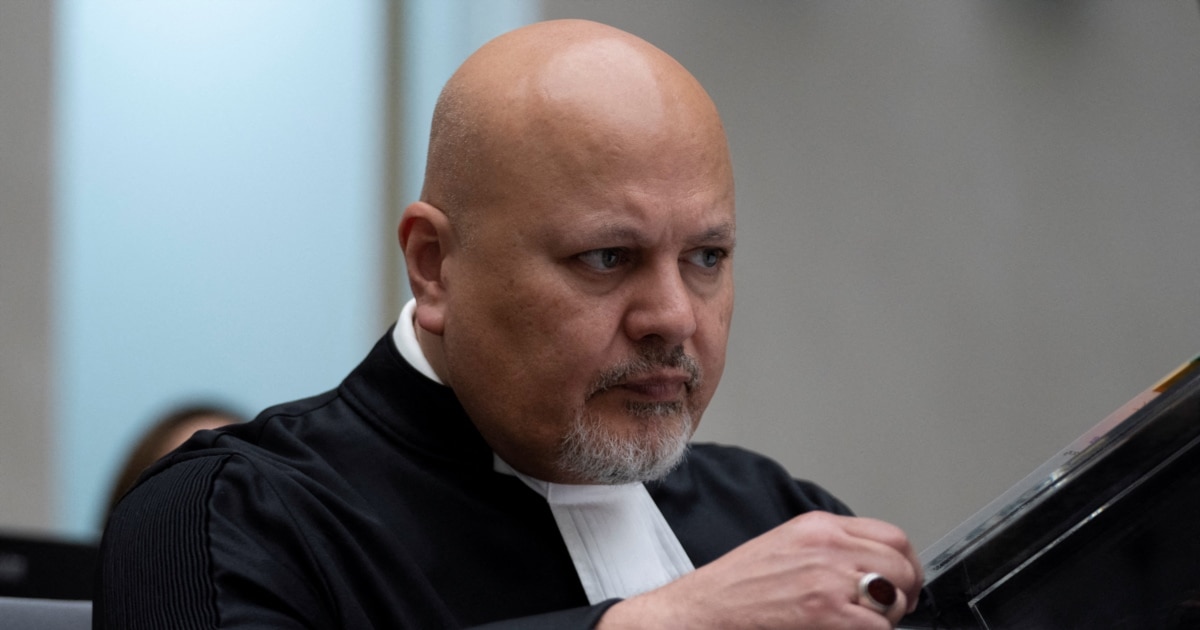
ICC Prosecutor Karim Khan Suspended by Assembly Bureau amid Sexual Harassment Allegations
The bureau of the Assembly of States Parties to the Rome Statute voted on June 8 to suspend International Criminal Court (ICC) Prosecutor Karim Khan from his duties amid allegations of sexual harassment, which Khan has strongly denied. A final decision will be taken by the Assembly at a special session; Khan had previously led investigations that produced arrest-warrant requests for Vladimir Putin and Benjamin Netanyahu.
By Blake Marriott
1,067 views
The International Criminal Court’s (ICC) prosecutor, British lawyer Karim Khan, has been suspended from his duties by the bureau of the Assembly of States Parties to the Rome Statute, the assembly said on June 8. The bureau reached the decision by a majority vote following allegations of sexual harassment against Khan, allegations he has categorically denied. A final determination on his status will be made by the Assembly at a later special session.
The suspension follows media reports and an internal disciplinary inquiry into complaints from a female staff member accusing Khan of sexual harassment. Khan has publicly rejected the claims, saying the allegations are not true. He had previously taken administrative leave while the disciplinary investigation was under way.
Karim Khan has been the ICC’s prosecutor since June 2021. Under his leadership the prosecutor’s office has pursued a number of high-profile investigations. Notably, Khan initiated requests that led to arrest-warrant applications for Russia’s president, Vladimir Putin, in March 2023 and for Israel’s prime minister, Benjamin Netanyahu, in November 2024. These actions have placed Khan and the ICC at the center of intense international scrutiny and political debate.
The prosecutor’s office also completed, in 2022, an investigation into the 2008 Russia-Georgia war, which resulted in the court presenting arrest-warrant applications related to figures associated with the conflict in what the court described as activities in South Ossetia. Those developments underscored Khan’s role in pursuing cases that target individuals from powerful states and complex geopolitical conflicts.
The Assembly of States Parties, composed of countries that are party to the Rome Statute, has authority to oversee aspects of the court’s governance and accountability. Its bureau’s decision to suspend Khan is a rare and consequential step that signals the assembly’s willingness to act on internal complaints against senior ICC officials. The bureau’s action is temporary pending the Assembly’s next steps at the special session, where member states will consider the bureau’s recommendation and any additional findings from the disciplinary process.
Observers say the suspension raises immediate questions about leadership continuity at the court and about how the ICC will proceed with high-profile investigations initiated under Khan’s tenure. While the prosecutor’s office can continue its work under deputy leadership, the suspension of the elected prosecutor may affect perceptions of the court’s stability at a time when it is confronting politically sensitive matters that involve state leaders and allegations of grave international crimes.
The ICC, headquartered in The Hague, is frequently referred to as the Hague-based court. It operates under the Rome Statute, the treaty governing its jurisdiction and the Assembly of States Parties that oversees it. The assembly’s actions to suspend and potentially replace an incumbent prosecutor are significant for the institution’s internal accountability mechanisms and for broader debates over the court’s independence, legitimacy and capacity to pursue cases implicating powerful states and officials.
As the Assembly prepares for a special session to make a final ruling, the prosecutor’s office remains under scrutiny. Khan’s supporters and critics alike will be watching how the Assembly balances the need for due process in the internal inquiry with concerns about maintaining the ICC’s operational momentum on major investigations. The outcome will have lasting implications for the court’s leadership and for international justice efforts tied to cases Khan had advanced.