Hungary Drops Charges Against Organisers of Banned Pride Marches After EU Court Ruling
Hungarian prosecutors have dismissed criminal charges against organisers of last year’s Pride marches after the European Court of Justice found the 2021 anti-LGBTQ law that underpinned the bans to be incompatible with EU law. The decision clears Budapest Mayor Gergely Karacsony and activist Geza Buzas-Habel and comes as police say they will permit this year’s Budapest Pride on 27 June.
By Christopher Manley
996 views
Hungarian prosecutors announced on Thursday that they have dropped criminal charges against organisers of last year’s Pride marches after a ruling by the European Court of Justice found the national law used to justify the bans in breach of EU rules. The decision directly affects Budapest's progressive mayor, Gergely Karacsony, who had been charged in January for his role in organising the capital’s 30th Pride parade despite an official prohibition under laws enacted during Viktor Orban’s administration.
Prosecutors said the legal basis for the charges no longer exists because the indictment relied on "a provision that was later found to violate EU law, the facts described in the prosecutor's indictment no longer constitute a criminal offence." The same reasoning led to the dismissal of charges against activist Geza Buzas-Habel, who organised Hungary’s only Pride march outside the capital, in the southern university city of Pecs.
The move follows an April ruling by the European Court of Justice (ECJ) that declared Hungary's 2021 anti-LGBTQ legislation incompatible with EU law. That legislation had been used by Hungarian authorities to ban or restrict LGBTQ events and to justify other measures presented domestically as "child protection." The ECJ judgment effectively removed the legal foundation for prosecuting organisers who had defied those national restrictions.
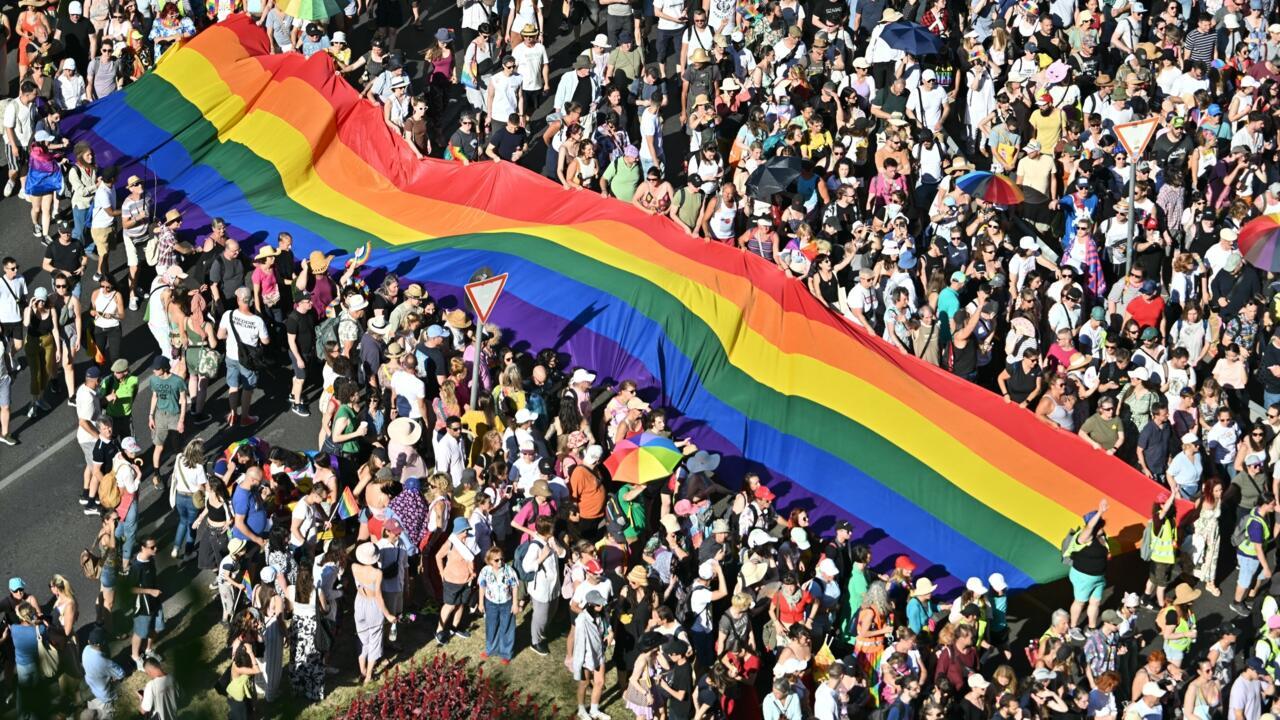
Police told the French news agency AFP last week that they would allow Budapest Pride to take place on 27 June, saying they found "no grounds for prohibiting" the event. Last year’s Pride in Budapest drew more than 200,000 participants in June, while the Pecs march in October attracted thousands, making both events notable, large-scale public demonstrations of support for LGBTQ rights in Hungary.
The record turnouts were widely read as a rebuke to Mr Orban’s long-running clampdown on LGBTQ rights. In response to last year’s bans, Mr Karacsony stepped in to co-organise the capital’s parade in an effort to circumvent restrictive regulations. Prosecutors had still sought to fine him following the event before the ECJ ruling made the charges untenable.
Hungarian rights groups welcomed the prosecutors’ decision. A joint statement signed by four prominent NGOs, including Amnesty International, said they were "extremely pleased" that the courage of the Pride organisers and participants "have paid off." The statement added: "The current court rulings vindicate the work and perseverance of all those who believed that the right to assembly is a fundamental right and did not allow the previous government's arbitrariness to deprive us of this right and our freedom." Those groups called on Hungary’s new government to formally repeal the 2021 anti-LGBTQ law and urged far-reaching constitutional reform to secure equality for LGBTQ people.
The developments come in the wake of a political change in Budapest: Prime Minister Peter Magyar, a pro-EU conservative who ousted Viktor Orban after 16 years in office in April’s elections, has publicly expressed support for equality and freedom of assembly. However, he has not explicitly endorsed the upcoming Pride parade nor taken concrete steps to reverse the raft of laws passed under Mr Orban that curtailed LGBTQ rights. The prosecution withdrawals and the ECJ ruling underscore the continuing clash between national policies enacted under Orban and obligations stemming from EU law, and they may prompt further legal and political debates in Hungary about the future of LGBTQ protections and the rule of law.