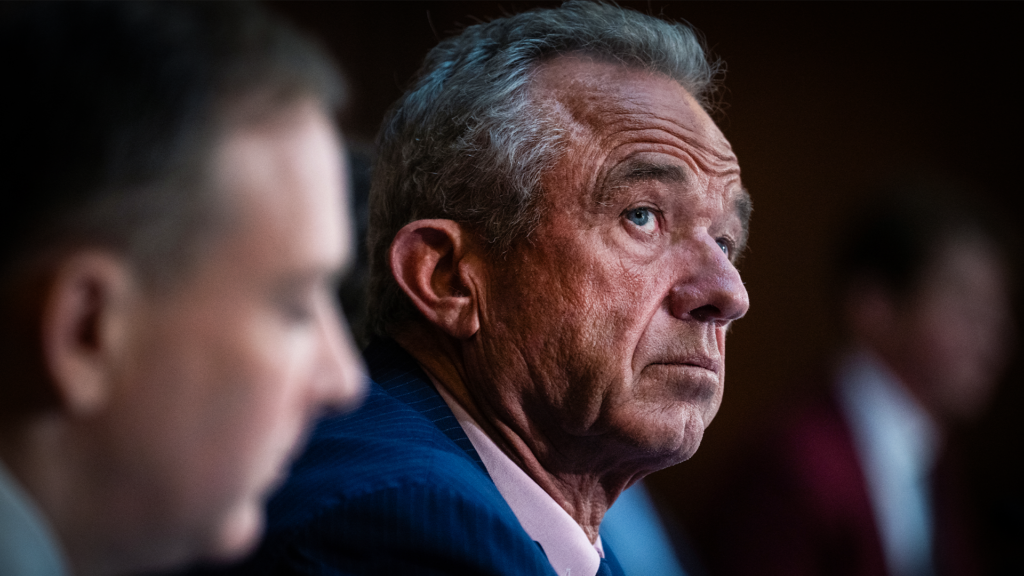
HHS Secretary Robert F. Kennedy Jr. Announces New Podcast, Citing 'Radical Government Transparency'
Robert F. Kennedy Jr., who currently serves as the secretary of Health and Human Services, announced he will launch The Secretary Kennedy Podcast, describing the program as an effort to pursue “radical government transparency and accountability.” Kennedy said the show will feature conversations with independent doctors, scientists and leaders in medical research, continuing his high-profile turn toward long-form media appearances.
By Robby Soave
1,114 views
Robert F. Kennedy Jr., the current secretary of Health and Human Services (HHS), has announced plans to launch a podcast titled The Secretary Kennedy Podcast, continuing a trend of elected officials and government figures turning to long-form audio and video platforms to reach audiences. Kennedy described the new program in a statement as part of an effort toward “radical government transparency and accountability,” saying the podcast will focus on “telling the truth, especially when it's uncomfortable” and will feature “fearless conversations with critical thinkers, including independent doctors, respected scientists and leaders in medical innovation and research.”
The announcement appeared on social media on April 8, 2026, where Kennedy teased the project with the title and a short message. The initiative follows a period in which Kennedy increased his public profile through repeated podcast appearances during 2023 and 2024, a strategy the HHS secretary has used to reach audiences beyond traditional press channels. Reason writer Robby Soave, who has hosted Kennedy on the program Rising multiple times, noted Kennedy's facility for long-form discussion: despite a notoriously strained manner of speech attributed to a rare neurological condition, Kennedy has demonstrated an ability to speak at length on a wide range of subjects and has become a familiar voice in podcast circles.
Kennedy's choice to host a podcast is part of a broader pattern in modern American politics. Members of Congress and other political figures have increasingly adopted podcasts as tools for messaging, fundraising and cultivating loyal followings. Many of those ventures have had limited reach, but exceptions exist—Sen. Ted Cruz's Verdict with Ted Cruz is among the more successful shows produced by a sitting lawmaker. Reporting and commentary have observed that party leadership often encourages such media efforts; as Andrew Solender of Axios noted, “So many members of Congress have podcasts that both Dem and GOP leadership in the House have websites where they're listed.”
The expansion of podcasting among politicians reflects larger shifts in media consumption. As YouTube and other nontraditional platforms have grown, uninterrupted long-form streams and podcast episodes have become a preferred medium for segments of conservative and progressive audiences alike. For some politicians, regular appearances on partisan-friendly outlets have yielded sizable followings and bolstered political influence. In some cases, media exposure has influenced how political figures shape their public identities and policy priorities.
Critics argue that the time commitment required by hosting, producing and promoting podcasts can distract officials from governing responsibilities. The article's commentary highlights that producing a regular show demands significant hours that could otherwise be spent on legislative work or agency duties. From a libertarian perspective expressed in the source piece, there's a grudging acceptance—preferable for a lawmaker to occupy time podcasting than to vote for tax increases or onerous regulations—but concern remains that heavy media engagement may hamper attention to critical governance tasks, such as oversight responsibilities or urgent policy matters.
The trend has led some high-profile figures to choose media careers over government work. Former FBI Deputy Director Dan Bongino is mentioned as an example of a figure who left government to pursue podcasting full time, a move the source notes came with the perceived decency of having resigned before returning to the studio. The article raises the question of whether greater media presence among public officials ultimately serves the public interest or simply reflects a shift in how politicians prioritize visibility and influence.
Kennedy's podcast announcement comes amid ongoing public interest in both his policy role at HHS and his unconventional media profile. Those who have followed his rise to increased prominence through podcast appearances point to his ability to engage audiences and shape narratives. Supporters frame the new show as a form of accountability and a venue for expert discussion; skeptics worry it will further blur the line between media personality and policymaker at a time when elected and appointed officials face significant substantive challenges.
The author notes additional programming and personal asides tied to his coverage: a discussion with Amber Duke about the Iran War ceasefire and internal conflicts within the MAGA movement over presidential foreign policy, and a personal mention that he is currently reading Fear and Loathing in Las Vegas for the first time. As elected officials continue to embrace podcasting as a tool of outreach and influence, Kennedy's entry into the medium underscores the growing intersection of political office and long-form media platforms.