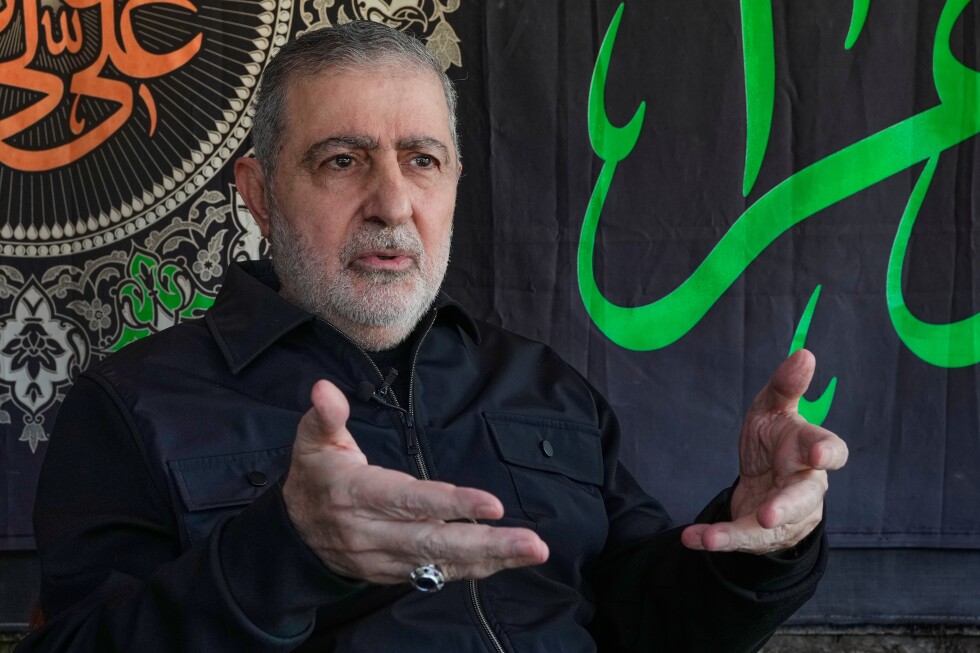
Hezbollah official rejects any agreements from U.S.-hosted Lebanon-Israel talks, imperiling mediation efforts
A senior Hezbollah official said the Shiite group will not abide by any agreements that emerge from Lebanon-Israel talks held in the United States, a stance that could undercut U.S.-mediated efforts to resolve longstanding disputes. The declaration heightens uncertainty over whether Beirut can conclude a settlement that controls both political and security risks posed by armed groups inside Lebanon.
By ABBY SEWELL
904 views
A senior Hezbollah official has publicly declared that the organization will not abide by any agreements reached in Lebanon-Israel talks held in the United States, a pronouncement that complicates U.S.-led diplomatic efforts to resolve disputes between the two countries. The stance, announced by Wafiq Safa according to the report, signals a direct challenge to the authority of any deal brokered outside Lebanon and undercuts assurances that an agreement could bring stability to a volatile frontier.
The Lebanon-Israel negotiations in the United States have been presented by mediators as a pathway to resolve contentious issues that have periodically flared into cross-border confrontations. Although formal diplomatic relations between Lebanon and Israel do not exist and the two countries remain technically at war, U.S. mediation has sought to address practical disputes — notably over maritime boundaries and natural resources offshore — that have economic and security implications for both sides.
Hezbollah’s rejection of any externally negotiated settlement matters for several reasons. First, the group is the most powerful armed political force inside Lebanon and maintains significant military capabilities beyond the control of state institutions. Its refusal to accept U.S.-facilitated agreements could therefore obstruct implementation on the ground, even if Lebanon’s civilian government signs or endorses a pact.
Second, the public stance risks sowing further political division inside Lebanon. The Lebanese government and political class are already fragmented, and securing domestic consensus for any deal with Israel would require navigating factional rivalries and the positions of armed groups. If a major actor like Hezbollah openly disavows the outcome of talks, it may embolden opponents of a negotiated settlement and complicate the government's ability to deliver on its commitments.
Third, the announcement raises broader regional implications. Agreements between Lebanon and Israel, particularly those involving maritime delineation and resource exploitation, have been framed as means to reduce tensions and avert military escalation. Opposition from Hezbollah could keep the flashpoint on the agenda, maintaining the risk of periodic violence along the Lebanon-Israel frontier and complicating the diplomatic calculus for outside mediators, including the United States.
The declaration also underscores the limits of external mediation when influential non-state actors are dissatisfied with the process or its perceived outcomes. U.S.-led talks depend not only on the formal negotiating parties but also on the acquiescence of powerful actors within each country’s political landscape. When such actors are prepared to repudiate agreements, the efficacy of diplomatic interventions can be sharply reduced.
Observers say the coming days and weeks will be critical to gauge whether the Lebanese government can bridge internal divisions and secure a settlement that holds. Much will depend on behind-the-scenes diplomacy, including whether Washington and other regional stakeholders can persuade Hezbollah or shape an outcome that addresses the group’s core concerns without unraveling the negotiating framework. For now, the public rejection by a senior Hezbollah official introduces a fresh layer of uncertainty into an already delicate diplomatic endeavor.